When you need to reach high branches and prune without bending, a long-handled trimmer is essential. This guide helps buyers identify five top pick options that balance reach, cutting power, and durability. Each item is suited for specific pruning needs, from occasional limb trimming to frequent high-branch maintenance. Use this overview to compare offerings and choose the best fit for your yard-work routine.
| Product | Best For | Length / Reach |
|---|---|---|
| Fiskars 28″ Loppers | Small to medium branches, garden maintenance | 28″ |
| Suchtale 10FT Pole Saw | Medium to high branches, no ladder needed | Up to 10 ft |
| LETYANGER 7.3–27 ft Pole Saw | Very tall branches, reach across large areas | 7.3–27 ft |
| Fiskars 32-Inch Loppers | Thicker branches, heavy-duty trimming | 32″ |
| Byhagern 32-Inch Cut and Hold Pruners | Extended reach with rotation for odd angles | About 32″ |
Fiskars 28″ Loppers for Tree Trimming

Features: 28″ steel blade bypass lopper that cuts up to 1.5″ branches; low-friction blade coating reduces gumming and boosts rust resistance; non-slip grip for better control; long-lasting steel blades with a lifetime warranty backing.
Best for: Home gardeners focusing on regular hedge and branch maintenance up to 1.5″ diameter.
Why selected: Combines reach, clean cuts, and durable construction with a reliable warranty, making it a solid all-around choice for yard work.
Caution: Not ideal for extremely thick limbs beyond 1.5″ without additional tools.
Suchtale 10FT Pole Saw for Tree Trimming
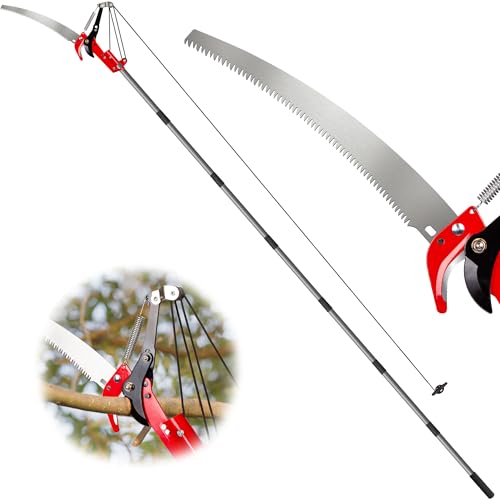
Features: 2-in-1 design with a sharp steel saw blade for thick limbs and a manganese steel pruning scissor for smaller branches; adjustable pole length up to 10 ft (33.6″ to 117.3″); high-carbon steel blade for edge retention and rust resistance.
Best for: Elevated pruning without ladders, ideal for households with tall shade trees or high shrubs.
Why selected: The dual-tool approach and extendable reach make it versatile for mid-height trimming tasks.
Limitation: Heavier than basic pruners, which may require some upper-body strength for long sessions.
LETYANGER 7.3–27 ft Extendable Pole Saw
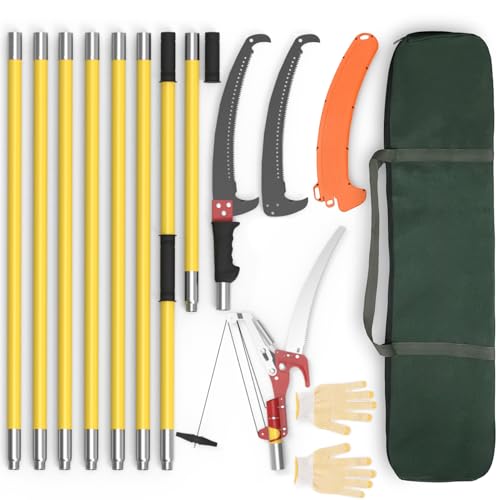
Features: 7-section expandable pole from 7.3 to 27 ft; alloy steel blades with 65 Mn steel for durability; includes a pulley system to simplify rope pulling; comes with a carry bag for storage.
Best for: Reaching very high branches on larger properties or trees with expansive canopies.
Why selected: The wide reach and included storage bag support easy transport and frequent use across different zones.
Caution: The overall weight can be higher when fully extended, potentially tiring during prolonged sessions.
Fiskars 32-Inch Loppers

Features: 32″ steel blade bypass lopper; handles branches up to 2″ thick; PowerGear2 technology multiplies leverage for easier cuts; high-quality, rust-resistant, low-friction coating.
Best for: Heavier pruning tasks when you need more leverage and greater bite on thicker limbs.
Why selected: The longer blade and PowerGear2 system offer strong cutting power with less effort, suitable for frequent major pruning.
Caution: Heavier tool than shorter models; may be cumbersome for shorter users or extended sessions.
Byhagern 32-Inch Cut and Hold Pruners
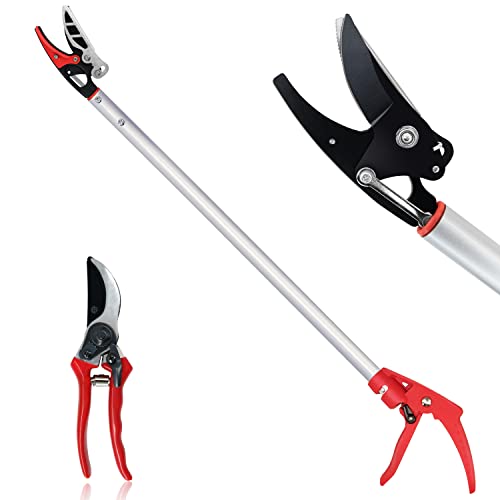
Features: 32″ long handle with rotating cutter head; high-carbon steel blades with anti-rust and anti-stick properties; lightweight aluminum handle designed to reduce wrist fatigue.
Best for: Pruning from a stooping or standing position while maintaining a comfortable workflow and angle.
Why selected: The rotating head adds versatility for awkward cuts and tight spaces, beneficial for dense shrubbery and fruit trees.
Caution: Cutting capacity is around 1/2 inch; not ideal for thicker limbs without switching to a stronger tool.
Buying Guide: Long-Handled Tree Trimmers
- Reach vs. weight: Longer poles extend reach but add weight. Choose a balance that suits your routine and height.
- Cut capacity: Loppers handle up to roughly 1.5″–2″ branches; pole saws cut thicker limbs. Match tool to typical branch sizes in your yard.
- Blade type and coating: Bypass blades offer clean cuts; rust resistance and low-friction coatings extend blade life and reduce effort.
- Adjustability and ease of use: Interchangeable heads, adjustable poles, and rotating heads improve accessibility and reduce fatigue.
- Materials and durability: Look for steel blades and aluminum poles for strength without excessive weight.
- Storage and maintenance: Consider whether the tool comes with a bag or easy storage, and plan for routine cleaning and sharpening.
- Safety considerations: Ensure secure grip, non-slip handles, and safe operation around power lines and overhead branches.
Frequently Asked Questions
- What length is best for most homeowners? A 28″ to 32″ lopper or a 7–10 ft pole saw works well for many yards, providing enough reach without excessive weight.
- Can I prune large branches with these tools? For branches around 1.5″–2″ diameters, loppers with extended blades or pole saws are suitable. For thicker limbs, a more robust saw or multiple tools may be needed.
- Is there a risk of damaging trees with long handles? Proper technique and clean cuts minimize damage; avoid tearing bark and prune only healthy branches as needed.
- How do I maintain the blades for longevity? Clean after use, dry thoroughly, and apply light oil to prevent rust; sharpen or replace blades as needed.
- Are these tools safer than ladders? Pole tools reduce ladder use for many tasks, but always assess stability and overhead hazards before operation.
- Which is best for very tall trees? Pole saws with multi-section extendable poles (e.g., up to 27 ft) are typically best for reaching high branches.