Choosing the right fertilizer for a Meyer lemon tree in a pot can impact growth, foliage health, and fruit yield. This guide highlights five well-regarded options that support vibrant greens, robust root systems, and tasty lemons without synthetic additives. Each product is suitable for container citrus, with formulas designed to deliver balanced nutrition, micronutrients, and easy application. Review the options below to find a match for organic or conventional practices, then consult the Buying Guide for key decisions on soil, watering, and feeding schedules.
| Product | Brand | Notes |
|---|---|---|
| All Natural Citrus Mix | Down To Earth All Natural Fertilizers | Balanced 6-3-3 NPK with calcium, micronutrients; OMRI-listed |
| Organic Premium Kelp Seaweed Fertilizer | GARDENWISE | Seaweed-based concentrate; 8 oz bottle; versatile delivery |
| 16oz Citrus Fertilizer | HiThrive | Makes 16 gallons; 4-3-6 NPK with micronutrients |
| Organic Lemon Tree Soil | GARDENWISE | Certified organic soil with built-in fertilizer; 3 quarts |
| Lemon Tree Liquid Fertilizer | Perfect Plants | 6-3-3 formula; easy mixing |
Down To Earth All Natural Citrus Mix 6-3-3

The Down To Earth Organic Citrus Mix provides a balanced 6-3-3 NPK ratio along with calcium, sulfur, iron, and zinc to support lush foliage, flowering, and fruiting. Crafted from premium natural sources such as feather meal, fish bone meal, alfalfa, langbeinite, basalt, potassium sulfate, zinc sulfate, kelp, and leonardite-derived humic acids, it emphasizes organic inputs and nutrient uptake. This product is OMRI-listed for organic use, making it a solid choice for sustainable or organic citrus care in pots.
GARDENWISE Organic Premium Kelp Seaweed Fertilizer

This all-in-one liquid citrus fertilizer blends seaweed-derived trace elements with growth promoters to boost flavor and vigor. It supports lush foliage and abundant fruit with a flexible delivery method, suitable for root watering or foliar spraying. Gardenwise emphasizes a balanced nutrient delivery for Meyer lemons and other citrus trees in pots, helping to maintain vibrant trees with steady yields.
16oz Citrus Fertilizer By HiThrive

This 16-ounce liquid citrus fertilizer makes 16 gallons of plant food, with a 4-3-6 NPK ratio plus micronutrients like calcium, magnesium, and zinc. It promotes strong roots and robust growth for lemon trees in pots, delivering essential nutrients to foliage and fruit development. The formula is designed to support both new growth and fruit yield while maintaining healthy leaves and vibrant color.
GARDENWISE Organic Lemon Tree Soil

GARDENWISE Organic Lemon Tree Soil combines a citrus-potting mix with organic fertilizer designed for up to six months of feeding. The mix includes extra perlite and coarse sand for drainage and aeration, helping prevent root rot in pots. It also maintains a citrus-friendly pH of 5.5–6.5, creating an acidic environment favorable to Meyer lemons and other citrus plants.
32oz Lemon Tree Fertilizer By HiThrive

This larger bottle scales feeding for bigger potted lemon trees, delivering a 4-3-6 NPK ratio plus micronutrients to encourage vigorous growth and bountiful harvests. It supports lush foliage, stronger roots, and improved fruit production through consistent application, making it suitable for container landscapes with Meyer lemons and similar citrus varieties.
Perfect Plants Liquid Lemon Tree Fertilizer
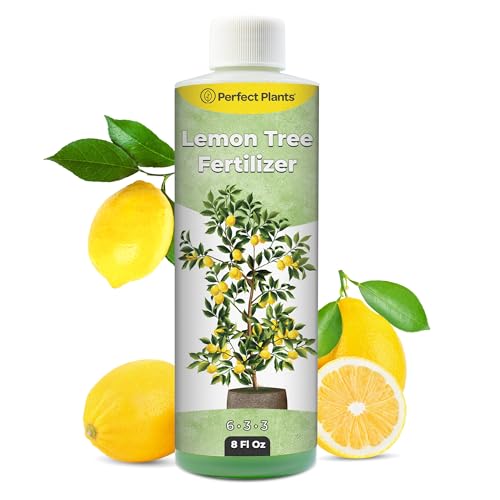
The Perfect Plants Liquid Lemon Tree Fertilizer features a balanced 6-3-3 formula, enriched with micronutrients to support flowering, fruit set, and continuous growth. It’s designed for easy mixing and uniform distribution in pots, helping Meyer lemon trees maintain vigor whether kept indoors or outdoors. The product emphasizes quick-root absorption for faster visible results.
Buying Guide: Key Purchase Considerations For Meyer Lemon Trees In Pots
- Form vs. convenience: Choose liquid concentrates for quick uptake and easy mixing, or granular/soil mixes for longer intervals between feeds. In pots, liquids often provide faster results, while soil mixes reduce feeding frequency.
- NPK balance: Look for a balanced formula around 4-3-6 or 6-3-3 for citrus. A slightly higher potassium level supports fruit development, while adequate nitrogen sustains leafy growth. Micronutrients like magnesium, iron, zinc, and calcium help prevent common deficiencies in container trees.
- Organic vs. synthetic: OMRI-listed or organic blends are preferable for sustainable grows and organic setups. Conventional fertilizers can deliver precise nutrient schedules but may require more careful monitoring of salt buildup.
- Delivery method: Root feeding (soil/water) is essential for pot-grown trees. Foliar sprays can supplement nutrition but should not replace root feeding, especially for potted plants with limited root volume.
- Soil compatibility: If you’re using a purely organic soil mix, align fertilizer types with the soil’s nutrient release to avoid overfeeding. For pre-fertilized mixes, adjust feeding accordingly and monitor growth and leaf color.
- Water management: Lemon trees in pots prefer evenly moist but well-drained soil. Over-fertilization with poor drainage can lead to root burn. Always water thoroughly after feeding and allow excess to drain away.
- Application frequency: Container trees often require more frequent but smaller feedings. Start with every 2–4 weeks during active growth, then taper in cooler months when growth slows.
- Tree size and pot volume: Smaller pots require lighter feeding to prevent fertilizer salt buildup. Choose a product and application rate that matches your pot size and tree age.
- Aesthetic considerations: Some growers prefer products that also promote flavor enhancement. While flavor can be influenced by multiple factors, nutrient quality and micronutrient balance contribute to fruit quality.