If you’re growing African violets indoors, you need reliable synthetic light that supports compact growth, vibrant blooms, and healthy foliage. This guide highlights five well-suited options, focusing on full-spectrum output, adjustable timers, and compact designs ideal for violets. Each selection includes practical notes on who benefits most, plus a caution to consider before buying. Read on to compare capabilities and find the best fit for your windowsill or small grow space.
| Product | Brand | Spectrum Notes | Timer Options |
|---|---|---|---|
| Aokrean Plant Grow Light (3 Pack) | Aokrean | Full spectrum with white, warm white, red options | 3/9/12 hours |
| LBW Grow Light for Indoor Plants | LBW | Full spectrum, 3 colors (white, warm, full) | 6/8/12/16 hours |
| LBW Desk Grow Light | LBW | Full spectrum, 3 switching modes | 3/6/12 hours |
| GooingTop LED Grow Light | GooingTop | Full spectrum with white and red LEDs | 4/8/12 hours |
| Bloom Lume LED Grow Lights | Bloom Lume | Full spectrum with multi-mode color spectrum | 5/10/15 hours |
Aokrean Plant Grow Light, 48 LEDs

The Aokrean 48-LED halo grow light is designed for compact indoor setups. It offers three lighting spectrums: white, warm white, and red, with 10 brightness levels. The unit can be positioned in two ways—inserted into soil or placed on a stand—giving flexibility for African violets, which prefer steady, gentle light. Best for small planters or windowsills where you want close-range illumination. Caution: stability depends on pot placement; the stand must be pressed down by the pot to stay stable.
LBW Grow Light for Indoor Plants

The LBW Grow Light provides a full spectrum with three color settings (white, warm, and full spectrum) and multiple timer options. Five adjustable brightness levels let you tailor light intensity for African violets at different growth stages. The base design is space-saving and stable when used with a pot; this makes it suitable for desks or shelves. Best for violet growers needing dependable daily use and easy adjustments. Limitation: stability can depend on pot weight and placement.
LBW Desk Grow Light, Full Spectrum

This LBW model delivers 214 full-spectrum LEDs to mimic natural sunlight from 380 nm to 780 nm. The lamp’s broad coverage supports vignette growth for African violets, with a 11×4.7 inch panel and heat-dissipation design for longevity. It features three switching modes to control single or multiple panels and three timer settings plus six dimmable levels for precise lighting. Best for users who want adjustable fixtures with high output. Caution: ensure adequate clearance for heat dissipation in smaller cabinets.
GooingTop LED Grow Light
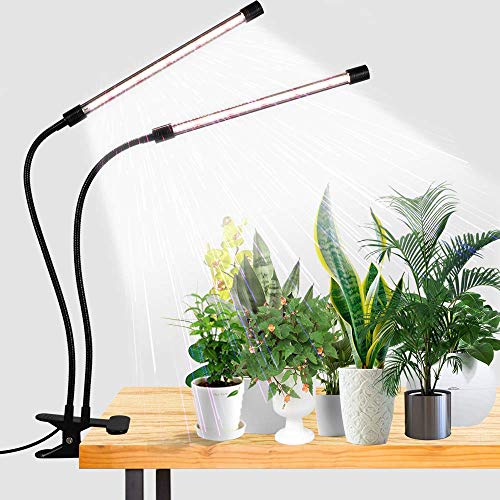
The GooingTop clip-on grow light combines 6000K white LEDs with red LEDs for a balanced spectrum. It uses a flexible gooseneck and clamp for easy directional lighting, ideal for violets on desks or shelves. Five-level dimming and four-to-twelve hour timers provide flexible schedules for photosynthesis and blooming cycles. Best for users who want a compact, adjustable clip-on option. Limitation: USB or wall plug dependency can affect placement options in some setups.
Bloom Lume LED Grow Lights for Indoor Plants
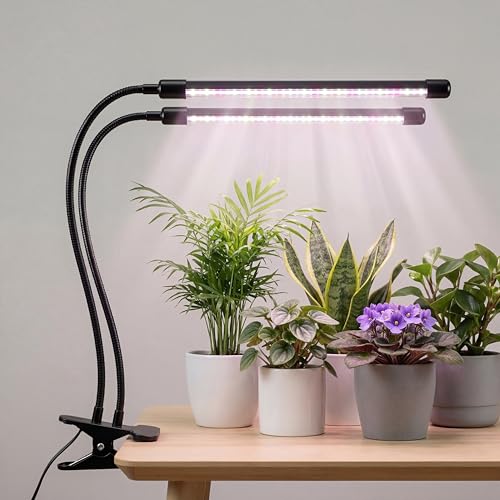
Bloom Lume offers full-spectrum LED lighting with multi-mode color spectrums and a gooseneck clamp. Its 10-level intensity and 5/10/15-hour timer options enable precise control for African violets, particularly in rooms with variable natural light. The design emphasizes portability and adjustability, making it a versatile choice for violets that require steady daily light. Caution: higher output may require monitoring to avoid overheating in small enclosures.
Buying Guide: Key Considerations For African Violet Grow Lights
- Light spectrum: African violets thrive with a balanced full spectrum that mimics natural daylight. Look for lights labeled as full spectrum or with a mix of white, red, and blue wavelengths.
- Light intensity and distance: For compact violets, closer, lower-intensity lighting reduces leaf burn. Choose lights with adjustable brightness or dimming to tailor to plant size and growth stage.
- Color temperature: A cool-to-balanced white spectrum (roughly 4000–6500K range) supports steady foliage and flowering without causing stress.
- Timers: Automatic on/off timers help maintain consistent photoperiods which are important for bloom cycles. Favor models with 3, 6, 12, or 24-hour cycles.
- Mounting and form factor: Clip-on, desk, halo, or strip lights each suit different grow spaces. Stability matters for small pots, so look for base support or secure mounting options.
- Energy use and heat: LEDs are typically energy-efficient. Check heat output and ensure adequate ventilation in compact setups to prevent heat buildup near violets.
- Expandability: If you plan to grow multiple plants, consider lights with multiple panels or the ability to link several units safely.
Practical Setup Tips
- Position lights 6–12 inches above violet leaves to avoid leaf burn while providing adequate intensity.
- Rotate plants weekly to promote even growth and prevent legginess.
- Pair with natural light by using these lamps as supplementary sources rather than sole lighting in dim rooms.
Frequently Asked Questions
- What light spectrum is best for African violets?
A full-spectrum LED with a mix of white and red wavelengths supports healthy growth and flowering without stressing the plant. - Do African violets need a timer?
Yes. A daily light cycle helps maintain consistent blooming cycles and foliage development, especially when natural light is inconsistent. - Can I use any grow light for violets?
Most LEDs labeled as full-spectrum are suitable; avoid high-intensity, narrow-spectrum options that may overstimulate or scorch leaves. - How far should the light be from the plant?
Start around 6–12 inches and adjust based on plant response; violets prefer gentle, even illumination. - Is clip-on lighting better than desk lamps?
Clip-on lamps offer flexibility for smaller spaces, while desk lamps can provide stable, extended coverage for several plants. - Can I combine multiple lights for more coverage?
Yes, but ensure even spacing to prevent hotspots and manage power draw safely.