Choosing a water pump for garden hoses requires considering flow rate, pressure, lift, and power source. This guide highlights five reliable options that fit typical yard irrigation, draining, and transfer tasks. Each product supports garden hoses and common fittings, with features designed for low-noise operation and safety. Read on to compare capabilities and find the right fit for your outdoor water needs.
| Product | Brand | Flow (GPM or GPH) | Max Lift/Head | Power |
|---|---|---|---|---|
| ECO-WORTHY 33-Series Diaphragm Pump | ECO-WORTHY | 4.0 GPM | 148 ft lift | 110V AC |
| TecHome 115V Transfer Pump | TecHome | 330 GPH | 40 ft head | 115V AC |
| Aquastrong Sump Pump | AQUASTRONG | 4500 GPH | 30 ft lift | 115V / 1 HP equivalent |
| ECO-WORTHY 110V Fresh Transfer Diaphragm Pump | ECO-WORTHY | 5.5 GPM | 131 ft lift | 110V AC |
| 6699 Utility Pump | 6699 | 1600 GPH | varies | 115V AC |
Note: Specifications reflect typical use cases such as garden irrigation, pool or pond drainage, and water transfer. Always match pump capabilities to your hose sizes and the elevation in your setup.
ECO-WORTHY 33-Series Diaphragm Pump For Irrigation
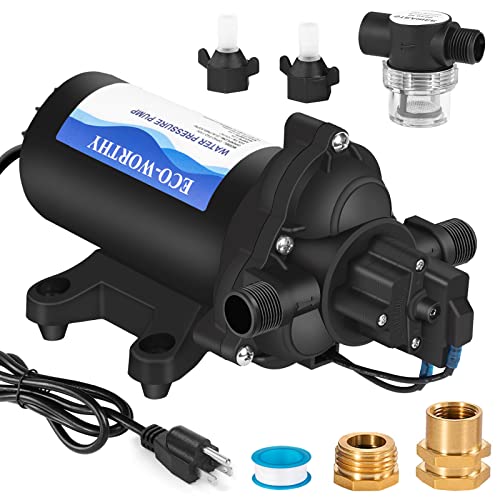
The ECO-WORTHY 33-Series 110V AC diaphragm pump delivers about 4.0 GPM with a 50 PSI turn-on/turn-off pressure switch. It is self-priming and can lift water up to about 148 feet, with a selectable pressure range of 45–70 PSI. Built-in thermal overload protection helps prevent motor damage if temperatures rise. This model is suitable for RV fresh-water systems, garden hose irrigation, and sprinkler setups, offering quiet operation and adjustable pressure to suit different faucet demands.
TecHome 115V 1/10HP Garden Hose Transfer Pump

Designed for straightforward water transfer, this 115V TecHome pump offers up to 330 GPH with 3/4 inch discharge and suction ports. It includes a 6-foot suction hose, a debris screen, and an impeller kit. It is non-submersible, so avoid wetting the motor, and it’s easy to carry with a compact form factor—ideal for transferring water from barrels or pools, draining small basins, and supporting temporary irrigation tasks.
Aquastrong 1 HP Submersible Sump Pump

With a robust 1 HP motor, the Aquastrong sump pump moves up to 4500 GPH and supports water removal from pools, ponds, basements, or window wells. The unit features bottom suction to pull water from the surface and handles debris efficiently. It ships with flexible discharge options and a 10-foot power cord for convenient placement. This pump is particularly suitable for for higher-volume drainage tasks and temporary water removal projects.
ECO-WORTHY 110V Fresh Transfer Diaphragm Pump

This 5.5 GPM, 70 PSI diaphragm pump offers self-priming up to 9.8 feet and a lift up to 131 feet. It includes a protective thermal overload feature to ensure safe operation when temperatures rise. The design emphasizes quiet operation and consistent water supply whenever a faucet opens, making it a solid choice for garden irrigation, RV use, or any scenario requiring controlled water pressure.
6699 Utility Pump For Draining

The 6699 compact utility pump is designed for draining tasks with a 1/4 HP motor and up to 1600 GPH. It includes adapters for garden hoses (GHT 3/4″) and PVC lay-flat hose connections, enabling quick setup for pools, ponds, or garden irrigation. It operates quietly and is suitable for removing clean water down to roughly 1/12 inch of surface. It is important to avoid dirty water or hoses that can trap debris.
Buying Guide
Key purchase considerations help compare garden hose water pumps across use cases and budgets. Consider these factors to select the best model for your needs:
- Flow and head requirements: For irrigation, a pump with 4–6 GPM and a lift around 30–150 feet meets most yard tasks. Higher GPH is advantageous for rapid drainage, while higher lift supports elevated outlets.
- Power source and energy use: 110V AC pumps are common and require a stable power outlet. If you lack power nearby, explore portable transfer pumps or battery-assisted options, keeping amps and heat in check for safe operation.
- Self-priming and suction capabilities: Self-priming pumps simplify setup. Check maximum suction lift to ensure the pump can draw water from your source (tank, barrel, or pond).
- Durability and materials: Look for metal housings or heavy-duty plastics with corrosion resistance, especially for outdoor use or hot tub draining. Thermal overload protection adds safety during continuous operation.
- Port size and adapters: Ensure discharge and suction ports match standard hose fittings (3/4″ GHT or 1″ PVC) and that any included hoses or adapters support your layout.
- Noise and portability: Quiet operation suits residential settings. Lightweight, compact units are easier to move around the yard or garage.
- Submersible vs. non-submersible: Submersible pumps are ideal for direct pool or sump use, while non-submersible types are often easier to service and carry.
When comparing units, align the product’s stated capabilities with your specific tasks—watering beds, filling troughs, draining basements, or transferring water from one container to another. Always observe safety notes, including avoiding dirty water exposure to certain pump types and protecting electrical connections from the elements.