For gardeners seeking efficient, low-effort seed placement, a push planter or hand-push seeder can dramatically improve planting speed and accuracy. The following picks focus on push-style planters designed to deliver 1-2 seeds per drop with consistent spacing, suitable for vegetables like corn, beans, carrots, and leafy greens. Each model emphasizes a stable hopper, adjustable seeding depth, and easy maneuverability to minimize bending and strain in the garden.
A quick overview of the selected products:
| Product | Brand | Key Benefit | Seed Capacity |
|---|---|---|---|
| Chapin Garden Seeder 8701B | Chapin International | Durable frame, precise 4-step seeding | 1.5 L hopper |
| LUPENGSHOP Manual Seed Planter | LUPENGSHOP | 7 nozzles, 1-2 seeds per sow | 8.27 lbs capacity |
| Hoss Garden Seeder | Hoss | Very versatile, adjustable depth | Removable hopper |
| Zivisamt Garden Seeder Row Planter | Zivisamt | Large capacity hopper, easy operation | 8.27 lbs seeds |
| ARPITUYN Hand-Push Seeder | ARPITUYN | Adjustable sowing quantity and depth | 7 nozzles |
Chapin Garden Seeder 8701B

The Chapin 8701B offers a robust, powder-coated steel frame with a 1.5-liter seed hopper, designed to handle a wide range of vegetables using six seed plates. The four-stage operation—mark, prep, place, cover—lets a gardener walk a row while using a zinc plow blade to form the row and space seeds evenly. Cushioned handle grips reduce fatigue, making it suitable for mid-range garden beds and raised beds. It supports more than 20 crop types, including beets, radishes, cucumbers, corn, lettuce, and peppers. The adjustable seed plates enable versatility across seed sizes and planting densities.
Highlights include a wide rear wheel for stable walking and a user-friendly workflow that minimizes bending. The seed hopper’s capacity helps cover longer rows before a refill, which is ideal for mid-sized gardens or small hobby plots. Users should note assembly may require some basic tool work, and the fixed wheel spacing is best suited to standard crop rows rather than very narrow beds.
LUPENGSHOP Manual Seed Planter
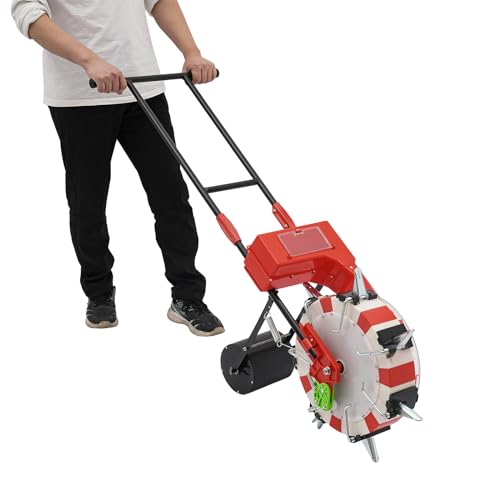
The LUPENGSHOP seeder emphasizes a durable build with an iron–ABS combination and a 9.06-inch nozzle spacing designed to deliver 1-2 seeds per sowing. The device promises corrosion and abrasion resistance for long-term garden use, with a design that reduces the need to bend or dig—sticky soil types notwithstanding. The seven nozzles enable efficient coverage across larger plots, and the 8.27-pound weight balances stability with maneuverability. For gardeners prioritizing consistent seed-to-soil distance, this model’s precision seeding is a notable feature, though setup and calibration may require careful attention for first-time users.
Best for medium-sized beds where multiple seed types are planted in neat rows, especially where uniform seed spacing drives harvest planning. It may be less ideal for tiny, tight spaces unless you adapt bed layout to its fixed nozzle spacing.
Hoss Garden Seeder

The Hoss Garden Seeder is pitched as one of the most versatile walk-behind planters. It promises accurate planting across a wide range of seed sizes and features an adjustable planting depth from 1/4″ to 1 1/2″. A removable hopper facilitates easy emptying of seeds, reducing spillage while refilling. This model’s strength lies in its adaptability for different crops and soil conditions, allowing gardeners to tailor depth and flow to specific varieties. The user-friendly design helps reduce fatigue during long planting sessions, and the build quality supports frequent use in varied soils.
One consideration is weight and size; larger beds may benefit from a lighter setup or a cart to transport the seeder between rows. The depth adjustment is valuable for deep-rooted crops like carrots, but precise calibration is essential for optimal germination across different soil textures.
Garden Push Seeder With 7 Seed Nozzles

This model emphasizes a 9.06-inch nozzle spacing with seven nozzles to create uniform rows for crops like corn, soybeans, peanuts, and cotton. The brush-controlled mechanism aims to deliver 1-2 seeds per drop. The design highlights ergonomics, reducing the need to bend and allowing a natural push action. A sturdy iron frame with a corrosion-resistant coating, paired with an ABS seed hopper, provides durability for outdoor use. The unit is described as a budget-friendly option for small farms or serious home gardeners looking to standardize planting depth and spacing across multiple rows.
Potential users should confirm seed compatibility, as some very small seeds may require different plate configurations or adjustments to avoid over-seeding. The product is well-suited for large, open beds where consistent spacing accelerates harvest planning and crop yields.
ARPITUYN Hand-Push Seeder

The ARPITUYN hand-push seeder features seven nozzles and a brush-like design to limit seed drops to 1-2 at a time. It emphasizes equal nozzle spacing of 9.06 inches for uniform sowing distances and an adjustable sowing depth between 1.38 and 3.07 inches. This model prioritizes labor-saving operation by injecting seeds directly into the soil, eliminating the need for bending or digging. The adjustability supports tailoring planting density and depth for different crops and soil types, making it suitable for various vegetables and row crops in home gardens or small-scale plots.
Users should consider maintenance of the moving parts and ensuring the depth settings align with seed type. The device’s robustness comes from the combination of metal and coated components, providing resistance to corrosion and general wear in outdoor conditions.
Buying Guide: Key Purchase Considerations And Comparisons
When choosing a push planter for your garden, consider the following factors to align with your growing goals and site conditions:
- Seeding precision: Look for models offering 1-2 seeds per drop with consistent spacing (ideally 9.06 inches apart). Precision reduces seed waste and helps achieve uniform germination.
- Seed hopper capacity: A larger hopper lets you plant longer rows without frequent refilling, improving efficiency in mid-size and large beds.
- Adjustable depth and quantity: Depth range and adjustable sowing quantity enable planting a variety of crops—from shallow-rooting greens to deeper carrots or beans.
- Durability and materials: Powder-coated steel, iron frames, and corrosion-resistant components extend the device’s lifespan, especially in wet or humid soil.
- Ease of use: Ergonomic handles, minimal bending, and a smooth rolling action reduce fatigue during longer planting sessions.
- Maintenance: Check for easy cleaning, lubrication needs, and simple disassembly for refilling or troubleshooting.
- Space and bed compatibility: Ensure the nozzle spacing and overall width fit your beds, especially in narrow raised beds or intercropped rows.
Comparing these five options reveals trade-offs between capacity, versatility, and effort. The Chapin 8701B offers robust all-around performance with a versatile seeding system and a durable frame, suitable for moderate garden plots. The LUPENGSHOP model emphasizes high nozzle count for larger planting areas and precise seed distribution, which is ideal for crops with uniform spacing. The Hoss seeder provides top-tier adaptability in depth and seed handling, though it may be heavier and bulkier. Zivisamt combines large seed capacity with straightforward operation, beneficial for continuous planting sessions. The ARPITUYN model balances adjustability and ease of use, making it suitable for gardeners seeking a user-friendly, adjustable tool for multiple crops.
In practice, your choice depends on your garden size, crop variety, and how much you value speed versus precision. For small to mid-sized home gardens with a focus on consistent rows, a model with 1-2 seeds per drop, 9.06-inch spacing, and an easily adjustable depth is typically the most efficient. For larger plots or frequent planting, prioritize higher hopper capacity and durable construction to minimize downtime between fills and maintenance needs.