Choosing the right potting soil is essential for veggie containers. The following selections highlight organic blends, peat-free options, and long-lasting nutrients ideal for herbs, tomatoes, peppers, and leafy greens. Each product blends moisture retention with balanced nutrients to support robust root growth and steady harvests in outdoor or indoor containers.
| Product | Size | Type | Key Benefit |
|---|---|---|---|
| Miracle-Gro Organic Outdoor Potting Mix, 16 qt | 16 qt | Organic Outdoor | Quick-release fertilizer; feeds up to 2 months |
| Back to the Roots 100% Organic Potting Mix, 12 qt | 12 qt | Organic, Peat-Free | Upcycled materials; lighter carbon footprint |
| Miracle-Gro Potting Mix For Container Plants, 8 qt (2-Pack) | 2 x 8 qt | Container Mix | Feeds up to 6 months; twice as big growth |
| Miracle-Gro Potting Mix, 16 qt (2-Pack) | 2 x 16 qt | Container Mix | Feeds up to 6 months; multiple containers |
| Burpee Premium Organic Potting Mix, 9 qt | 9 qt | Organic, Coconut Coir | Moisture retention; OMRI listed |
Miracle-Gro Organic Outdoor Potting Mix, 16 Qt

This Miracle-Gro blend is designed for outdoor container plants, including vegetables. It contains a quick-release natural fertilizer that feeds plants for up to two months. The mix uses responsibly sourced peat from certified producers and is OMRI listed, aligning with organic gardening practices. Suitable for vegetables, herbs, and ornamental containers, it provides a balanced base that supports root development and steady growth through the growing season.
Back to the Roots 100% Organic Potting Mix (Value 12 Quart)
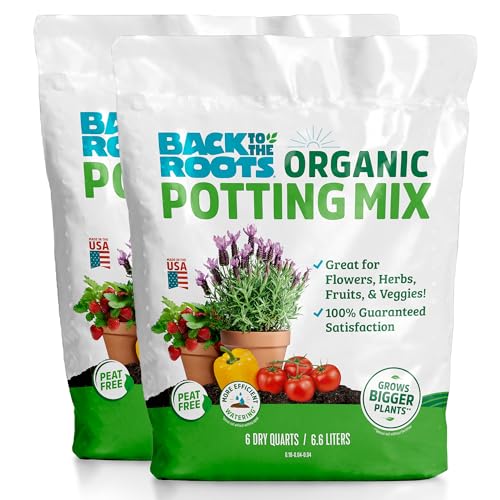
This peat-free potting mix uses upcycled plant matter and wood fines to create a lightweight, sustainable soil. It’s all-purpose and suitable for herbs, vegetables, fruits, and flowers. The blend includes moisture-control compounds and pH-balancing minerals (yucca extract and dolomitic limestone) to support consistent moisture and nutrient availability, which is particularly beneficial for container garden vegetables. Made in the USA, it offers a lower carbon footprint while maintaining performance.
Miracle-Gro Potting Mix For Container Plants, 8 qt (2-Pack)

This two-pack of Miracle-Gro Potting Mix is designed for containers and includes enough material to fill multiple 8-inch planters. It’s formulated to feed container plants for up to six months, promoting stronger growth and more abundant blooms. While focused on color, the sustained release nutrition also benefits vegetable starts and compact veggies in pots, helping ensure consistent growth across the growing season.
Miracle-Gro Potting Mix, 16 qt (2-Pack)
This bundle includes two 16-quart bags of Miracle-Gro Potting Mix, designed to fill one large 12-inch container per bag. It is marketed to feed for up to six months, supporting extended growth for vegetables, herbs, and ornamental container plants. The blend emphasizes robust root development and vibrant foliage, making it a convenient option for vegetable pots with longer harvest windows.
Burpee Premium Organic Potting Mix, 9 qt

Burpee’s premium mix uses plant food and coconut coir to promote seed and root growth, making it well-suited for containers filled with vegetables, herbs, and flowers. OMRI-listed for organic use, it provides instant feeding and a slow-release component for up to three months. Coconut coir boosts moisture retention, helping containers stay evenly hydrated during warm periods, which is beneficial for vegetable transplants or seasonal herbs.
Buying Guide: Key Purchase Considerations
When selecting potting soil for vegetables, consider the following factors to match your container setup and climate:
- Nutrient release and duration: mixes with quick-release fertilizers offer immediate feeding, while slow-release or extended-feeding blends reduce how often you must fertlize. For vegetables, a balance between initial nutrition and long-term feeding helps steady growth.
- Peat vs. peat-free: peat-based blends often retain moisture well but may have sustainability drawbacks. Peat-free formulas use coconut coir, composted bark, or upcycled materials, providing good moisture control with a lower environmental impact.
- Moisture retention: containers dry out quickly in sun and wind. Look for ingredients like coco coir or perlite to improve water-holding capacity and drainage to prevent root rot.
- pH balance: most vegetables prefer slightly acidic to neutral soil. Some blends include lime or dolomitic limestone to stabilize pH, which can benefit tomato and leafy green growth.
- OMRI listings and organic suitability: for organic gardening, OMRI-listed blends ensure compliance with organic standards and reduce the risk of synthetic inputs in edible crops.
- Container type and size: ensure the soil volume matches your pot size. Larger containers may require more soil and longer-lasting nutrients, while smaller pots need lighter blends with adequate drainage.
- Sustainability and origin: peat-free formulations and blends made in the USA may appeal to gardeners prioritizing environmental impact and local sourcing.
Overall, for vegetable containers, a peat-free mix with moisture retention, pH balance, and a reasonable feeding profile tends to yield steady results across herbs and vegetables. Consider pairing one of these blends with appropriate container sizes and consistent watering schedules for healthy crops through the growing season.