Choosing compostable pots helps reduce plastic waste while promoting healthier seedlings. This guide highlights five top options, focusing on biodegradability, drainage, and ease of transplanting. Each product is suited for starting seeds, herbs, vegetables, or flowers, with built-in drainage and plant labels. Read on to compare materials, sizes, and practical use cases to find the right pots for your sustainable gardening goals.
| Product | Size | Biodegradable Material | Extras |
|---|---|---|---|
| Jolliance 4” Peat Pots | 4 inches | Biodegradable pulp | 60 pots + 60 labels, drainage holes |
| JNYONG 3.15” Peat Pots | 3.15 inches | Recycled pulp & plant fibers | 60 pots, 50 labels, drainage holes |
| Jiffy 5” Biodegradable Pots | 5 inches | Biodegradable peat | 24 pots, water-absorbent, reduces transplant shock |
| ANGTUO 4.33” Peat Pots | 4.33 inches | 100% natural, biodegradable peat | 30 pots + 20 labels |
| DESKEMAI 12 Pots | Standard peat pots | Biodegradable material | Drain holes, bulk starter kit |
Jolliance 4” Peat Pots With Labels
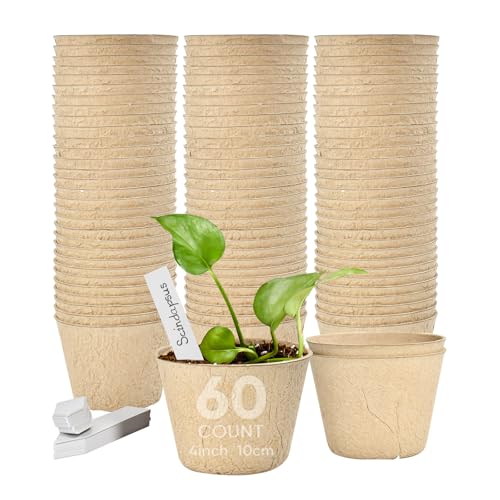
These seed starter pots combine biodegradable construction with practical labeling. Each 4-inch pot includes a plant label, enabling clear seed tracking while you build a tray of seedlings. The pots are molded from recycled pulp and binding agents, designed to breathe like clay. They deliver a favorable root environment and degrade rapidly once planted or incorporated into soil. Drainage holes support healthy moisture levels, reducing overwatering risks for a range of flowers, herbs, and vegetables.
The kit format, with 60 pots and 60 labels, suits larger starter projects or classroom settings. The pots’ size accommodates many common seedlings, providing enough root room before transplanting. This option is especially convenient for gardeners seeking a simple, all-in-one solution that minimizes waste yet maximizes transplant success.
JNYONG 60 Packs 3.15 Inch Peat Pots

This option offers compact 3.15-inch pots built from recycled pulp and plant fibers. The package includes 60 pots and 50 plant labels, making it easy to organize seed types and dates. Four drainage holes at the bottom facilitate rapid drainage and air flow, supporting strong early root development. Like other biodegradable pots, these can be planted directly into soil, allowing roots to grow through the walls and reducing transplant shock.
The combination of size, drainage, and labeling makes JNYONG a practical choice for starting a wide range of herbs and vegetables. The 60-pot bundle is ideal for seed starting trays, micro-gardens, or educational settings where many seedlings are raised at once.
Jiffy Organic Seed Starting 5″ Pots

Jiffy’s 5-inch biodegradable pots provide ample space for larger seedlings and more developed root systems. The pots are designed to be used on a watertight tray, filled with seed starting mix, and watered until fully saturated. A key advantage is transplant ease: you plant the entire pot in soil, protecting roots from disturbance and reducing transplant shock. The kit is suitable for gardeners who want reliability for bigger, sturdier seedlings and a trusted brand in seed starting.
The 5-inch size is a practical sweet spot for many vegetables and flowers, offering robust root support while fitting standard starting trays. While not a full tray, the single- or small-batch use helps gardeners scale up gradually without compromising root health.
ANGTUO 30 Pcs Peat Pots With Labels

ANGTUO’s 4.33-inch pots emphasize green cultivation with natural, biodegradable peat. The set includes 30 pots and 20 plant labels, giving users a straightforward starter kit for seedling projects. The pots are breathable and self-absorbing, featuring drainage holes that foster strong, healthy growth. This option suits gardeners who want a larger medium pot without switching to plastic or clay alternatives.
Versatility is a highlight here, as the pots accommodate a broad range of plant types—from flowers and herbs to vegetables and strawberries. The included labels help maintain seed organization, which is especially helpful for gardeners planning successive planting cycles or educational activities with kids.
DESKEMAI Peat Pots With Drain Holes

DESKEMAI offers a bulk pack of biodegradable peat pots designed for easy transplanting. The pots feature a drainage system that keeps soil well-drained and ventilated, reducing root rot risk. They’re suitable for starting seedlings indoors or transplanting directly into a garden bed once roots are established. The kit’s quantity makes it a practical option for larger projects or community gardens, aligning with sustainability goals.
Materially, these pots rely on peat-based composition that breaks down in soil, promoting a seamless transition from nursery to garden. The drainage holes and bulk packaging appeal to users who value both practicality and eco-friendliness in their seed-starting routines.
Buying Guide: Key Considerations For Compostable Seed Pots
- Biodegradable material: Look for pots made from peat, recycled pulp, or plant fibers. These materials break down in soil, enabling direct transplantation with minimal root disturbance.
- Size and root space: Choose pot sizes that suit your plant type. Smaller pots are great for herbs and greens, while larger pots suit tomatoes and peppers or longer growth cycles.
- Drainage: Adequate drainage holes are essential to prevent waterlogging. Check pot design to ensure consistent moisture management.
- Labels and tracking: Including plant labels helps organize seeds by variety and sowing date, enhancing garden planning and yield predictions.
- Transplant convenience: Pots that can be planted whole reduce root disturbance, supporting transplant success and vigor in early growth stages.
- Environmental impact: Prioritize brands with transparent sustainability claims and post-use disposal guidance to maximize eco-friendliness.
- Budget and scale: Consider whether you need a small starter set or a bulk pack for a community garden. Bulk options often lower per-pot costs.
- Compatibility with seed types: Some pots work better for herbs and leafy greens, others for vegetables and ornamentals. Match pot size and firmness to seedling needs.
- Tray integration: If you use seed trays, ensure the pots fit and provide stable tray support during watering and growth.
Overall, the best compostable pots balance biodegradability, plant health benefits, and practical features like labeling and drainage. When selecting, align your choice with the plant varieties you grow, your transplant timing, and your commitment to reducing plastic waste in the garden.