Biodegradable pots for plants simplify starting seeds and transplanting without disturbing delicate roots. The following selections combine breathable materials, drainage, and easy soil incorporation. Each option helps reduce transplant shock and supports sustainable gardening practices. Below you’ll find concise product summaries, a quick comparison, and a buying guide to help you choose the right fit for your space and crops.
| Product | Brand | Size | Key Benefit |
|---|---|---|---|
| JNYONG 60 Packs 3.15 Inch Peat Pots | JNYONG | 3.15 inches | Includes 50 labels; four drainage holes; 100% biodegradable |
| Jolliance 4” Peat Pots | Jolliance | 4 inches | 60 labels; breathable pulp material; quick biodegradation |
| VIVOSUN 3.15-Inch Peat Pots | VIVOSUN | 3.15 inches | Four drainage holes; plant labels; soil-friendly decomposition |
| JERIA 3.15 Inch Peat Pots | JERIA | 3.15 inches | 50 pots with labels; pulp-based; promotes healthy roots |
| DESKEMAI Peat Pots | DESKEMAI | 12 pots | Drain holes; biodegradable; bulk pack for seed starting |
Note: The table above highlights core details. Each product listing includes drainage features, biodegradability, and seed-starting suitability to help you compare quickly for your next planting cycle.
JNYONG 60-Pack Peat Pots: Biodegradable Seed Starters

The JNYONG set offers 60 peat pots sized at 3.15 inches each, designed with four drainage holes to prevent waterlogging and promote healthy root growth. The pack includes 50 plant labels for keeping seed rows organized. These pots are molded from recycled pulp and plant fibers, a biodegradable choice suitable for direct planting into soil. Their robust construction supports seed germination while remaining flexible enough for easy transplant without root disturbance.
Jolliance 4” Peat Pots With Labels
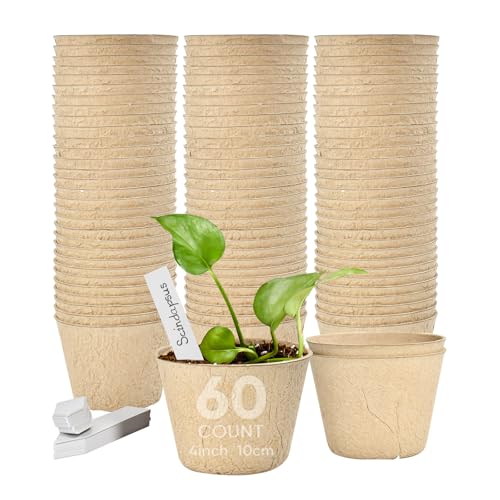
The Jolliance kit expands to 4-inch pots and includes 60 plant labels. Built with biodegradable pulp materials, these pots mimic clay in breathability while degrading quickly when planted. The set is versatile for starting flowers, herbs, and vegetables, offering a stable microenvironment for root systems and easier handling during transplanting. The included labels help gardeners track varieties and growth stages from germination onward.
VIVOSUN 3.15-Inch Seed Pots With Labels

VIVOSUN’s 3.15-inch pots are crafted from paper fibers that break down into organic nutrients when integrated into soil. The kit includes four drainage holes and 20 plant labels, supporting multiple plant types—from flowers to vegetables. The design promotes better drainage and aeration, which can enhance root establishment and reduce transplant shock by allowing gardeners to plant the entire pot directly into the ground or larger containers.
JERIA 3.15 Inch Seedling Pots Kit

The JERIA 50-pack includes 50 peat pots, each 3.15 inches wide, along with 50 plant labels. Made from recycled pulp with binding agents, these pots breathe to promote root growth and biodegrade when planted. They are well-suited for starting a variety of flowers, herbs, and vegetables, offering an economical option for hobbyists and small-scale gardeners who want a straightforward, sustainable seed-starting solution.
DESKEMAI Peat Pots: Biodegradable Seed Starters

DESKEMAI offers a bulk pack of 12 biodegradable peat pots with drainage holes, designed for seed starting and transplanting into garden beds. The pots are made from natural peat materials that break down directly in soil, reducing transplant shock and supporting a seamless transition. Their simple design makes them accessible to new gardeners while remaining practical for seasoned growers managing larger seed trays or plots.
Buying Guide: Key Purchase Considerations
- Biodegradability rate: Look for pots described as compostable or biodegradable within soil-friendly timeframes to ensure gradual nutrient release.
- Drainage design: Four or more drainage holes help prevent waterlogging and encourage healthy root systems. Consider drainage patterns that match your soil type and plant needs.
- Material quality: Recycled pulp or plant-fiber composites offer better aeration and root development than dense plastics, while still being easy to handle.
- Size and compatibility: Choose pot diameters that align with your seed types and transplant plans. Starting with 3.15–4 inch pots covers many herbs, flowers, and vegetables.
- Labels and tracking: Including plant labels helps manage multiple varieties, especially in mixed seed rows or community gardens.
- Transplant ease: Pots designed to break down in soil reduce root disturbance. This minimizes transplant shock and encourages quicker establishment.
- Bulk options: For larger projects, bulk packs offer better value and reduce the frequency of replacements during busy seasons.
- Environmental impact: Favor pots that emphasize recycled materials and biodegradability to minimize plastic use and waste.
Comparative Perspectives
For beginners, kits with labels and clear size guidance provide a straightforward path from seed to transplant. For growers with large seed trays, bulk options that balance size, strength, and biodegradability help streamline workflow. Those prioritizing nutrient delivery may prefer pots whose materials contribute organic matter to the soil after planting. Finally, while all options support healthy root growth, the choice often comes down to availability, durability during handling, and the ease of direct soil incorporation.