Growing tomatoes successfully often hinges on consistent watering. A smart watering system can reduce guesswork, prevent root rot, and promote even fruit development. This guide highlights five effective tomato watering solutions, outlining how each works, ideal use cases, and what to consider when choosing. Whether you garden on a balcony, patio, or in a backyard bed, these options help you monitor moisture, save time, and support healthy yields.
Summary of selected products:
| Product | Brand | Key Feature | Reservoir/Watering Method |
|---|---|---|---|
| Tomato Planter Pot with Self-Watering System | TeCreatio | Mobile planter with water indicator | 2.0-gallon reservoir; self-watering via capillary action |
| 2-Pack Raised Garden Bed Planter with Trellis | MQHUAYU | Vertical space with trellis for climbing tomatoes | Bottom reservoir; adjustable height |
| GCTR 10 Gal Tomato Garden Planting System | Hydrofarm | 4-foot trellis tower; wheels for mobility | Below-fill reservoir; tower irrigation |
| RAINPOINT Automatic Plant Waterer | RAINPOINT | Cycle & soak, versatile scheduling | Drip irrigation with adjustable cycles |
| MQFORU 2-Pack Raised Garden Bed Planter with Trellis | MQFORU | Self-watering, adjustable height panels | Built-in reservoir; siphon-based watering |
Tomato Planter Pot With Self-Watering System

The TeCreatio Tomato Planter Pot combines mobility and a built-in water indicator for easy moisture management. It includes five wheels, with four brakes, enabling quick repositioning to optimize sunlight exposure. A 2.0-gallon reservoir supports a self-watering system that uses capillary action to supply water gradually, reducing the risk of overwatering. The top water inlet simplifies refilling without disturbing soil nutrients, while the indicator helps ensure consistent hydration between 7–10 days depending on weather.
MQHUAYU 2Pack Raised Garden Bed Planter Box With Trellis

The MQHUAYU planters provide a scientific design featuring a bottom water reservoir and air circulation to hydrate roots while promoting healthy growth. The upgraded model increases soil capacity with heightened walls, enabling more nutrient-rich soil and larger root zones. Its four-corner tower design optimizes vertical space for climbing tomatoes and other vines, supporting robust yields in compact setups or indoor gardens.
Hydrofarm GCTR 10 Gal Tomato Garden System

Hydrofarm’s GCTR system offers a large 10-gallon media reservoir with a four-foot trellis tower and wheels for easy relocation. The reservoir feeds water and nutrients from below, using a gravity-assisted design to maintain consistent moisture and reduce the frequency of refilling. Its sturdy frame supports heavy tomato loads and helps vines grow upward, keeping fruit off the soil and improving air circulation to limit disease risk.
RAINPOINT Automatic Plant Waterer
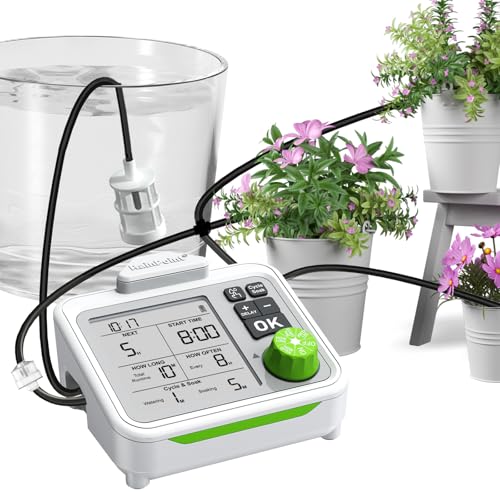
RAINPOINT provides an exclusive Cycle & Soak setting to maximize soil saturation while conserving water. The system is highly programmable, with watering frequencies ranging from every 8 hours to once every 30 days and durations from 20 seconds to 20 minutes. In addition, manual and delay watering options help adapt schedules to rainy days or drought conditions. This versatility makes it suitable for a range of tomato varieties and container setups.
MQFORU 2 Packs Raised Garden Bed Planter With Trellis

The MQFORU combination planter includes stacked or separate configurations with a built-in self-watering system. The water reservoir and siphon-based watering help maintain consistent soil moisture for tomatoes while allowing height adjustments to accommodate growth stages. The PP material is designed to resist weathering, supporting indoor and outdoor use across seasons with durable performance.
Buying Guide: Key Considerations for Choosing a Tomato Watering System
- Watering method: Choose between bottom-watering reservoirs, cycle-and-soak drip systems, or self-watering planters based on your setup and how much time you want to dedicate to irrigation.
- Capacity and cycle duration: Larger reservoirs reduce refills but may require more frequent maintenance checks. Look for adjustable cycles to match tomato growth stages and climate.
- Mobility and placement: If you have variable sun exposure or limited space, select systems with wheels or modular components to reposition plants easily.
- Soil moisture control: Systems with water level indicators or gauges help prevent overwatering and promote healthy root development, especially in containers.
- Materials and durability: For outdoor use, prioritize UV-resistant, weatherproof materials that resist corrosion and keep soil from leaching chemicals into plants.
- Expandability: If you plan to grow multiple varieties, choose modular trellis designs and stackable beds that can be expanded without replacing existing setups.
- Maintenance: Consider ease of cleaning, accessibility of reservoir ports, and whether a product’s parts are readily available in case of replacement needs.
- Indoor vs. outdoor suitability: Some systems are better suited for greenhouses or grow tents due to humidity control; others excel in patios and yards.
Each option above offers distinct strengths for tomato care, from simple self-watering pots to expansive trellis plans with built-in irrigation. When selecting, align the system with your space, climate, plant variety, and how hands-on you want to be with watering. By prioritizing reliable moisture management and easy integration into your garden layout, you can support healthier plants and more abundant harvests.