Looking to add greenery without sacrificing square footage? A vertical garden with irrigation simplifies soil, water, and space management. This guide highlights five top Amazon picks that efficiently deliver water to plants while saving your time. Perfect for urban balconies, patios, or kitchens, these systems support herbs, vegetables, and flowers. Choose the setup that fits your space, budget, and plant goals. The buyer-friendly notes below help you compare best for, better for, and avoid this if scenarios.
| Product | ||
|---|---|---|
| Self Watering Planters with Timer and Rain Sensor, 36-Pocket Wall Mounted Vertical Garden System | Busy households, frequent travelers | Smart timer with rain sensor; 36 planting pockets |
| 50FT Drip Irrigation System for Starter | Customizable small-to-medium gardens | Hybrid mist and drip with 3 emitter types |
| 2-Ft x 3-Ft Outdoor Vertical Garden Planter with Built-in Drip Line | Food-growing on patios or balconies | Built-in drip line; modular expansion |
| Toolven Hanging Vertical Wall Planter, 18 Pack | Affordable, lightweight vertical display | Top-watering system; wall-mounted support |
| CENCESON 36 Pockets Living Wall Planter Indoor Outdoor | Self-watering, easy maintenance | Independent water storage; 36 pockets |
The following five products are selected for their clear irrigation features, space-saving designs, and suitability for indoor or outdoor setups. Each entry explains who it’s best for, why it stands out, and a practical caveat to consider before purchasing.
Self Watering Planters With Timer And Rain Sensor
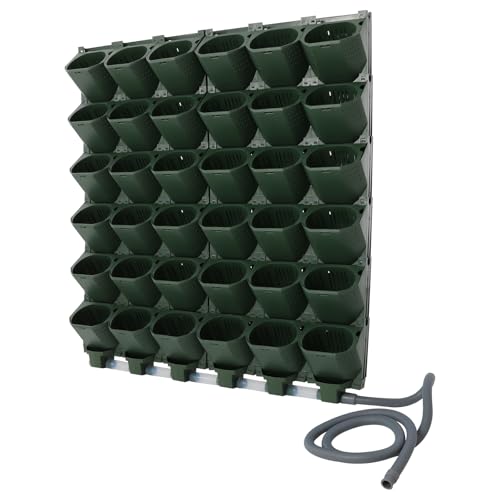
The NEATOOM system is designed for a wall-mounted vertical garden with 36 planting pockets. It includes a timer and a rain sensor to automatically pause irrigation on rainy days, avoiding overwatering. Best for busy urban homes, rental apartments, or offices where frequent watering isn’t feasible. Users can customize watering intervals from 1 hour to 30 days and durations from 1 second to 999 minutes. The 9.84-foot irrigation hose and 6.56-foot drainage pipe support a flexible installation on balconies, kitchens, or patios. A potential limitation is the need for a reliable water source and space to mount the frame securely. Use this when you want a high-pocket capacity with automated watering for a semi-permanent wall installation.
Who it’s best for: Pet owners, travelers, or busy households wanting a lush green wall without daily watering chores.
Why chosen: High pocket count with automation that protects plant health during extended absences; adjustable drip output enhances growth across different plant types.
Stackable Vertical Planter Tower, 4 Tier

The Stackable Vertical Planter Tower from Smart Spring features four tiers with 16 plant sites, crafted for tight spaces. It’s designed with a center hole for optional irrigation piping, enabling a compact, customizable irrigation setup. Best for compact urban gardens, small balcony corners, and beginner growers who want an easy, scalable vertical system. A caveat is that the center-hole option requires additional components for dripping or misting if you want automated irrigation. Choose this if you want a modular, expandable tower for herbs and small vegetables in a tiny footprint.
Who it’s best for: Urban gardeners seeking a scalable, space-saving design for herbs and fruiting plants.
Why chosen: Simple expansion potential and built-in irrigation compatibility appeal to DIY irrigation enthusiasts and growers who value structure and airflow for better yields.
50Ft Drip Irrigation System For Starter

This PESIODU kit blends drip and misting technologies for versatile irrigation. It includes 50 feet of tubing, a 1/4-inch quick-connect system, and three emitter types: vortex drip emitters for deep watering, stream emitters for steady flow, and bendable misting nozzles for gentle humidity. Best for beginners who want to design a hybrid irrigation scheme across vegetable rows, potted herbs, and flowering beds. A limitation is that the multi-emitter setup may require careful planning to avoid overwatering in very small planters. Choose this when you need flexible, multi-mode watering in a single kit.
Who it’s best for: Home gardeners who want a customizable, hybrid irrigation solution for different plant needs.
Why chosen: The three emitter types cover a wide range of plant watering profiles, enabling precise control over root hydration and foliage moisture.
2-Ft x 3-Ft Outdoor Vertical Garden Planter

The Varden Vertical Gardens unit is a two-by-three-foot outdoor system designed for food growth on patios or balconies. It emphasizes expandability and easy installation, with a built-in drip line to streamline irrigation. Best for urban growers who want to grow leafy greens, strawberries, and small herbs without sacrificing space. A potential limitation is that the kit’s modular nature may require additional components to reach larger configurations. Choose this if you want a durable, expandable frame that supports edible crops with a straightforward drip line.
Who it’s best for: Balcony or patio gardeners focusing on herbs and small vegetables with a simple setup.
Why chosen: The built-in drip line simplifies initial setup and ongoing irrigation for a compact food-growing system.
CENCESON 36 Pockets Living Wall Planter

The CENCESON system provides 36 pockets in a living wall configuration with self-watering capabilities. Each pocket holds about 300 ml of water, reducing daily watering frequency. It’s designed for both indoor and outdoor use and features independent water storage with a lightweight, durable PP material. Best for gardeners who want a low-maintenance wall display and consistent moisture for a broad palette of plants. A limitation is the larger overall footprint on the wall; ensure you have adequate mounting support. Choose this if you prefer a self-watering, wall-mounted planter with broad plant compatibility.
Who it’s best for: Homeowners seeking a self-watering wall system that’s easy to maintain and visually impactful.
Why chosen: Self-watering pockets reduce watering frequency while supporting diverse plant types, from herbs to ornamentals.
Buying Guide: Key Considerations For Your Vertical Irrigation Garden
- Space and placement: Do you want indoors, on a balcony, or in a yard? Wall-mounted systems save floor space, while freestanding towers offer flexible relocation.
- Irrigation style: Choose between drip-only, misting, or hybrid systems. Drip is water-efficient for soil-based plants, while misting favors leafy greens in dry environments.
- Water source and connection: Ensure you have a convenient water source and check hose length, pressure requirements, and installation ease for your chosen kit.
- Plant types: Herbs and leafy greens prefer reliable moisture; tomatoes or strawberries benefit from robust irrigation and airflow in vertical layouts.
- Maintenance: Self-watering pockets reduce daily care but require periodic checks for clogs and reservoir levels. Modular kits improve expandability but may require more components.
- Material and durability: Look for weather-resistant plastics or stainless steel for outdoor use; indoor options should be sturdy yet lightweight for mounting.
Frequently Asked Questions
- What size should my vertical irrigation system be for a small balcony? A compact 2×3-foot system often fits well on a typical balcony, with a built-in drip line for simplicity.
- Is a timer essential for vertical gardens? Timers help automate watering, especially for travelers or busy households, reducing plant stress from missed waterings.
- Can I mix plant types in one vertical system? Yes, but group plants with similar water needs to minimize overwatering or underwatering in mixed pockets.
- Do these systems require professional installation? Most kits are designed for DIY installation, though some larger setups may benefit from basic plumbing or mounting assistance.
- Are self-watering pockets safe for edible plants? Self-watering designs are suitable for herbs and vegetables, provided the reservoir is kept clean and refilled regularly.
- What maintenance should I expect? Check for clogged emitters, replace worn hoses, and periodically inspect seals to prevent leaks and ensure even irrigation.