Three-way soil meters combine moisture, light, and pH readings to help you optimize watering, fertilization, and sun exposure for healthier plants. This guide reviews five top options, highlighting each tool’s core strengths, how it reads soil and what garden scenarios they suit best. Whether you care for a home balcony garden or a large outdoor plot, these meters aim to simplify soil health monitoring and support data-driven plant care.
Summary Table of Selected Products
| Product | Brand | Key Capabilities | Notes |
|---|---|---|---|
| VIVOSUN Soil Tester, 3-in-1 | VIVOSUN | Moisture, Light, pH | Compact 10.8-inch design; switch modes with a button |
| SONKIR Soil pH Meter, MS02 3-in-1 | SONKIR | Moisture, Light, pH | No battery required; simple three-function mode |
| 2 Packs Soil Moisture Meter, 3 in 1 | Rngeo | Moisture, Light, pH | Two-color set; no batteries; compact for multiple beds |
| Maxsolve 2 Pack Soil Tester | Maxsolve | Moisture, Light, pH | No batteries required; 3-in-1 versatile kit |
| Dr.meter Plant Moisture Meter | Dr.meter | Moisture, Light, pH | Two probes plus light sensor; no battery needed |
This article evaluates five popular three-way meters, focusing on usability, measurement range, and durability to help you choose the right tool for indoor, outdoor, or mixed environments.
VIVOSUN 3-in-1 Soil Tester

The VIVOSUN model combines soil moisture, light, and pH measurements in a compact 10.8-inch design. Users switch modes with a single button, enabling quick checks for watering needs, sun exposure, and soil acidity. The moisture reading spans 1-10 (from dry to moist), while light is measured 0-2000, and pH covers 3.5-8. This balance makes it suitable for a range of plants—from vegetables to ornamentals—both indoors and outdoors.
Property highlights include portability, straightforward operation, and a simple readout that minimizes guesswork in garden planning. Its integrated design reduces the number of tools needed for routine garden maintenance, making it a practical option for hobbyists and casual gardeners alike.
SONKIR 3-in-1 Soil Tester MS02

SONKIR’s MS02 offers a three-function approach within a single meter that reads soil moisture, pH, and sunlight level. The device emphasizes battery-free operation; it doesn’t require any power source, and readings appear on a readout panel after inserting the probe into soil. A key note is that it’s designed for soil tests only and may require watering prior to testing when the soil is overly dry to obtain accurate readings. This model is well-suited for gardeners who prefer a low-maintenance tool.
Rngeo 2 Pack 3-in-1 Soil Moisture Meter

Rngeo’s kit provides two meters in one purchase, each measuring soil moisture, light, and pH. A practical feature is the dual-color design—black and green—to differentiate zones or beds. The 10.8-inch probes fit into most garden soils, and the lack of batteries simplifies maintenance. It’s a space-efficient choice for gardeners managing multiple garden beds or potted plants across terraces, balconies, or yards.
Maxsolve 2 Pack Soil Tester

Maxsolve emphasizes a simple plug-and-play design with three measurement capabilities: soil moisture, light, and pH. The kit targets indoor and outdoor gardening, highlighting its usefulness for delicate plants that require precise water, light, and pH management. Notably, it specifies that it is not intended for water testing. The two-pack option supports monitoring different beds or areas without swapping meters between tasks, and no batteries are required for operation.
Dr.meter Plant Moisture Meter
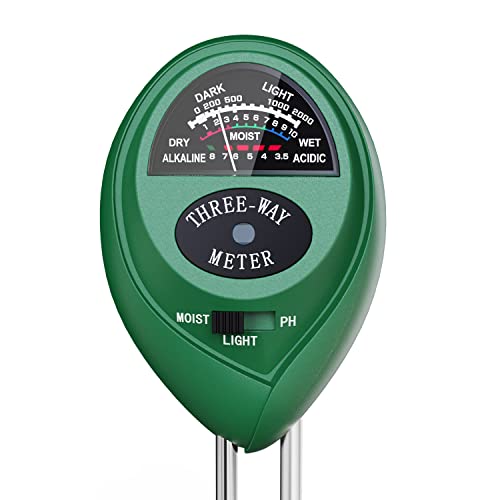
Dr.meter’s model combines three readings—moisture, pH, and light—via two probes and a light sensor. It is designed for quick, accurate readings with calibration options to improve precision. A notable advantage is its battery-free design, relying on the soil and the instrument’s own circuitry for operation. This meter is well-suited for gardeners who value immediate feedback during planting, potting, or transplating activities and want to minimize maintenance.
Buying Guide
When selecting a three-way soil meter, consider how you garden, the size of your planting area, and the level of precision you need. Here are critical factors to evaluate:
- Measurement trio and accuracy: Confirm the three functions (moisture, light, pH) align with your crops. Look for meters that provide a clear scale or digital readout and reliable calibration recommendations.
- Soil compatibility: Some meters perform best in loamy soils, while others handle sandy or clay soils with equal effectiveness. If you cultivate a variety of plants, choose a model with broader pH and moisture ranges.
- Power source: Battery-free designs reduce maintenance but may rely on time for readings to stabilize. Batteries add flexibility, especially for digital displays and backlit screens.
- Durability and use case: For outdoor use, select meters with robust probes and weather-resistant housings. Indoor setups can benefit from compact, lightweight designs that fit into pots or small beds.
- Ease of use and reading comfort: A rotating dial, clear digital readout, or backlit screen improves readability in bright sun or low-light conditions. Consider whether you need a stand or single-hand operation.
- Multi-pack value: If you manage several garden beds, a two-pack or twin meters can be cost-effective and allow simultaneous measurements across zones without swapping devices.
- Maintenance and longevity: Tools without moving parts or batteries may offer longer lifespans in routine garden environments. Clean probes after use to maintain accuracy.
Usage scenarios and recommendations:
- Container gardens: A compact 10.8-inch meter works well for pots, allowing quick checks before watering or moving plants to sunnier spots.
- Edible garden beds: Accurate pH and moisture readings support soil amendments and watering schedules for vegetables and herbs.
- Ornamental plant care: Readings for light help place sun-loving vs. shade-tolerant species appropriately throughout the landscape.
In sum, three-way soil meters offer practical guidance for routine soil monitoring. The best choice depends on whether you prioritize battery-free simplicity, the number of meters you need, or the breadth of measurement capabilities for diverse plant types. Use these tools as part of a broader soil-health routine that includes periodic soil tests, mindful watering, and appropriate fertilization to sustain plant vitality.