If you want a quick, effective way to remove thatch and rejuvenate large lawns, a tow-behind dethatcher is the right tool. These attachments connect to riding tractors or ATVs and cover wide swaths with spring steel tines. They’re best for homeowners with expansive turf, professional landscapers, or anyone who needs faster dethatching across big properties. The top picks below balance durability, coverage width, and ease of use to help you choose the right model for your mower and yard conditions.
Summary table of selected products:
| Product | Key Benefit | Width | Best For |
|---|---|---|---|
| BlumeTrec 40 Inch Tow Behind Dethatcher | Balanced durability with 20 tines and easy mounting | 40 in | Medium-to-large yards; simple setup |
| BlumeTrec 48 Inch Tow Behind Dethatcher | Wider coverage; robust 24 tines for faster work | 48 in | Large lawns; quick dethatching across big areas |
| YITAMOTOR 40 Inch Tow Behind Dethatcher | Commercial-grade frame; high ballast capacity | 40 in | Large properties; deeper thatch removal with ballast |
| AugFir 48-Inch Tow Behind Dethatcher | Two-height adjustment; high-capacity ballast tray | 48 in | Big lawns; easy height control for varied soil |
| Agri-Fab 45-0295 48in Tow Behind Dethatcher | U.S.-made, 24 tines; reliable performance | 48 in | Traditional, steady dethatching with reputable build |
BlumeTrec 40 Inch Tow Behind Dethatcher

Best for mid-size properties where speed matters. The 40-inch working width and 20 spring tines deliver efficient thatch removal, with a heavy-duty carbon steel frame for durability. A 100 lb ballast tray supports deeper tine penetration when needed. Best for homeowners with riding mowers or ATVs looking for a straightforward dethatching solution. Caution: Regularly clean soil residue after use to prevent tine binding and ensure longevity.
BlumeTrec 48 Inch Tow Behind Dethatcher
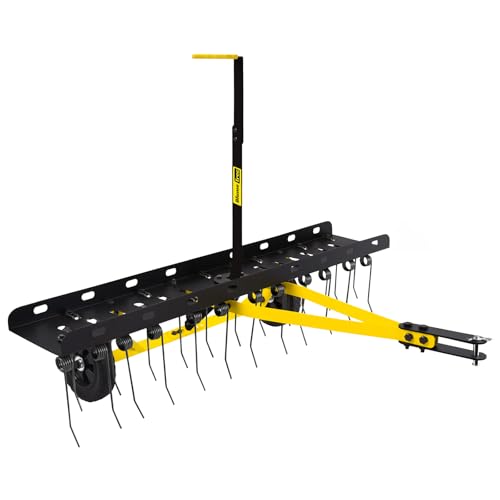
This model broadens coverage to 48 inches with 24 heat-treated tines for efficient thatch lifting. The wider width reduces passes, saving time on large lawns. It uses a universal pin-style hitch for easy attachment to riding mowers, tractors, ATVs, or UTVs, and its 100 lb ballast tray supports deeper dethatching. Best for owners who want faster results on expansive lawns. Caution: Ensure you don’t exceed tractor lift capacity when using the ballast tray on uneven terrain.
YITAMOTOR 40 Inch Tow Behind Dethatcher

Best for heavy-duty use on larger properties. It features 20 steel tines, a 40-inch working width, and a reinforced steel frame with a 70 lb ballast tray for deeper soil penetration. A simple lift handle enables quick height changes between dethatching and transport. Choose this if you need strong, reliable performance and a straightforward height setup. Limitation: Tines are replaceable but wear over time under rough debris; inspect after seasons of use.
AugFir 48-Inch Tow Behind Dethatcher

Best for large yards that require efficient coverage and adaptable tine depth. The 48-inch working width reduces passes, and the dual-height adjustment helps tailor performance to soil conditions. A heavy-duty carbon steel frame and a high-capacity 150 lb ballast tray provide deeper dethatching. Best for owners who want precise height control and the ability to tailor ballast for different lawns. Potential limitation: Taller ballast may reduce maneuverability on tight turns.
Agri-Fab 45-0295 48in Tow Behind Dethatcher
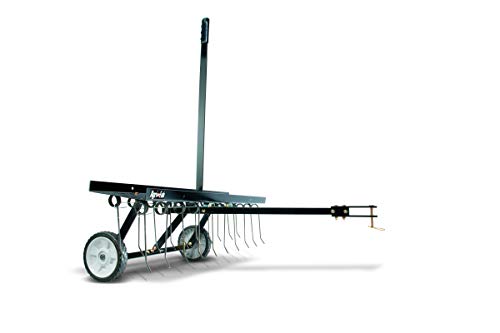
Best for traditional dethatching with a reputable build. This 48-inch model uses 24 durable spring tines to uproot dead, matted grass and loosen soil. It’s made in the USA and designed to pull behind lawn and garden tractors, offering reliable, consistent performance for routine lawn care. Caution: Ensure proper hitch compatibility to avoid mounting issues with some tractor setups.
Buying Guide
What to consider when choosing a tow-behind dethatcher
- Working width: Wider models cover more ground per pass but require a tractor capable of handling the ballast and steering. For very large lawns, 48 inches is efficient; for mid-size yards, 40 inches can be sufficient.
- Tine design and count: More tines can remove thatch more aggressively. Look for heat-treated, rust-resistant springs for longevity and replaceability if you encounter wear.
- Ballast capacity: Heavier ballast aids deeper dethatching but adds weight. Match ballast to your tractor’s lift capacity and soil conditions to avoid stress on the hitch or turf.
- Attachment system: A universal pin-style hitch is common and easy to swap between mowers, tractors, ATVs, and UTVs. Confirm compatibility with your equipment’s hitch type.
- Height and depth adjustments: Height control enables you to avoid scalping on uneven ground and to switch between dethatching and transport modes quickly.
- Durability and warranty indicators: Look for a heavy-duty carbon steel frame, rust-proof tines, and evidence of durable bearings. A ballast tray is helpful for deeper penetration in compacted soil.
- Maintenance needs: Clean residue after use and inspect tines for wear. Replacing tines as needed extends tool life and performance.
FAQ
- Q: What size dethatcher should I choose for my yard? A: For large yards, 48 inches is typically more efficient; for smaller lawns, 40 inches provides sufficient coverage with easier handling.
- Q: Do these attach to all tractors? A: Most use a universal pin-style hitch or a standard Category 1 3-point hitch. Always verify compatibility with your specific tractor, mower, or ATV prior to purchase.
- Q: Can I use these on a lawn with rocks or roots? A: Yes, but inspect the tines for wear and protect the turf by raising the tines when crossing obstacles; use ballast strategically to penetrate soil without excessive resistance.
- Q: How often should I dethatch? A: Dethatching is typically done in spring or fall when the lawn needs air and nutrients to reach the roots. Avoid dethatching during extreme heat or drought conditions.
- Q: Are ballast trays necessary? A: Ballast trays help deepen tine penetration for tougher thatch. They’re beneficial on compacted soil but ensure your mower and hitch can safely handle the extra weight.
- Q: Do these require special maintenance? A: Clean after use, inspect tines for wear, and replace any damaged parts. Lubricate bearings if applicable and store on level ground to prevent rust.