Gardening outdoors or tending houseplants often means protecting greenery from insects without compromising safety. The following five plant-focused bug sprays are designed to deter pests while staying gentle enough for homes with children and pets when used as directed. Each option relies on plant-based ingredients or essential oils to minimize residue and harm to beneficial insects when used properly. Read on to compare features, usage, and suitability for different plants and environments.
| Product | Brand | Key Benefit | Format |
|---|---|---|---|
| Mighty Mint Peppermint Plant Protection Spray | Mighty Mint | Plant-based protection against insects, mites, and disease | 16 oz |
| Earth’s Ally Insect Control for Plants Ready-to-Use | Earth’s Ally | Organic-friendly insect control with rosemary, clove, peppermint oils | 24 oz |
| STEM Plant-Based Bug Spray | STEM | Botanical formula for indoor and outdoor use | 12 fl oz |
| Mighty Mint Peppermint Oil Insect Repellent Spray | Mighty Mint | Extra-concentrated peppermint oil for deterrence | 16 oz |
| Mighty Mint Peppermint Plant Protection Spray (32 oz) | Mighty Mint | Large-volume spray for extended coverage | 32 oz |
Mighty Mint Peppermint Plant Protection Spray

Mighty Mint Peppermint Plant Protection Spray combines plant-based ingredients to deter a range of pests while supporting plant health. The formula emphasizes ease of use with straightforward application and cleanup. It’s designed to be safe around people and pets when used as directed, making it suitable for home gardens and potted indoor plants. The peppermint-based actives provide a natural barrier against insects, gnats, and some fungal concerns, helping plants maintain vigor without harsh chemicals.
Earth’s Ally Insect Control for Plants Ready-to-Use

Earth’s Ally Insect Control for Plants Ready-to-Use provides a botanical-based approach to pest management. It targets soft-bodied insects such as spider mites, aphids, whiteflies, and mealybugs while offering the option to spray up to harvest time on herbs and vegetables. The product is OMRI Listed for organic gardening, helping maintain an eco-conscious garden. Its blend includes rosemary, clove, and peppermint oils, delivering knockdown and repellency with a focus on minimizing residue and environmental impact.
STEM Kills Ants, Roaches And Flies

STEM’s plant-based bug spray is designed for indoor and outdoor use, offering quick knockdown of common pests such as ants, roaches, and flies. It emphasizes a safe profile for households when used as directed and features botanical extracts that appeal to those seeking a fragrance-free or mild-scent solution. The product is tested by entomologists to ensure effectiveness against target pests while maintaining a clean, non-staining finish on plant surfaces and household furnishings.
Mighty Mint Peppermint Oil Insect Repellent Spray
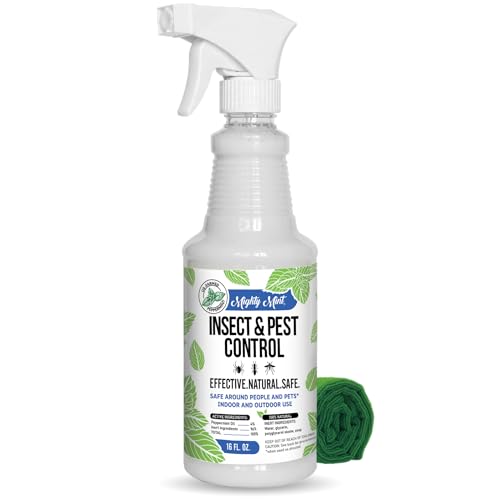
This Mighty Mint formula centers on concentrated peppermint oil to deter spiders, ants, roaches, and other insects in indoor and outdoor settings. The product is positioned as pet-friendly and family-safe when used as directed, focusing on a natural pest-control approach that reduces chemical odor and residue. It’s versatile for baseboards, entryways, patios, and other common pest entry points around homes or garden spaces.
Mighty Mint 32 oz Peppermint Plant Protection Spray

This larger 32 oz Mighty Mint Peppermint Plant Protection Spray extends coverage and ongoing protection for gardens and larger plant collections. It emphasizes easy application and cleanup, with plant-based ingredients designed to be safe around people and pets when used as directed. The extra strength peppermint formula aims to provide robust deterrence against spiders, insects, gnats, and related issues, supporting healthier plant growth across bigger growing spaces.
Buying Guide
Key purchase considerations help you choose the right safe bug spray for plants:
- Ingredients and safety: Look for plant-based actives (peppermint oil, rosemary oil, clove oil) and verify that the product is clearly labeled for safe use around people and pets if applicable.
- Target pests: Identify the pests you encounter (ants, aphids, spider mites, mealybugs, fungi) and confirm the product’s efficacy against those species.
- Indoor vs outdoor use: Some formulas are optimized for indoor environments with minimal odor, while others are designed to withstand outdoor conditions and broader spray coverage.
- Harvest and plant compatibility: If you grow edibles, prefer products labeled safe to spray up to harvest or suitable for vegetables and herbs as directed.
- Residue and staining: Choose oils or extracts that dry clear and leave minimal residue on leaves and stems; test on a small area if unsure.
- Application frequency: Review how often treatments are recommended; larger volumes reduce reapplication while maintaining protection.
- Environmental impact: Favor OMRI-listed or organic-compliant products if you aim for organic gardening, and consider the product’s effect on beneficial insects.
- Ease of use: Consider spray containers, coverage efficiency, and whether the bottle design supports even distribution on dense foliage or large plant collections.
- Safety precautions: Always follow directions, keep away from children and pets when advised, and avoid spraying during extreme heat or flowering periods for certain crops.
- Cost and volume: Compare price per ounce to determine long-term value, especially for larger gardens or frequent treatments.
In practice, selecting a safe bug spray for plants involves balancing pest control with plant health, human safety, and environmental considerations. For homes with pets or children, prioritize products explicitly marketed as pet-friendly and read labels for any restrictions. If pest pressure is high, a combination approach—integrating an oil-based spray with careful cultural controls and regular plant inspections—often yields the best results while preserving beneficial insects and overall plant vigor.