Choosing the right rope for tree pulling and rigging is essential for safety and efficiency. This guide reviews five top-rated arbors and rigging ropes designed to handle demanding outdoor work, from tree felling to swing setups. Each option features strong materials, various diameters, and robust abrasion resistance to help you select the best fit for your projects.
| Product | Brand | Diameter | Length | Breaking Strength |
|---|---|---|---|---|
| TINVHY 3/4″ x 200 ft | TINVHY | 3/4 inch | 200 ft | 20,000 lbs |
| Glfcai 3/4″ x 150 ft | Glfcai | 3/4 inch | 150 ft | 20,000 lbs |
| HOKINETY 3/4″ x 120 ft | HOKINETY | 3/4 inch | 120 ft | 8,200 lbs |
| Quintropel 1/2″ x 150 ft | Quintropel | 1/2 inch | 150 ft | 10,700 lbs (static) |
| JANJOSN 1/2″ x 100 ft | JANJOSN | 1/2 inch | 100 ft | Noted high tensile strength |
TINVHY 3/4″ x 200 ft Double Braid Polyester Rope

The TINVHY rope combines high-tenacity polyester with a 3/4-inch diameter and 200-foot length for demanding tree work. With a tensile strength of 20,000 lbs., this double-braid rope delivers durable performance for rigging, pulling, and handling heavy loads. The smooth surface minimizes friction and burrs, reducing wear on hands and clothing. It is easily cut to size and knots securely, making it suitable for a variety of rigging tasks in forestry and outdoor projects.
Glfcai Climbing Rope 3/4 in x 150 ft

Glfcai offers a 3/4-inch static rope with a 20,000-pound tensile strength, well-suited for arborist work, tree felling, and rigging. At 150 feet, it provides ample reach for challenging jobs. The rope’s anti-slip design enhances grip and stability during climbs or pulls, while its robust polyester construction resists wear from moisture and UV exposure. This versatile rope can handle a range of outdoor applications beyond tree work.
HOKINETY Double Braided Arborist Rope 3/4″ x 120 ft
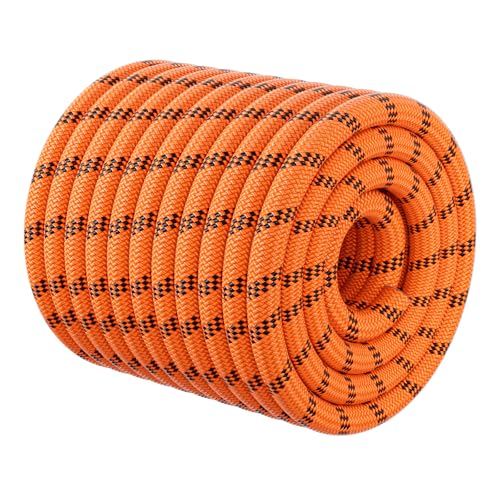
This orange, 3/4-inch double-braided rope offers a solid 8,200-pound breaking strength across 120 feet. Its 24-strand outer braid and 8-strand inner core deliver excellent abrasion resistance and flexibility, supporting safe handling in outdoor settings. The construction emphasizes durability, resistance to moisture and UV rays, and reliable knot security for rigging, tree pulling, and camping or hiking uses where rugged gear is essential.
Quintropel Arborist Rigging Rope Red 1/2″ x 150 ft

Quintropel’s 1/2-inch static rope is designed for climbing, tree pulling, and rigging with a static tensile strength of at least 10,700 pounds and a safe working load around 800 pounds. The rope resists moisture, UV exposure, chemicals, and aging, ensuring long-term performance in harsh outdoor conditions. Its reliable grip and stiffness provide stability during climbs, felling, and rope-assisted operations, making it a solid choice for professional arborists and enthusiasts alike.
JANJOSN 1/2″ x 100 ft Arborist Rope

JANJOSN’s 1/2-inch, 100-foot rope is tailored for tree pulling and rigging, offering 48 strands of double-braided polyester. This construction combines a balance of high tensile strength with manageable flexibility for pulleys and rigging setups. The rope is designed for outdoor use and is UV-resistant, helping it withstand prolonged exposure and maintain performance for demanding arborist tasks and related outdoor operations.
Buying Guide
Key considerations help ensure you choose the right rope for tree work, safety, and long-term value. Below are several perspectives to inform your decision:
- Diameter and strength: Wider diameters (1/2″ to 3/4″) typically offer higher tensile strength and load-bearing capacity, useful for heavy rigging but may be harder to handle in tight spaces. Choose based on the maximum load you expect and the rigging systems you use.
- Rope construction: Double braided, braided, or static ropes have different handling characteristics and resistance to abrasion. Double-braided lines tend to be highly durable and comfortable to grip, while static ropes minimize stretch for controlled pulls.
- Material durability: Polyester blends resist moisture, UV light, and chemicals, extending rope life outdoors. Nylon can offer greater elasticity but may stretch more under load; consider your application and environment.
- Length versus maneuverability: Longer ropes provide reach for distant limbs and larger trees, but they can be cumbersome. Balance length with your typical working area and pulleys or winches you employ.
- Safety and standards: Look for ropes designed for arborist tasks with adequate breaking strength and safe working loads. Ensure compatibility with your rigging hardware and knots.
- Maintenance: Clean ropes after use, inspect for frays or damage, and retire any rope showing significant wear. Proper storage away from direct sunlight helps extend life.
- Application variety: Some ropes excel in multiple roles, including tree pulling, rigging, swinging, and climbing. Consider whether you need a universal rope or specialized lines for specific tasks.
- Cost versus value: While higher-priced ropes may offer longer lifespans and better performance, ensure your selection aligns with the scope of your projects and frequency of use.