Choosing the right geogrid and reinforcement mesh can significantly improve the durability of retaining walls, driveways, and sloped landscapes. This guide highlights five highly relevant options designed to reinforce soil, distribute loads, and prevent movement. Each product features materials suited for heavy-duty applications, easy installation, and long-term performance. Read on to compare construction-grade reinforcement grids and how they serve different project needs.
| Product | Material | Size | Key Benefit |
|---|---|---|---|
| 3ft x 65ft Retaining Wall Geogrid Roll | Polypropylene | 3′ W x 65′ L | Bi-directional reinforcement for diverse ground and wall projects |
| Universal Retaining Wall Geogrid Roll 4′ x 98′ | Fiberglass Geogrid | 4′ x 98′ | High tensile strength for walls up to 6 feet |
| 3ft x 164ft Bi-Directional Geogrid | Polypropylene | 3′ x 164′ | Extends coverage for large slope and terrace projects |
| 4ft x 50ft Fiberglass Geogrid | Fiberglass | 4′ x 50′ | High strength and efficient installation for walls up to 6 ft |
| Bi-Directional Universal Geogrid 33′ L | Fiberglass Geogrid | 33′ L x 3′ W | 30 KN tensile strength for roadbed and soil reinforcement |
3ft x 65ft Retaining Wall Geogrid Roll

The 3′ W by 65′ L geogrid is designed to provide stable reinforcement in both directions. Made from polypropylene, it offers deformation resistance and chemical resistance, ensuring long-term performance for garden paths, decks, parking lots, driveways, and similar applications. Its 1.5-inch mesh supports adequate soil interlock, while the roll-up design facilitates transport and rapid installation, saving time and labor costs on large projects.
Universal Retaining Wall Geogrid Roll 4′ x 98′

This fiberglass geogrid provides a strong foundation for roads and walls, with a 4′ x 98′ coverage. It features a Tensile strength of 50 KN and superior resistance to heat and corrosion. The bi-directional grid improves load distribution, reduces settlement, and enhances bearing capacity for durable, long-lasting infrastructure. Its toughness in both longitudinal and transverse directions helps prevent ground collapse and cracking, maintaining neat, capable surfaces over time.
3ft x 164ft Bi-Directional Universal Retaining Wall Geogrid

This roll measures 3′ x 164′, designed for slopes and flat land alike. It uses bidirectional polypropylene to deliver durable reinforcement, with clear guidance on stretching limitations to avoid damage. The grid features a compact 0.82 inch (2.1 cm) side length, optimizing installation efficiency in terraces, parking lots, and landscaping projects while supporting easy adaptation to irregular grounds.
4ft x 50ft Fiberglass Geogrid
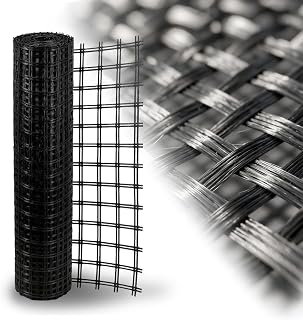
This fiberglass geogrid offers a 30kN tensile strength with a 0.8 inch mesh, providing strong soil interlock and resistance to movement. The 4′ x 50′ material minimizes seams and speeds up installation, making it suitable for retaining walls up to 6 feet, driveways, and erosion control projects. It combines durability with practical coverage to streamline landscape reinforcement tasks.
Bi-Directional Universal Retaining Wall Geogrid 33′ L

This bi-directional fiberglass geogrid is 33′ long with a 3′ width, offering a 30 KN tensile strength. It reinforces retaining walls by distributing loads more evenly and suppressing soil settlement. The fiberglass composition provides high tensile strength, corrosion, and temperature resistance. It can be cut to size for flexible installation and tailored reinforcement across varied soil conditions.
Buying Guide: Key Purchase Considerations
- Material type: Polypropylene geogrids are versatile for soil reinforcement and light to moderate walls, while fiberglass grids offer higher tensile strength for heavier or taller structures. Consider exposure to moisture, chemicals, and temperature fluctuations when selecting materials.
- Tensile strength and load distribution: Higher tensile strength improves load-bearing capacity and reduces settlement. Check whether the grid’s longitudinal and transverse strength meets your project requirements.
- Grid size and mesh: Smaller mesh sizes provide better soil interlock, but may require more careful handling. Larger grids cover more area per roll but may require additional cuts for fitment.
- Roll length and width: For large slopes or terraces, longer rolls reduce seam points and speed up installation. Ensure the roll dimensions fit your site measurements and storage capabilities.
- Installation considerations: Some grids require heating for stretch, while others are designed for straightforward laying and anchoring. Verify handling guidelines to avoid damage during deployment.
- Durability and environmental resistance: Look for resistance to deformation, oxidation, aging, and temperature extremes to ensure long-term performance in outdoor settings.
- Compatibility with excavation and base materials: Ensure the grid type complements the underlying soil, base aggregates, and backfill used in your project to optimize bearing capacity.
- Cost-to-performance balance: Compare installation time, labor costs, and anticipated longevity to determine the most economical option for your project scale.