If you maintain a home lawn, a push lawn fertilizer spreader can save time and improve evenness when applying seed, fertilizer, salt, or ice melt. This guide reviews top push spreaders, highlighting capacity, spread width, durability, and ease of use. Use the quick-reference table below to compare models at a glance and then explore detailed sections for each product.
Summary of selected products:
- Scotts Turf Builder EdgeGuard Mini Broadcast Spreader
- Scotts Turf Builder EdgeGuard DLX Broadcast Spreader
- SmarketBuy Fertilizer Spreader, 90 LBS
- Agri-Fab 45-0463 130 lb Tow-Behind Spreader
- Brinly P20-500BHDF-A Push Spreader with Side Deflector Kit
Scotts Turf Builder EdgeGuard Mini Broadcast Spreader

The Scotts EdgeGuard Mini is a compact, pre-calibrated spreader designed for small to medium lawns. Its compact footprint makes storage simple, and all-terrain use is aided by the fold-down handle. EdgeGuard technology helps keep lawn products away from landscaping, driveways, and sidewalks, reducing accidental over-application and mess. This model is ideal for homeowners who want a straightforward setup with predictable results without sacrificing portability or efficiency.
Scotts Turf Builder EdgeGuard DLX Broadcast Spreader

The EdgeGuard DLX is a larger, pre-calibrated broadcast spreader designed for bigger lawns or more frequent use. Like the Mini, it features EdgeGuard technology to minimize overspray onto landscaping and sidewalks, but it provides a wider spread and greater capacity. This option suits homeowners seeking a no-fuss solution that supports larger application ranges while maintaining precise product placement.
SmarketBuy Fertilizer Spreader, 90LBS

This large-capacity walk-behind spreader accommodates up to 90 pounds, with a 23-liter hopper for extended use between refills. It includes 12.5-inch pneumatic tires for stability on uneven lawns, plus three flow settings for adjustable spread width and pattern. The versatility makes it suitable for seeds, fertilizers, and even salt or ice-melt tasks in winter, offering year-round utility for larger yards or multi-season care.
Agri-Fab 45-0463 130 lb Tow-Behind Spreader

The 45-0463 model provides a large 130-pound hopper and a substantial 10-12 foot spread width. Designed to be towed behind a riding mower or ATV, it combines high capacity with the convenience of on-the-go operation, making it a solid option for larger properties, farms, or extensive lawn projects where frequent refills would be impractical.
Brinly P20-500BHDF-A Push Spreader

The Brinly P20-500BHDF-A provides a 50-pound capacity with a deflector kit to improve flow control and reduce spillover onto undesired areas. Its easy-to-use design prioritizes precise material delivery and simple maintenance, with large pneumatic tires for smoother operation across varied lawn terrain. This model suits homeowners needing a compact yet capable push spreader with adjustable flow control.
Agri-Fab 45-0288 175 lb Tow-Behind Spreader
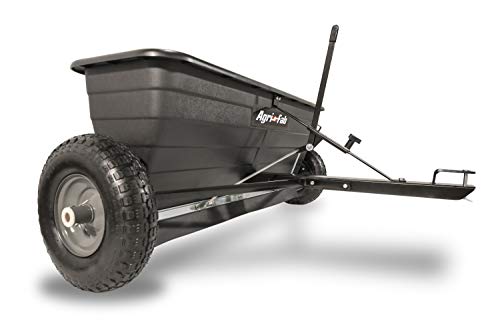
With a 175-pound hopper and around 40,000 square feet coverage, this tow-behind model is designed for large-scale applications. Its design emphasizes efficiency for tractors or riding lawn equipment, enabling extended spreading sessions with minimal downtime due to refills. It is best suited for property owners who regularly treat substantial lawns or fields.
Buying Guide
Key considerations for choosing a push spreader include capacity, spread width, compatibility with yard equipment, and control features. If you have a small lawn, a compact model like the Mini EdgeGuard may be ideal for tidy applications and easy storage. For larger lawns, DLX or high-capacity walk-behind units reduce the number of refills and speed up tasks without sacrificing precision. Tow-behind options are best when paired with riding or lawn tractors and prioritize high capacity and wide coverage.
Spread width and flow control are essential. Models with adjustable flow settings or multiple pattern options enable more precise distribution on uneven ground. EdgeGuard technology can help prevent product from landing on landscaping, driveways, or sidewalks, reducing waste and cleanup. Durability is influenced by hopper materials and wheel quality; pneumatic tires offer better traction on uneven lawns, while rust-resistant hoppers extend product life in humid environments.
Maintenance considerations include calibration ease, clog resistance, and the ability to disassemble for cleaning. If you regularly apply salt or ice melt in winter, choose a spreader with robust construction and suitable hopper materials. Tow-behind units should have secure hitch compatibility and clear flow controls that can be adjusted from the tractor seat or mower. For seasonal use, a versatile model that handles seed, fertilizer, and salt expands value across the year.
Product compatibility matters. While many spreaders are marketed for lawn care products specifically, verify that your chosen model supports all intended materials, including fertilizer types, seeds, or rock salt. Storage space, assembly requirements, and weight when full can influence how often you’ll use the spreader and how easy it is to maneuver in storage areas or sheds.
In summary, select a spreader that aligns with your lawn size, preferred pulling method (push vs. tow), and seasonal needs. A model with a durable hopper, reliable flow control, and protective EdgeGuard or deflector features typically delivers the best balance of performance, maintenance, and value for American lawns.
Note: This article presents objective product features and specifications to assist informed purchasing decisions. Prices and availability may vary by retailer and time.