Looking for a reliable push lawn sweeper that makes yard cleanup quick and effortless? The right model combines a wide sweeping path, durable construction, and a large hopper to minimize trips to the trash. This guide highlights five top options and explains who each one is best for. Whether you need heavy-duty performance for large yards or a lightweight model for small lawns, you’ll find clear comparisons and practical buying tips here.
The following quick-reference table summarizes the key specs of the five selected sweepers to help you compare at a glance.
| Product | Sweeping Path | Hopper Capacity | Best For | Notable Pros |
|---|---|---|---|---|
| VEVOR 21″ Push Lawn Sweeper | 21 in | 3.5 ft³ | Smaller to mid-sized yards | Thick brushes, adjustable height |
| VEVOR 26″ Push Lawn Sweeper (4 brushes) | 26 in | 7 ft³ | Medium to large yards | Reinforced steel, large hopper |
| VEVOR 26″ Push Lawn Sweeper (12 ft³ option) | 26 in | 7 ft³ | Large debris loads | High-capacity hopper |
| Boldworks 21″ Push Lawn Sweeper | 21 in | 103 L (~3.6 ft³) | Budget-friendly, light-duty | Flexible plastic components protect lawn |
| EWORK 26″ Push Lawn Sweeper | 26 in | 3.5 ft³ | Versatile, easy brush height | Powerful 1:5 brush-to-wheel ratio |
VEVOR 21-Inch Push Lawn Sweeper
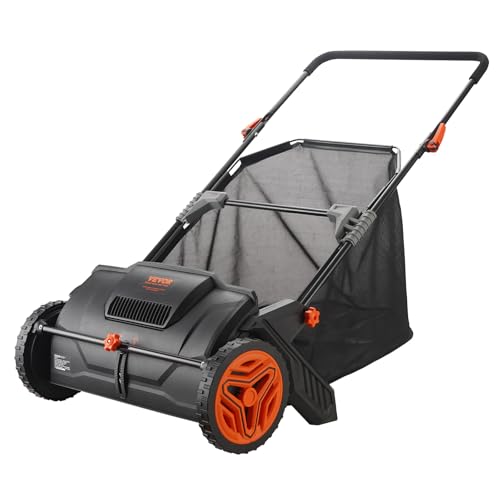
The 21-inch VEVOR model uses thickened, densified brushes designed to increase sweeping force and resist deformation. Its 3.5 ft³ non-woven hopper bag provides a large capacity, reducing dump frequency. The stepless brush height adjustment lets you tune performance across sidewalks, driveways, yards, and gardens without tools. Best for smaller to mid-sized yards where maneuverability matters. Caution: performance may vary with very wet leaves or heavy pine needles.
Why it’s a strong pick: The combination of a compact 21″ width and adjustable brushes helps ensure consistent debris pickup while maintaining control on varied terrains. The large hopper is a major time-saver for busy lawns. Ideal for homeowners who want reliable performance without a bulky machine.
VEVOR 26-Inch Push Lawn Sweeper With 7 ft³ Bag

This 26-inch sweeper emphasizes heavy-duty construction. Four brushes provide strong sweeping force to collect leaves and grass clippings in a single pass, and the reinforced steel frame helps prevent tipping when the hopper is full. The 7 ft³ bag means you can cover larger areas before dumping. Best for mid- to large-sized yards and homeowners who value durability. Caution: heavier unit may require more effort to push on steeper slopes.
Why it’s a strong pick: The 26″ width paired with a robust frame and larger bag capacity makes it a time-efficient option for bigger lawns. The extra brushes increase debris pickup efficiency, particularly on lawns with mixed leaves and grass.
VEVOR 26-Inch With 7 ft³ Hopper And Adjustable Height
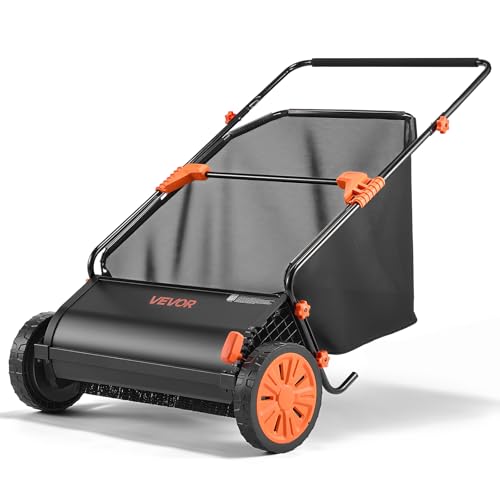
This model blends a 26-inch sweep path with a three-gear brush-height adjustment and a 7 ft³ hopper. Its V-shaped brush design helps reach into grass and reduces ground resistance, making it suitable for varied terrains including lawns, driveways, and patios. Best for homeowners who want adaptable cleaning depth and a high-efficiency brush system. Caution: be aware that wet leaves may reduce sweeping efficiency.
EWORK Push Lawn Sweeper, 26-Inch

The EWORK 26-inch sweeper emphasizes a strong 1:5 brush-to-wheel ratio with a 3.5 ft³ hopper. It features tool-free brush-height adjustment and a lightweight design to help users manage long sessions. It’s best for homeowners needing a versatile sweeper that performs well across lawns, driveways, and sidewalks. Caution: wet leaves may reduce overall efficiency; ensure dry conditions for best results.
Earthwise LSW70021 21-Inch Push Sweeper
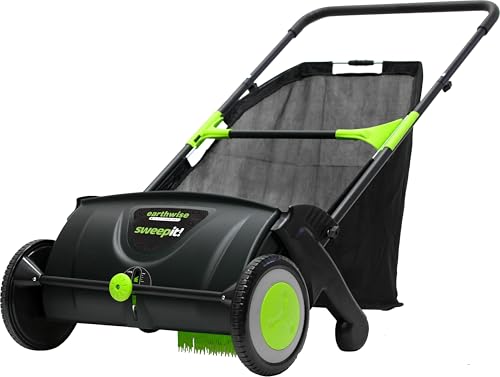
Earthwise’s 21-inch sweeper is optimized for dry leaves on maintained lawns. It requires multiple passes for optimal cleanup and performs best on short, flat grass. It’s a practical choice for routine maintenance where debris is light and the lawn is regularly mowed. Caution: performance may decline with tall grass, uneven terrain, or heavy debris such as pinecones or wet leaves.
Buying Guide
What should you consider when choosing a push lawn sweeper?
- Sweep path width: Larger widths cover more ground per pass but can be harder to maneuver in tight spaces. Choose based on yard shape and fence layout.
- Hopper capacity: Bigger bags reduce dumping frequency. For large properties, prioritize 7 ft³ or similar capacity; for small lawns, 3–4 ft³ is often sufficient.
- Brush design and height adjustability: Look for V-shaped or multiple brushes for thorough pickup and a height adjustment feature to adapt to grass height and terrain.
- Construction and durability: Steel frames offer durability; reinforced components help on uneven ground and with heavy debris. Weigh the trade-offs between weight and stability.
- Terrain compatibility: If your yard includes driveways or sidewalks, ensure the model can handle harder surfaces and includes a stable frame to prevent tipping.
- Maintenance and parts: Check for replacement brushes and hopper bags availability to reduce downtime.
- Wet leaves vs. dry leaves: Many models perform best with dry debris; rain or moisture can reduce pickup efficiency.
Frequently Asked Questions
- Q: What’s the ideal sweep path for a medium yard? A: A sweeper around 24–26 inches wide provides a good balance of coverage and control.
- Q: How important is hopper capacity? A: For larger yards, a bigger hopper reduces dump frequency and improves efficiency.
- Q: Can these sweepers handle wet leaves? A: Most perform best with dry debris; wet leaves may reduce efficiency and require more passes.
- Q: Do I need tools to adjust the brush height? A: Some models offer tool-free height adjustment; others require simple adjustments with a knob or lever.
- Q: Are these sweepers better than rakes or blowers? A: Sweepers reduce physical strain by eliminating back-and-forth raking and can cover large areas quickly, especially on flat, well-maintained lawns.
- Q: Which model is best for uneven terrain? A: Models with adjustable brushes and reinforced frames tend to perform better on uneven surfaces, but avoid heavy units on very steep slopes.