Wasps can disrupt outdoor activities, gardens, and summer gatherings. This guide highlights reliable spray options, traps, and deterrents designed to address wasps, hornets, and mud daubers. Each product below is chosen for broad effectiveness, safety features, and practical application from a distance. Read on to compare sprays, traps, and deterrents to find the best fit for your situation.
Summary of Selected Products
- Raid Wasp & Hornet Killer Spray (2-pack) — 14 oz cans, broad wasp coverage, long spray reach.
- Hot Shot Wasp And Hornet Killer Aerosol — 14 oz, up to 27-foot jet spray, non-staining option for siding.
- Raid Wasp & Hornet Killer Spray (17.5 oz) — nest-killing spray with 22-foot spray reach.
- 4-Pack Fake Wasp Nests — durable outdoor decor to deter activity by visual deception.
- RESCUE! VisiLure TrapStik For Wasps (2-pack) — non-spray lure traps to capture wasps without chemicals.
Raid Wasp & Hornet Killer Spray, 14 oz (Pack of 2)
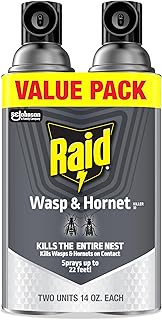
Two 14 oz spray cans are designed to kill flying stinging bugs on contact, including paper wasps, yellow jackets, mud daubers, and bald-faced hornets. The spray is electrically non-conducting up to 32,500 volts, offering a safer option when dealing with exposed nests. With a reach of up to 22 feet, it allows targeting nests from a distance to reduce risk while delivering rapid lethality.
Key features include quick-action containment and a nest-targeting capability that helps reduce wasp populations in outdoor spaces. The product is suitable for yard, porch, and garden use, providing a practical, ready-to-use solution when a nest is clearly visible and accessible from a safe spot. Proper application remains essential to maximize effectiveness and minimize risk to bystanders or pets.
Hot Shot Wasp And Hornet Killer Aerosol, 14 oz (2-pack)

This aerosol provides on-contact control of wasps, hornets, yellow jackets, and other pests, with a jet spray reaching up to 27 feet. The extended reach allows users to address nests from a safe distance, reducing exposure to stings. The product is described as non-staining on most home siding, though it’s advised to test a small area first and recheck after a few hours to ensure no staining occurs.
Designed for outdoor use around homes, decks, and sheds, this option emphasizes rapid knockdown while maintaining surface safety on typical exterior finishes. The two-pack format offers extended coverage for larger outdoor spaces or multiple nests. As with all spray products, careful aiming, wind considerations, and keeping bystanders away are important for safe operation.
Raid Wasp & Hornet Killer Spray, 17.5 oz

This nest-killer spray is designed to eradicate entire nests with quick contact action against hornets, mud daubers, wasps, and yellow jackets. The spray reaches up to 22 feet, enabling safe targeting from a distance. The product emphasizes rapid nest annihilation, helping to reduce ongoing wasp activity in outdoor areas where nests are accessible.
4 Packs of Fake Wasp Nests

Decorative deterrents that mimic real wasp nests, these are designed to reduce wasp activity by visual confusion. The package includes four fake nests with metal supports and hanging ropes. Constructed from durable materials that withstand wind and rain, these decorations are suitable for outdoor spaces, patios, and gardens where visual cues can discourage wasps from nesting nearby.
RESCUE! VisiLure TrapStik For Wasps

The VisiLure TrapStik is a non-chemical approach that lures wasps with appealing colors and a multi-dimensional pattern. Once attracted, wasps become stuck to the sticky surface and expire. The 2-pack is designed for seasonal use from spring through fall, offering a lure-based mitigation strategy without sprays. Glue Guards are included to reduce incidental catches of non-insects, providing thoughtful design for safer use near outdoor spaces and human activity.
Buying Guide: Key Considerations For Wasps And Hornets
Wasps require different strategies depending on location, nest accessibility, and user safety. When choosing a product, consider delivery method, range, and potential side effects on surfaces, pets, and nearby humans. Sprays that reach nests from a distance are preferable for large or hard-to-reach nests, while traps and deterrents work well for ongoing, passive control without spray exposure.
Delivery method matters. Contact sprays offer rapid knockdown but require proximity and direct aim. Long-range sprays reduce risk, while non-staining formulas protect siding and decor. Always follow label directions, account for wind direction, and wear protective gear if required. Elevation and access can influence whether a nest is reachable from ground level or if a ladder is needed.
Environmental and safety considerations also guide choice. Non-chemical options such as Lure Traps minimize exposure and environmental impact, though they may require more time and maintenance. Decorative deterrents and nest obstructions can complement chemical controls, reducing nesting sites near living spaces. Always check for local guidelines if you’re working near beehives or pollinators that may be present in your area.
Effectiveness and maintenance are important. Sprays provide immediate results, but nests persist until fully treated. Repeated applications might be necessary for larger colonies or if multiple nests exist. Traps need monitoring to prevent overfilling and to replace attractants as seasons change. A combined approach—spray for active nests and deterrents for prevention—often yields the best long-term results.
Allergic reactions and stings safety should guide usage. Keep children and pets away during application, and retreat the area after spraying. If stung, seek appropriate medical attention, especially for individuals with known allergies. Proper storage and disposal of canisters also help ensure household safety and environmental responsibility.