Answering the need for quick, reliable soil insights, these portable soil testing kits help gardeners, lawn enthusiasts, and small-scale growers decide on fertilizers, amendments, and watering. The top picks below are best for different buyers: home gardeners seeking simple at-home readings, serious hobbyists wanting multi-parameter data, and those preferring lab-grade analysis without sending samples away. Use the summary table to compare core strengths at a glance.
| Product | Best For | Key Benefit |
|---|---|---|
| Rapitest Soil Test Kit | At-home quick checks | Color comparators for pH and nutrients; 20 tests included |
| SONKIR Soil pH Meter MS02 | Simple moisture, pH, sunlight in one probe | No battery required; compact 3-in-1 reading |
| MySoil Soil Test Kit | Professional-grade nutrient profiling | 13 plant-available nutrients with tailored recommendations |
| AKSBTEC 4-in-1 Soil Test Kit | Budget-friendly multi-test kit | 40 tests total; pH, N, P, K in one kit |
| Auduto 7-in-One Soil Test Kit | Comprehensive in-one-monitor | Moisture, pH, fertility, light, temp, humidity—LCD readouts |
Rapitest Soil Test Kit for Gardens

The Rapitest kit provides quick, at-home results for soil pH, nitrogen, phosphorus, and potash. It uses an easy-to-use capsule system and patented color comparators, with enough components for 20 tests (5 tests per variable). This makes it a strong choice for small yard sections or seasonal garden tasks. Best for: homeowners who want a straightforward, affordable way to monitor multiple soil parameters without sending samples away.
Best for home gardeners who value speed and cost-effectiveness over lab-grade precision. Cautions: color interpretation can vary with lighting; ensure you test in consistent lighting and follow the capsule usage precisely to avoid skewed results.
SONKIR Soil pH Meter MS02

The SONKIR MS02 is a 3-in-1 tester that measures soil moisture, pH, and sunlight. It’s battery-free and requires no setup—just insert into soil and read the display after a few minutes. This makes it ideal for hobby gardeners who want a quick snapshot of current soil moisture and light exposure for routine plant care. Best for: indoor and outdoor gardeners seeking a compact, no-fuss tool for basic monitoring.
Limitation: extremely dry soil can delay readings; you may need to water lightly before testing. Choose this if you want a simple tri-parameter gauge without extra features or higher cost.
MySoil Soil Test Kit
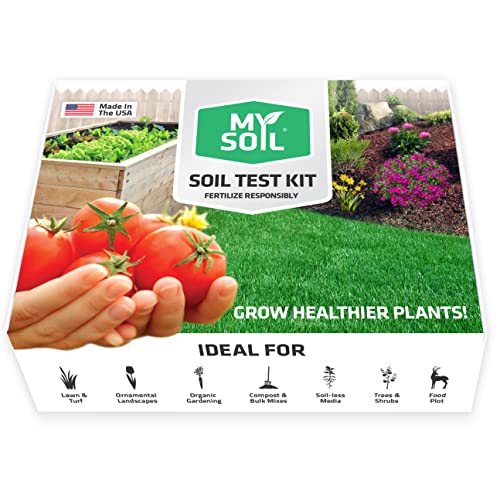
MySoil focuses on professional-style analysis, offering 13 plant-available nutrient measurements plus pH with tailored recommendations. Results come with actionable steps designed for lawn, garden, or landscape scenarios. Best for: serious gardeners and small-scale growers who want a data-driven plan tailored to their soil and plant needs, rather than rough estimates.
Caution: results come with a lead time compared to instant at-home tests, and the service relies on mail-in analysis, so plan ahead for results to guide fertilization cycles.
AKSBTEC 2026 NEW 4-in-1 Soil Test Kit

AKSBTEC offers a full 4-in-1 kit covering pH, nitrogen, phosphorus, and potassium with 40 tests total (10 per element). It’s designed for repeated use across multiple lawn or garden areas, and it’s marketed as fast and easy for home use—no calibration required, just mix soil with water, add reagent, and compare to color charts. Best for: gardeners who want a budget-friendly, scalable testing solution for larger parcels or ongoing monitoring.
Limitation: color-contrast interpretation is essential; misreading a color chart can affect accuracy. Choose this if you need a larger test pool without paying for professional lab services.
Auduto 7-in-One Soil Test Kit
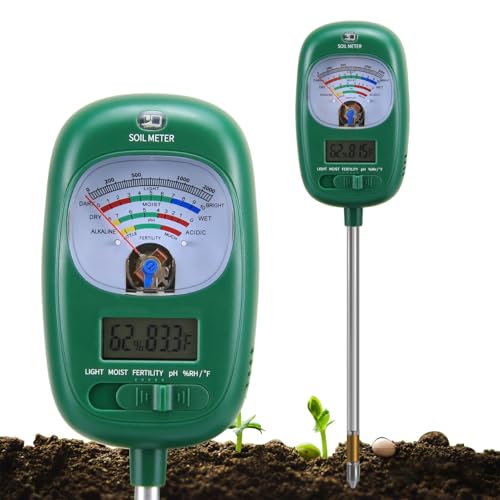
The Auduto 7-in-One kit combines a soil moisture meter, pH meter, and fertility testing with light, humidity, and temperature readings via LCD display. It emphasizes a comprehensive, one-unit solution with dual-dial design and metal probes for improved conductivity. Best for: gardeners seeking a centralized, all-in-one instrument that provides multiple environmental cues for plant care and transplant planning.
Limitation: some users may prefer separate specialized meters for precise lab-grade readings. Use this if you want an integrated tool that minimizes gear clutter and provides quick, actionable data in one glance.
Buying Guide: Key Decisions For Your Soil Testing Kit
- Purpose and scope: Do you need quick home checks (pH and nutrients), or a comprehensive, data-driven plan (lab-style analysis)? Choose accordingly.
- Number of parameters: If you want more than pH, consider N, P, K plus moisture and light. 4-in-1 or 7-in-1 kits cover more bases than basic kits.
- Readout style: Do you prefer color charts, digital LCD readouts, or mail-in lab results? Each format has trade-offs in speed, accuracy, and actionable guidance.
- Ease of use: Battery-free options are simple but may be less precise. Digital meters or kits with clear instructions reduce user error.
- Sample handling: Some kits require soil mixing with water; others test in-situ. Consider your tolerance for preparation steps and time-to-result.
- Reusability and duration: Look at the number of tests included and whether you’ll reuse the kit across different garden zones over seasons.
- Budget considerations: At-home kits are generally less expensive per test, while lab-based analysis offers depth but with longer turnaround and cost.
FAQ: Quick Answers For Buyers
- What is the most versatile soil test kit for a backyard lawn?
Answer: Kits offering pH, N, P, K along with moisture or light readings tend to be most versatile for lawn and garden planning. - Do I need a lab-based soil test for accurate nutrients?
Answer: If you need precise nutrient levels and tailored fertilizer recommendations, a mail-in lab analysis like MySoil provides more detail than basic home kits. - Is a battery-free soil tester sufficient for houseplants?
Answer: For basic care and routine checks, battery-free meters are typically adequate, but for intricate plant needs, consider a digital or multi-parameter kit. - How often should I test my soil?
Answer: For established gardens, testing once per growing season is common; for new or changing soil conditions, more frequent checks help guide amendments. - What should I do with test results?
Answer: Compare readings to plant-specific guidelines and your fertilizer plan. Use color charts or recommended nutrient levels to determine amendment needs. - Can I use these kits for hydroponics or containers?
Answer: Some kits are designed for soil; verify whether they’re suitable for hydroponic media or container mixes before use.