Choosing the right plug trays can boost germination, root development, and transplant success. This guide highlights five highly-rated options designed for seeds, cuttings, and seedlings, helping growers—from hobbyists to urban farmers—select trays that fit their space and plant needs. Each featured product emphasizes durable construction, proper cell depth, and reliable moisture management to support robust early growth.
| Product | Brand | Cells / Depth | Key Benefit |
|---|---|---|---|
| LAPOND 40 Pcs Grow Sponges with Tray | LAPOND | 40 cells with tray; plugs for seedlings | Premium peat & coco coir blend for strong early roots |
| LAPOND 40 Pcs Grow Sponges with Tray (Seed Starters) | LAPOND | 40 cells; tray included | Baltic peat moss blend for moisture retention and germination |
| RooTrimmer 54 Cell Seed Starter Trays | RooTrimmer | 54 cells; 2.8″ deep | Sturdy, deep design for varied seedlings |
| Seed Starter Trays, 144 Cells + Stakes | The Hydroponic City | 144 cells; 1.5″ x 2.25″ per cell | Versatile, durable, reusable |
| RooTrimmer 200 Cell Plug Tray | RooTrimmer | 200 cells; shallow 1.5″ depth | Large-volume seed starting with compatibility to 1020 trays |
Note: All products featured are designed to promote healthy root development, ease of transplanting, and long-lasting reuse. The selection covers a range of tray sizes and cell configurations to suit different plant types—from tender herbs and greens to root-heavy vegetables and flowers.
LAPOND 40 Pcs Grow Sponges with Tray

The LAPOND kit combines 40 seed starter sponges with a practical tray, ideal for cuttings and seedlings in soil, tray, or planting pod setups. The sponges are crafted from a blend of organic peat and coco coir, engineered to deliver an optimal air-to-water balance that supports explosive early root growth. This configuration makes it straightforward to soak, insert cuttings, and maintain consistent moisture levels. The system is designed for simple operation—no tools required. Soak for 3–5 minutes, place cuttings, and monitor roots as they develop.
LAPOND 40 Pcs Grow Sponges with Tray (Seed Starters)

This LAPOND seed starter set emphasizes efficient germination with 40 plugs matched to a tray. The sponges are made from Baltic peat moss, offering superior breathability and moisture retention while maintaining a stable pH. The design supports rapid rooting and germination across multiple plant types. When ready, seedlings can be easily transplanted into pots or outdoor soil, aided by the included replacement sponge that simplifies transplanting and reduces root disturbance during move‑in.
RooTrimmer 54 Cell Seed Starter Trays

The RooTrimmer 54-cell trays are built for durability, with a 2.8-inch cell depth to promote robust root systems. The trays are thick and reusable, designed to withstand repeated use season after season. The deeper cells accommodate a variety of plants, from herbs to vegetables, and the trays fit into standard propagation setups. These features minimize transplant shock and support healthy early growth, making them suitable for both hobbyists and small-scale commercial operations.
Seed Starter Trays, 144 Cells

These 144-cell trays from The Hydroponic City offer broad versatility for flowers, herbs, succulents, and vegetables. Each cell measures 1.5″ square by 2.25″ deep, prioritizing healthy root development and a strong start for seedlings. The trays are designed for durability and reuse, supporting sustainable gardening practices. They accommodate a wide range of species, making them a practical option for mixed seed starts or educational projects where multiple plant types are grown simultaneously.
RooTrimmer 200 Cell Plug Tray
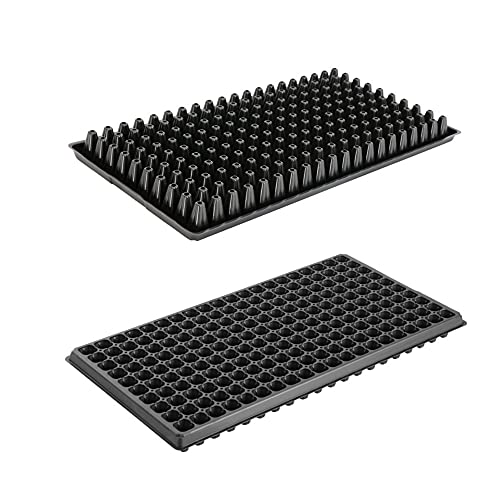
The RooTrimmer 200-cell plug tray provides an expansive, shallow 1.5-inch depth designed for fast germination and efficient transplant readiness. This large-cell option is compatible with shallow 1020 trays, enabling scalable propagation for larger projects. The tray emphasizes a sturdy, reusable construction that resists warping and withstands frequent handling. It’s suited for growers who manage multiple plant varieties or require high-throughput seed starting with minimal root disturbance during transplantation.
RooTrimmer 1020 Plant Growing Trays

RooTrimmer’s TD538 1020 trays are designed without holes to hold 1020 plug trays securely. The 21 by 11-inch top surface fits standard plug trays, while the 19.1 by 9-inch bottom ensures stability. At 1.6 inches deep, these trays balance weight and space for larger root systems, making them a practical choice for greenhouse setups, microgreens, or high-volume seed starting where stability and compatibility with existing plug trays are essential.
Buying Guide: Key Purchase Considerations
When selecting plug trays for plants, consider cell count, depth, and compatibility with existing propagation systems. Higher cell counts (72–200) support a broader range of crops and clinical transplant sequencing, but may require more space and longer benign staging before transplanting. Cell depth matters: deeper cells promote robust root systems for vegetables and perennials, while shallow cells suit fast-growing herbs and microgreens. Materials influence durability and reuse; thick plastics and sturdy construction resist warping but may add weight. Reusable options support sustainability and cost-per-use over time.
Other considerations include tray compatibility with standard 1020 and 1020 shallow trays, which affects transplant workflow in greenhouses and benches. Moisture management features, such as drainage holes or water-retentive designs, help prevent root rot and overwatering. Alignment with automated irrigation or climate-control systems can boost efficiency in larger operations. Finally, assess ease of handling, stacking capability, and whether the trays meet local regulations for plastics and sustainability goals. These factors collectively shape long-term planting success and operational efficiency.
In practice, buyers should map their crop mix, space, and labor. For small spaces and a focus on herbs or greens, compact 40–54 cell trays with moderate depth provide adequate root growth without overwhelming transplant schedules. For larger starts—tomatoes, peppers, and longer-root crops—consider deeper or higher-capacity trays (72–200 cells) to sustain growth until transplant. Durability and reusability are worth the upfront investment for frequent use. The right combination reduces transplant shock, promotes vigorous establishment, and supports consistent yields over seasons.