Choosing the right plant trays can streamline greenhouse operations, improve germination rates, and keep growing areas tidy. This guide highlights top no-drain-hole and no-drain-option trays designed for seed starting, microgreens, and transplant propagation. Each option balances durability, reusability, and clean water management to fit various greenhouse setups.
| Product | Bundle / Cells | Outer Dimensions |
|---|---|---|
| Gardzen 5-Set Seed Starter Tray Kits | 40-Cell capacity per kit | Approximately 21″ x 11″ x 1.3″ |
| Gardzen 10-Pack Seed Trays No Drain Holes | 10 trays, 14.5″ x 9″ x 1.85″ | No drainage holes |
| Gardzen 10-Pack 1020 Growing Trays | 10 trays, 21″ x 11″ x 1.3″ | No drainage holes |
| RooTrimmer 10 Pack 1020 Trays | 10 trays, 10″ x 20″ base | No drainage holes |
| ZAVOOS 6 Pack Nursery Potting Trays | 6 trays, 17.3″ x 11.6″ x 1.3″ | No drainage holes |
Gardzen 5-Set Seed Starter Tray Kits
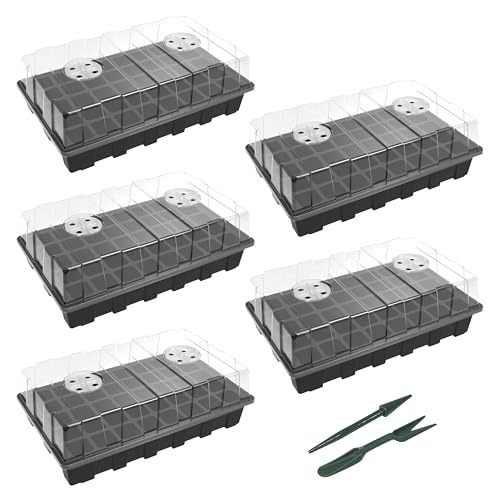
These seed starter trays come with a 40-cell capacity per kit and upgraded adjustable ventilation. The two top air vents support airflow control to prevent mold and ensure uniform germination. The sturdy plastic construction and attached stickers help ensure a snug fit between dome and base, maximizing efficiency for indoor and greenhouse seed starting. Ideal for beginners and experienced growers alike, these trays support tight spacing and scalable propagation projects.
Gardzen 10-Pack Seed Trays No Drain Holes

These durable trays are designed without drainage holes to hold drip water and keep surfaces clean. They measure 14.5 by 9 inches with a shallow profile that fits most racks or shelves. The set is reusable, reducing waste and lowering long-term costs. They are well-suited for seed starting, microgreens, and other compact propagations in greenhouses or indoor setups where mess-free water management matters.
Gardzen 10-Pack 1020 Growing Trays

These 1020 trays are designed for high-volume propagation with no holes to simplify water management. Outer dimensions are roughly 21″ x 11″ with a shallow 1.3″ depth, making them suitable for seed starting, microgreens, and nursery operations. They stack for compact storage and are made from reusable PS material, supporting long-term greenhouse use while maintaining clean drainage-free use for controlled irrigation approaches.
RooTrimmer 10 Pack 1020 Trays

RooTrimmer trays offer a robust build with a no-drain-hole design and reinforced thickness for durability. Sized to fit standard 1020 setups (top 11.2″ x 21.6″, bottom 10″ x 20″), they support heavy soil loads and frequent handling. The trays are ideal for microgreens, seedlings, and transplant propagation in greenhouses where a sturdy, reusable tray is essential for repeat cycles.
ZAVOOS 6 Pack Nursery Potting Trays
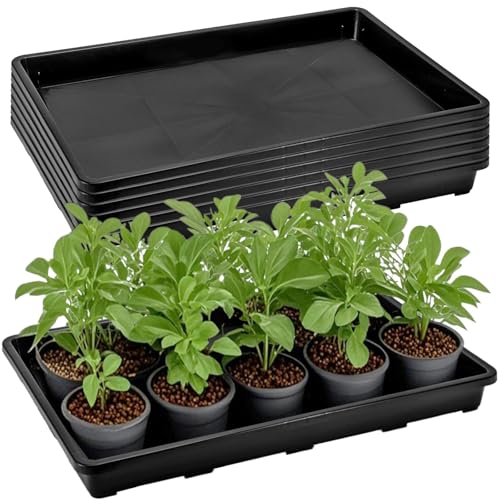
ZAVOOS offers a value pack of six no-drain-hole trays, sized at 17.3″ x 11.6″ x 1.3″. They are described as sturdy, durable, and easy to clean, making them well-suited for indoor seed starting, vegetables, and flowering plugs. The absence of drainage holes helps contain moisture for consistent rooting environments while maintaining compatibility with drip irrigation schemes in greenhouse setups.
Buying Guide: Key Considerations For Greenhouse Trays
When selecting plant trays for greenhouse use, consider: tray material and durability, whether holes are needed, tray size compatibility with existing racks, and ease of cleaning. No-drain-hole designs excel in drip-irrigation systems and moisture-controlled environments, while perforated trays aid drainage and root aeration for certain crops. Reusability and compatibility with stackable bases reduce storage space and labor.
- Storage and layout: Choose trays that stack or nest to maximize bench space and shelving in limited greenhouse footprints.
- Water management: If using drip irrigation or misting, no-drain-hole trays help prevent mess and water pooling; for crops needing airflow and drainage, perforated options may be preferred.
- Cell density and size: Seedling depth and spacing matter. Higher cell counts support many varieties, but larger trays support bigger starter plugs and early-stage transplants.
- Durability and material: Reusable PS or sturdy plastics reduce replacement costs and support long-term greenhouse operations.
- Compatibility: Ensure trays fit standard 1020 and 1020-based systems if you rely on common propagation benches.
- Price vs. longevity: Compare upfront cost to expected lifespan and potential savings from reusability over multiple growing seasons.
All selected options emphasize durability, ease of cleaning, and adaptability to greenhouse environments. For growers prioritizing clean water management, no-drain-hole designs pair well with drip systems and containment needs. Those requiring efficient drainage and rapid air exchange may benefit from perforated variants or those with drainage features integrated into their base setups. The right mix depends on plant species, irrigation strategy, and space constraints.