Tomato gardeners increasingly seek organic pest control that protects edible crops without harming pollinators or soil. The following selections are formulated for organic cultivation and offer multiple-action protection—from insect control to disease prevention. Each product is suitable for use on tomatoes and other garden vegetables, with options ranging from ready-to-use sprays to concentrated formulas. This guide highlights five choices that balance safety, effectiveness, and ease of use for American home gardeners.
| Product | Brand | Type | Notes |
|---|---|---|---|
| BioAdvanced Organics Tomato, Vegetable & Fruit | BioAdvanced | Ready-to-Use Spray | Insect and powdery mildew control |
| Earth’s Ally 3-in-1 Plant Spray | Earth’s Ally | Insecticide / Miticide / Fungicide | OMRI Listed; safe for pollinators |
| BioAdvanced Tomato & Vegetable Pest Control | BioAdvanced | Ready-to-Use Spray | Pest control for tomatoes and other vegetables |
| ARBER Organic Insecticide & Fungicide | ARBER | Concentrate Spray | Powdery mildew and pests control |
| Bonide Captain Jack’s Insecticidal Super Soap | Bonide | Ready-to-Use Spray | Soap-based pest control for outdoors |
BioAdvanced Organics Tomato, Vegetable & Fruit Spray
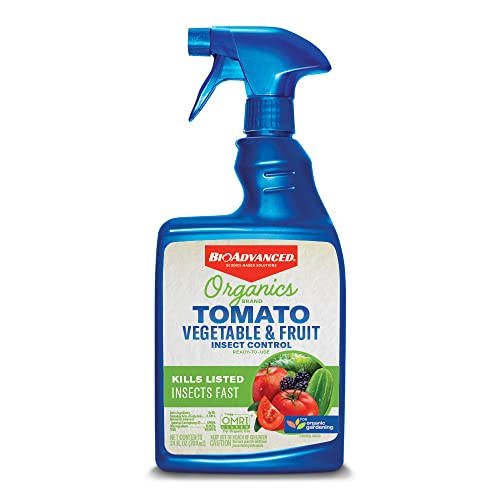
This ready-to-use spray targets common pests on edibles, including aphids, caterpillars, mealybugs, and spider mites, while also offering curative control against powdery mildew. It is suitable for use on vegetables, fruit, nut trees, citrus, berries, herbs, and container-grown plants, making it a versatile option for tomato crops grown in gardens and containers.
Earth’s Ally 3-in-1 Plant Spray

Earth’s Ally combines insecticidal, miticidal, and fungicidal actions in a single product. The formulation targets spider mites, aphids, whiteflies, and powdery mildew, with an emphasis on safe use around pollinators and pets. Its organic credentials and indoor/outdoor versatility make it a practical choice for tomato growers facing both pests and fungal issues.
BioAdvanced Tomato & Vegetable Pest Control

This ready-to-use insect control product is designed to protect tomatoes and other vegetables from common pests like aphids and cutworms. It provides rapid action with a focus on vegetables and edible crops, supporting steady yields when used as part of a broader integrated pest management plan.
ARBER Organic Insecticide & Fungicide

ARBER offers an organic concentrate that functions as both an insecticide and a fungicide. The product is suitable for use on seedlings, established beds, containers, and greenhouses, providing a broad-spectrum approach to control powdery mildew and common soft-bodied pests on tomato plants and other crops.
Bonide Captain Jack’s Insecticidal Super Soap

This soap-based insecticidal spray provides contact kill for a broad range of pests including aphids, caterpillars, and spider mites. It is designed for outdoor use in home gardens and landscapes, serving as a gentle, multi-target option that works quickly on contact with pests and can also prevent feeding damage.
Buying Guide: Key Considerations For Organic Tomato Pest Control
- Active pests and diseases: Identify the prevalent pests (aphids, whiteflies, spider mites) and diseases (powdery mildew, blight) in your area to select a product with appropriate action—insecticide, miticide, and fungicide capabilities as needed.
- Organic certification: Look for OMRI-Listed or equivalent certifications to ensure products meet organic gardening standards and are safe for edible crops.
- Mode of application: Choose based on your gardening setup. Ready-to-use sprays are convenient for small plots, while concentrates provide cost efficiency for larger gardens and may require mixing.
- Pollinator safety: Prefer formulas labeled as safe for pollinators, especially when spraying during flowering periods or around attractant plants.
- Plant safety and compatibility: Some products are more suited to foliar use, while others protect root zones or soil surfaces. Follow label directions to avoid plant damage or nutrient imbalances.
- Resistance management: Rotate products with different active ingredients to reduce the risk of pest resistance. Combine with cultural controls like pruning, hand-picking, and proper irrigation.
- Environmental considerations: Consider weather patterns, such as rain and heat, which influence spray persistence and interval requirements between applications.
- Container and in-ground use: Ensure the product is suitable for your tomato growing setup, especially if using containers or raised beds where drip systems and run-off may differ.
- Safety and handling: Wear protective gear as recommended and store products away from food preparation areas and children’s reach.
When implementing organic pest control, integrate these products into a broader disease and pest management plan. Regular scouting, proper watering practices, healthy soil, and plant spacing can reduce pest pressure and improve the effectiveness of organic treatments on tomato crops.