Keep ants at bay with organic, environmentally friendly options. This guide highlights five top picks that target ants and other common pests while staying gentle on homes, gardens, and people. Each product features plant-based ingredients, OMRI listings, or nature-safe formulations designed to minimize chemical exposure. Read on to compare methods—from repellents and deterrents to-contact killers and garden sprays—and discover strategies that fit indoor and outdoor spaces.
| Product | Brand | Use Case |
|---|---|---|
| Safer Home Diatomaceous Earth | Safer | Indoor/outdoor pest control; kills crawling insects |
| Organic Laboratories Lab QT Organocide | Organic Laboratories | Organic insecticide/fungicide for garden and harvest |
| Mint Naturals Ant Shield | Mint Naturals | Natural ant repellent for indoor/outdoor use |
| Kate’s Home & Garden Peppermint Oil Spray | Kate’s Home & Garden | Indoor pest repellent; natural odor-based deterrent |
| Orange Guard Home Pest Control Spray | ORANGE GUARD | Natural organic formula for indoor/outdoor use |
The following sections profile five products most relevant to organic ant control, summarizing how each works, where to apply, and what to expect in typical use scenarios.
Safer Home Diatomaceous Earth 4 lb

Safer’s Diatomaceous Earth provides a contact-based approach to ants and other crawlers. The product combines diatomaceous earth with targeted bait to dehydrate and kill bed bugs, roaches, fleas, ants, silverfish, and related pests within about 48 hours after contact. It’s versatile for both indoor and outdoor use, suitable for cracks, crevices, and along baseboards where ants commonly travel. This option is odorless and easy to apply, making it a practical inclusion in kitchens, entryways, and around foundations. For ant activity, reapplication after establishing a barrier can help maintain control, especially in high-traffic areas.
Organic Laboratories Lab QT Organocide 3-in-1 Garden Spray

Organocide is a nature-safe, organic insecticide and fungicide designed for broad effectiveness in gardens. It acts against a wide variety of insects and mites and carries environmental-friendly credentials. The product replaces many harsher pesticides and has no restricted entry time, allowing use even during harvest or indoors in certain situations. While primarily a garden solution, its broad-spectrum approach can help reduce ant-friendly pest ecosystems when applied to plant matter that ants frequent. EPA exempt status emphasizes its focus on safer, organic pest control.
AgroMagen GrowSafe Bio-Pesticide

GrowSafe Bio-Pesticide emphasizes natural, organic ingredients designed for plant protection. It targets pests like spider mites, whiteflies, and aphids, as well as powdery mildew and downy mildew. Although its primary focus is on crops, using this product in gardens and around entry points can disrupt the food sources and habitats that ants rely on. The formula is described as all-natural and food-based, offering compatibility with organic gardening practices. It mixes easily with water and is designed to avoid damaging leaves or altering fruit taste.
Mint Naturals Ant Shield

Ant Shield uses a peppermint oil formula to create a strong barrier against ants and other crawling insects. It’s suitable for indoor use in kitchens, pantries, cabinets, and around baseboards, with outdoor applications on patios, decks, and entry points. The plant-based ingredients offer a natural alternative to synthetic repellents, and the scent is a deterrent rather than a toxin. While peppermint oil can be effective for many small pests, it may require reapplication in outdoor conditions or after rain to maintain efficacy.
Kate’s Home & Garden Peppermint Oil Spray

Kate’s Home & Garden Peppermint Oil Spray combines peppermint and cedarwood oils for natural pest control. It’s designed for indoor use against ants, spiders, roaches, stink bugs, and other crawling insects. The product markets itself as a non-toxic option that can also be used around kitchens and dining areas, providing a fresh scent while deterring pests. It claims safety for households with children and pets, though users should still test on a small area and avoid direct contact with surfaces that may be sensitive to essential oils.
Orange Guard Home Pest Control Spray
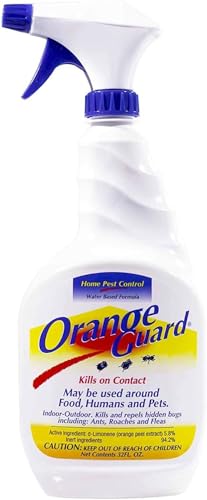
Orange Guard offers a 100% natural pesticide formulated for both indoor and outdoor use. Branded as a natural organic formula, it provides a broad barrier against ants and roaches among other pests. Its approach centers on safe, consumer-friendly chemistry that aligns with organic living. For ant control, routine applications around entry points, along baseboards, and at harboring zones can help reduce trails and nesting areas. Outdoor use around foundations and entryways can complement indoor barriers for a comprehensive approach.
OrganiShield Organic Pesticide

OrganiShield emphasizes instant pest elimination through a formulation that penetrates and disrupts the insect’s outer protective layer, causing rapid dehydration. The product claims no accumulation, no resistance, and no oily residue, making it suitable for spraying around plants and entry points without affecting plant pores or growth. It’s designed for flexible application times, allowing use regardless of lighting or plant stage. For ant control, applying to trails and nests near structures can reduce contact and colony activity.
Organic Laboratories 100-004 Organocide 3-in-1 RTU Garden Spray
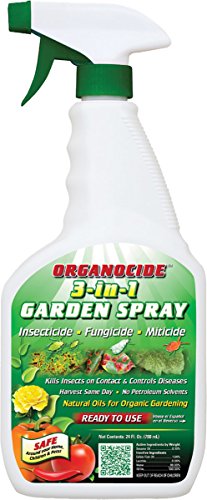
Organocide RTU Garden Spray is an OMRI-listed, nature-safe insecticide and fungicide based on a blend of soybean extract and sesame and fish oils. It targets a broad range of insects and mites, reinforcing organic pest management in gardens. While not exclusively ant-focused, it can reduce food sources and nesting sites for ants when used on plants and surrounding soil surfaces. Its compatibility with organic production makes it a viable option for gardeners seeking a multi-purpose solution without synthetic residues.
Buying Guide
Key factors to consider when selecting an organic approach to ants include formulation type, application site, and potential environmental impact. The following perspectives help balance effectiveness with safety:
- Mode of action: Contact-Kill vs. Repellent. Diatomaceous earth stops insects by desiccation after direct contact, while peppermint oil and cedar-based sprays act as repellents. For persistent ant colonies, using a combination of barrier treatments and targeted baits can improve outcomes.
- Indoor vs. outdoor use: Choose products suited to the problem zones—kitchens, baseboards, and entry points indoors, and foundations, patios, and mulch lines outdoors. Some products are marketed as dual-use, which can simplify routines.
- Environmental and safety considerations: Look for OMRI listings, EPA exemptions, or plant-based ingredients. Check for potential residues on edible plants, and test surfaces before wide application to minimize unintended effects on crops or household fabrics.
- Reapplication and cleanup: Some products require periodic reapplication, especially in rain-prone outdoor areas. Plan for regular monitoring of ant trails, nests, and bait stations to maintain control without overuse.
- Compatibility with other pest controls: If you already use a particular spray or barrier, ensure the organic product is compatible to avoid diminishing efficacy or creating residue conflicts.
For optimal results, integrate an ant-focused strategy with preventive measures: seal entry points, remove food sources, trim vegetation near the foundation, and maintain clean interiors. Organic products can be effective parts of a broader, behavior-based pest management plan that reduces reliance on harsh chemicals while addressing ant activity in homes and gardens.