Powdery mildew is a common challenge for indoor and outdoor gardens. This article highlights select organic fungicides that target powdery mildew and related plant diseases while supporting safe, sustainable gardening. Each product below is chosen for OMRI listing, natural active ingredients, and practical use across vegetables, ornamentals, and lawns. Read on to compare options and find the best fit for your plants and environment.
| Product | Brand | Key Benefit | Use |
|---|---|---|---|
| Grower’s Ally Fungicide Spray | Grower’s Ally | Kills and prevents powdery mildew with citric acid | Indoor & Outdoor |
| Earth’s Ally Disease Control | Earth’s Ally | Natural fungicide for multiple diseases | Fruits, vegetables, ornamentals |
| Neudorff Plant Fungicide Spray | Neudorff | Copper-based protection against listed diseases | Roses, vegetables, fruit |
| Grower’s Ally Concentrate | Grower’s Ally | Concentrated formula makes up to 20 gallons | Indoor & Outdoor |
| Trifecta Crop Control | Trifecta | Broad-spectrum plant protection and pest control | Indoor & Outdoor |
Grower’s Ally Fungicide Spray For Plants

Grower’s Ally Fungicide Spray is formulated as a natural fungicide and bactericide for plants. It targets powdery mildew and other common pathogens, providing both treatment and preventative benefits. The product emphasizes a clean ingredient list with food-grade citric acid, supporting organic gardening standards. This makes it suitable for growers seeking an OMRI-listed option without synthetic residues.
The spray’s active approach centers on forming a protective barrier on leaf surfaces to inhibit pathogen development. It is presented as a broad-spectrum option that also helps reduce bacterial growth while remaining gentle on plant tissue. When powdery mildew pressure is high, regular application can help keep infections at bay, especially on susceptible crops and ornamentals.
Earth’s Ally Disease Control Concentrate

Earth’s Ally Disease Control Concentrate is designed to treat and prevent a range of plant diseases, including powdery mildew, downy mildew, blight, and leaf spots. The concentrate format enables you to mix according to your garden needs, making it a flexible option for larger planting areas or seasonal spraying programs.
As a citric-acid-based formula, Earth’s Ally emphasizes safety for people, pets, and the environment. It is positioned as a safer alternative to harsher chemical fungicides, supporting home gardeners who want effective disease control without strong chemical residues. The product is marketed for use on fruits, vegetables, flowers, ornamentals, trees, and shrubs, offering broad applicability across garden types.
Neudorff Plant Fungicide Spray

Neudorff Copper Fungicide Spray provides protection against a broad list of diseases including powdery mildew, rusts, and black spot. It is suitable for use on roses, vegetables, fruits, and ornamentals, and is labeled for organic gardening. Copper-based fungicides are a traditional option for disease management, and Neudorff emphasizes use on both indoor and outdoor plants with a focus on protecting buds and flowers.
The product is described as effective at various growth stages and can be used up to the day of harvest on some crops, depending on label instructions. For gardeners seeking an established organic option with a long track record against powdery mildew and related diseases, this product offers a dependable choice, especially on woody ornamentals and fruiting plants.
Grower’s Ally Fungicide For Plants Concentrate

Grower’s Ally Concentrate is a scalable option that makes up to 20 gallons of treatment. Like the spray version, it leverages citric-acid-based chemistry to act as a natural fungicide and bactericide. The concentrate format can be cost-effective for larger operations or gardeners who spray frequently, enabling consistent coverage across dense plantings.
Reference notes highlight that the product is FIFRA 25(b) exempt and OMRI Listed, aligning with organic gardening standards. The concentrate’s dual action against powdery mildew and other pathogens supports proactive disease management while minimizing environmental impact compared to synthetic fungicides.
Trifecta Crop Control Ready To Use
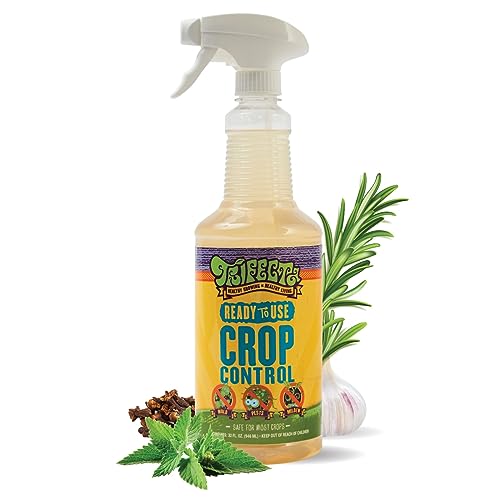
Trifecta Crop Control is marketed as a multi-purpose solution for organic gardening, combining plant-based fungicidal, miticidal, and insecticidal action. The product emphasizes effectiveness against powdery mildew as part of a broader pest and disease management strategy. Its essential-oil formulation aims to deliver rapid coverage and fast drying, with a focus on safe use around homes and gardens.
For gardeners seeking an all-in-one spray to address both diseases and pests, Trifecta provides a comprehensive option. The product claims compatibility with edible crops and a broad spectrum of use cases, making it suitable for vegetable beds, fruiting plants, and ornamental plantings alike. As with any essential-oil-based product, follow label directions for sensitive plants and high-heat conditions to maximize safety and efficacy.
Buying Guide: Key Considerations For Choosing A Powdery Mildew Fungicide
- Active ingredient and organic status: Verify OMRI listing and FIFRA 25(b) exemption where applicable. Natural ingredients such as citric acid and thyme oil are common among organic options and may influence spray frequency and plant compatibility.
- Crop compatibility and harvest timing: Check label instructions for edible crops and any pre-harvest intervals. Copper-based products may have restrictions on harvest timing for certain plants.
- Target range and disease spectrum: If powdery mildew is the primary concern, prioritize products with proven efficacy against powdery mildew and related fungal diseases. Some options also address blight, rust, leaf spots, and other issues.
- Formulation and usage style: Sprays, concentrates, and ready-to-use formulations each fit different gardening scales. Consider risk of residue, ease of mixing, and application frequency in your routine.
- Safety and environmental impact: Organic options often emphasize lower environmental risk and non-toxic profiles for households, pets, and pollinators. Review safety data sheets and label precautions for day-to-day use.
- Plant tissue sensitivity and compatibility: Some crops (delicate roses or young transplants) may require lower application rates or protective intervals. Test on a small area if applying to sensitive varieties.
- Cost and coverage: Concentrates are typically more economical per gallon, while ready-to-use products offer convenience. Compare coverage per bottle to estimate seasonal needs.
- Broad-spectrum vs. targeted control: Broad-spectrum products may manage multiple pests and diseases but could impact beneficial organisms. For integrated pest management, balance efficacy with ecosystem considerations.
In practice, selecting an organic fungicide for powdery mildew often involves considering the specific crops you grow, your environmental conditions, and how frequently you spray. The products above represent a mix of ready-to-use sprays and concentrates, with varying degrees of disease-spectrum coverage. A common approach is to alternate products or combine preventative sprays with disease-monitoring practices, such as proper air circulation, balanced watering, and sanitation, to minimize powdery mildew pressure while supporting healthy, resilient plants.