If you’re starting a child’s journey into gardening, these beginner-friendly kits help kids learn by doing. They’re designed for ages 3–8, encourage hands-on exploration, and make it easy for families to enjoy growing plants together. The top picks below suit curious beginners, budding scientists, and parents seeking educational, mess-friendly projects for rainy days or weekend outdoor time.
Summary table of chosen products:
- Product: Buzzy Seeds My First Garden Windowsill Grow Kit
- Best for: Beginners who want a simple, all-in-one windowsill setup for tomatoes and marigolds
- Product: National Geographic Flower & Herb Gardening Kit for Kids
- Best for: Creative kids who love decorating pots and growing a small herb/flower garden
- Product: The Ultimate Kids Gardening Set
- Best for: Activity-packed kit with durable tools for active play and gardening practice
- Product: Kinderific Gardening Set, Tool Kit, for Kids
- Best for: Colorful, compact set that covers essential tools for little gardeners
- Product: Kidoozie My First Gardening Set
- Best for: Pretend play with realistic tools and a parent-loved wheelbarrow
Buzzy Seeds My First Garden Windowsill Grow Kit

What it is: A complete indoor planting kit designed for a sunny windowsill. The set includes a galvanized planter, growing medium, and seeds for tomatoes and marigolds. It’s a simple, hands-on project that yields edible fruit and decorative blooms. Best for families seeking a tidy, beginner-friendly way to start edible gardening indoors.
Who it’s for: Great for younger children or first-time gardeners who want a contained, low-mess grow experience. Suitable for classrooms or family projects that want visible, quick results with edible components.
Why selected: This kit emphasizes a streamlined, all-in-one approach. It combines an easy grow medium, seeds, and a compact planter in one package, making setup fast and straightforward for absolute beginners. It’s also satisfying as you can harvest fresh tomatoes and enjoy cheerful marigolds early in the season.
One caution: Indoor lighting and consistent watering are key; without adequate sun or light, sprouts may be slower to appear.
National Geographic Flower & Herb Gardening Kit for Kids
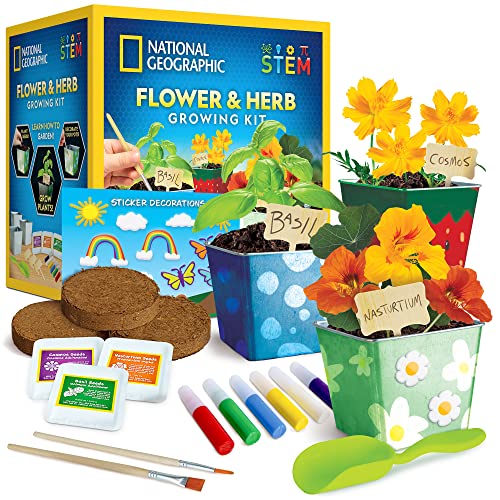
This kit helps kids grow cosmos, nasturtium, and basil with three durable stainless steel pots and decorating supplies. It blends hands-on planting with creative pot customization, plus a practical learning guide. Best for kids who enjoy decorating and learning about plant science while growing an herb garden.
Who it’s for: Ideal for creative children who like crafts as part of gardening and want a visual, kid-friendly introduction to flowering and culinary herbs.
Why selected: The set couples decorate-and-grow activities with a real gardening experience. The stainless steel pots are sturdy enough for multiple uses, and the included seeds offer a quick, tangible result.
One limitation: Pots may be smaller than expected for larger plants; consider upgrading or supplementing with larger containers if a bigger plant is desired.
The Ultimate Kids Gardening Set

This all-in-one set includes gloves, a tote, a kids watering can, rake, shovel, and five pots, making it a portable, all-in-one gardening adventure. It’s designed to stimulate curiosity and responsibility as kids learn to plant, water, and care for their mini garden.
Who it’s for: Best for active kids who enjoy outdoor play and hands-on tool use. The full tool kit supports a range of gardening activities, from planting seeds to transplanting young plants.
Why selected: The comprehensive tool assortment reduces the need for additional purchases. It’s especially helpful for households that want a robust kit that grows with the child’s growing interest.
One caution: The tools are sized for small hands, so older children may quickly outgrow the kit’s scale and require larger tools later on.
Kinderific Gardening Set, Tool Kit, for Kids

This 6-piece kit covers essential tools, including a tote bag, watering can, gloves, rake, shovel, and fork. The colorful design is inviting for young gardeners, and the tools are described as durable and kid-friendly, facilitating easy entry into basic gardening routines.
Who it’s for: Ideal for beginners who want a compact, simple, and visually engaging tool set that’s easy to store and transport.
Why selected: It offers a balanced starter kit without overwhelming a new gardener. The included tote makes organization straightforward for a child’s gardening nook or classroom corner.
One limitation: The set focuses on basic tools; older children seeking more diverse equipment might want to add a few extra items later on.
Kidoozie My First Gardening Set

This pretend-and-learn set features 15 pieces of garden-themed play tools plus a sturdy wagon for on-the-go fun. It blends imaginative play with basic gardening concepts, making it a strong choice for younger children who enjoy role-play before getting hands-on with real soil.
Who it’s for: Best for toddlers and early preschoolers who benefit from imaginative play to introduce concepts like planting, watering, and garden care.
Why selected: The wagon provides portable play space and storage for the tools, which is helpful for keeping a child engaged during outdoor play or indoor pretend setups.
One caution: This kit emphasizes pretend play more than real planting; if you want immediate real gardening results, pair it with a separate beginner gardening kit.
Buying Guide: Key Purchase Considerations
What age is appropriate for a first gardening kit?
Look for kits clearly labeled for ages 3–8 or 4–8. Younger children may benefit from pretend-play sets, while older beginners will benefit from kits with real seeds, durable tools, and straightforward planting steps.
Is indoors or outdoors better for a first kit?
Indoors kits work well for beginners to learn planting basics and observe sprouts quickly. Outdoors kits suit families with space and allow larger plants to thrive. Choose based on your home environment and lighting availability.
What type of plants should a beginner start with?
Begin with easy, fast-growing plants like tomatoes, marigolds, basil, and cosmos. Edible options such as cherry tomatoes offer quick rewards, which can boost a child’s enthusiasm and ongoing interest.
How important is the included planter and growing medium?
Narrow kits benefit from a simple, contained planter and quality growing medium. A sturdy planter reduces spills, and ready-to-use media speeds up setup. If the kit lacks these, plan to add compatible alternatives.
What safety features should I look for in a kids’ kit?
Check for BPA-free or child-safe materials, rounded tool edges, and lightweight handles. Avoid kits with small parts that could pose choking hazards until your child is ready to handle them responsibly.
How do I expand a starter kit over time?
Start with a basic set and gradually add extra seeds, tools, or larger pots. This approach maintains engagement and allows the child to learn more advanced gardening concepts as they grow more capable.
What accessories help with successful growth?
Quality lighting for indoor kits, a small watering can, and a simple labeling system can help kids track what they planted and monitor growth progress.
Frequently Asked Questions
- What is the easiest first plant for kids? Tomatoes and marigolds are commonly recommended for their quick growth and simple care, making them ideal for beginner gardeners.
- Can these kits be used in a classroom? Yes. Many kits are designed for multiple children and easy sharing, which works well in classroom settings or after-school programs.
- Do these kits require adult supervision? Yes, especially for younger children. Adults help with planting, watering, and interpreting results to reinforce learning.
- Are the tools safe for toddlers? Most sets include small, lightweight tools designed for young hands, but supervise use and store away any tools when not in use.
- How soon will kids see results? Depending on plants, sprouts can appear within 3–14 days, with visible growth within a few weeks for most beginner seeds.
- What if my child loses interest? Rotate seeds, try new plant types, or pair gardening with related crafts to renew curiosity and maintain engagement.