Finding the right main line drip irrigation tubing is essential for reliable, water-efficient irrigation. This guide highlights five top 1/2 inch main line options, focusing on durability, ease of installation, and compatibility with common drip components. Each product is suited to different garden sizes and layouts—from compact raised beds to larger plots. The buyer can expect clear differences in connector setups, flexibility, and year‑round performance. Below, compare strengths, best-use scenarios, and practical cautions to help you choose the right main line for your system.
Summary at a glance: the following table lists the five selected products, their brand, main strengths, and ideal use cases to help you compare quickly.
| Product | Brand | Best For | Why It Stands Out |
|---|---|---|---|
| 50 FT 1/2 Inch Drip Irrigation Tubing Main Drip Line Hose Tube | Riboud | Medium gardens with multiple branch connections | Thick wall, included 6‑way and straight connectors, durable in varied weather |
| Raindrip 052020P 1/2-Inch Tubing | Raindrip | Versatile main or feeder line | Flexible use with emitters and drippers; broad compatibility |
| MIXC 1/2 Inch Drip Irrigation Tubing, 100FT | MIXC | Flexible layouts and tight spaces | High bendability; long 100 ft length; durable polyethylene |
| MIXC 50 FT 1/2 Inch Tubing Kit | MIXC | Starter systems with multiple branch needs | Includes 4‑way connectors; easy expansion |
| Maotong 40 FT 1/2 Inch Drip Irrigation Tubing | Maotong | Year‑round outdoor installations | Thick wall, ROSH-certified fabric, reliable main line option |
Riboud 50 Ft Main Drip Irrigation Tubing

Key features: Inner diameter 13 mm; outer diameter 16 mm; 3 mm thick wall for enhanced leakage resistance; comes with 1/2″ straight connector and 6‑way connector for branching.
Best for: Home gardeners with a medium plot who need a robust main line that feeds several 1/4″ branches. The included fittings simplify expansion without extra purchases.
Why selected: The extra‑thick wall and quick‑connect fittings provide reliable performance under pressure changes, making it a solid main line choice for mixed plantings. Limitations: check local freeze conditions; prolonged freezing may require winter storage or protection.
Raindrip 052020P 1/2-Inch Tubing
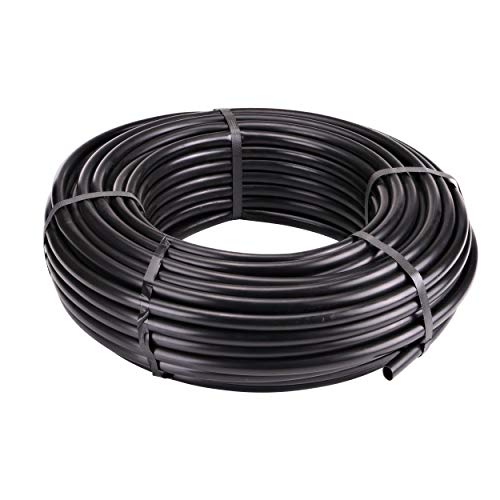
Key features: 1/2 inch irrigation tubing suitable as main supply or feeder line; connects to main line or drip parts; versatile for trees, shrubs, beds, planters, and containers.
Best for: Gardeners who want a flexible main line that can be punched to emitters or used directly as a feeder line. Suitable for both new and existing drip systems.
Why selected: Its adaptability across multiple configurations makes it easier to tailor a layout with minimal extra parts. Caution: ensure compatible fittings when extending with non‑Raindrip components.
MIXC 1/2 Inch Drip Tubing, 100FT

Key features: 100 ft mainline tubing; flexible, durable polyethylene construction; resists cracking and kinking; designed for underground or surface mounting.
Best for: Layouts requiring long runs with minimal joints. Great for long beds or around edges where fewer connectors improve reliability.
Why selected: Exceptional combination of flexibility and durability supports complex layouts. Limitation: longer runs may still need additional clamps or hangers for stabilization in windy or exposed locations.
MIXC 50 FT 1/2 Inch Tubing Kit

Key features: 50 ft main line with four 6‑way connectors; designed to branch into 1/4″ tubing for emitters and sprayers; durable main line material.
Best for: Beginners or mid‑size projects where you want a ready‑to‑go main line with multiple branch options. Choose this if you plan to expand to several zones quickly.
Why selected: The included 6‑way connectors streamline expansion, reducing the number of additional fittings. Caution: verify your end‑use compatibility with 1/4″ components before purchase.
Maotong 40 Ft Main Line Drip Tubing

Key features: 13 mm inner diameter, 16 mm outer diameter; 3 mm thick wall; ROSH‑certified flexible fabric material; suitable for year‑round use from -20°C to 70°C.
Best for: Gardeners who need a reliable main line capable of withstanding diverse seasons and outdoor conditions. Compatible with 6‑way couplers and 1/4″ branches.
Why selected: Strong durability and temperature tolerance make it a dependable option for perennial setups. Caution: ensure proper cold protection in freezing climates to maintain performance.
Buying Guide
What should you consider when choosing a main line drip tubing?
- Diameter and wall thickness: A 1/2 inch line with a thicker wall reduces the risk of bursting under pressure. Look for inner 13 mm and outer 16 mm specifications and 3 mm walls for durability.
- Length and layout: Measure your garden and plan runs that minimize elbows. Longer runs require flexible tubing and possibly additional connectors or supports.
- Connector compatibility: Ensure the tubing works with your emitters, 1/4″ drip tubes, and couplers. Some bundles include several connectors—these can simplify installation.
- Durability and weather exposure: Polyethylene tubing with UV resistance and ROSH certification offers better year‑round performance in sun, rain, and heat.
- Expansion potential: If you foresee adding zones, choose tubing that supports 4‑way or 6‑way connectors to minimize new main lines.
How to plan installation in different setups?
- Raised beds and borders: Use a main 1/2″ line along the bed length with 1/4″ branch lines to emitters; secure tubing with clips to prevent movement.
- Containers and pots: Shorter main lines with close emitter spacing; consider flexible tubes for tight corners and around pot shelves.
- Ground cover and trees: Long main lines with fewer joints help reduce leak points; punch in emitters directly where hydration is needed.
What are common trade‑offs?
- More connectors can increase leak points; opt for quality fittings and test each connection after installation.
- Longer lengths increase potential pressure loss; ensure the pump and source can sustain steady flow across the run.
- Flexibility vs. rigidity: Highly flexible tubing eases routing in tight spaces but can kink if not supported properly; plan supports and guides.
Frequently Asked Questions
- Q: Is a thicker wall tubing always better for all climates? A: Generally yes for durability, but ensure compatibility with your fittings and irrigation layout.
- Q: Can I use 1/2″ tubing for small balcony gardens? A: Yes, but shorter runs with appropriate branch fittings are usually sufficient.
- Q: Do I need special tools to install main line tubing? A: Simple scissors, tubing cutter, and standard fittings are typically enough; some kits include necessary connectors.
- Q: How do I prevent leaks at joints? A: Use barbed fittings with compression clamps or quick‑connect couplers and test the system before deployment.
- Q: How often should I replace main line tubing? A: With proper protection and climate considerations, high‑quality polyethylene tubing can last multiple seasons.
- Q: Can I mix brands for a larger system? A: It’s possible if fittings are compatible; verify the compatibility of connector sizes and joint types.