For tractor owners who need reliable wood handling, a dedicated log splitter brings speed, safety, and precision to wood storage. The right model combines tractor compatibility, power, and ease of transport. This guide highlights five top Amazon picks designed to work with tractors, including towable and hitch-mounted options, plus a heavy-duty cylinder for upgrades. Read on to compare features, performance, and suitability for your property’s hardwood needs.
Summary of chosen products:
- Titan Attachments Industrial 30 Ton Towable Hydraulic Horizontal/Vertical Log Splitter
- Titan Attachments 3 Point Industrial 25 Ton Hydraulic Log Splitter
- Full Boar 35 Ton Gas Log Splitter with 4-Way & 6-Way Wedges
- SuperHandy Log Splitter, 20 Ton, Gas Powered
- 4×24 Hydraulic Log Splitter Cylinder – 4″ Bore x 24″ Stroke
Titan Attachments Industrial 30 Ton Towable Log Splitter

Titan Attachments offers a towable log splitter that’s designed to work with lawn and garden tractors or ATV/UTVs. It delivers up to 30 tons of splitting force, with an auto return valve and adjustable detent for controlled cycles. The unit supports logs up to 24 inches long and 9.5 inches in diameter and can be oriented vertically or horizontally for flexible operation. Its rugged rear tires make it easier to move around acres of land, making it a practical choice for larger properties or farms where tractors are used for other tasks.
Titan Attachments 3 Point Industrial 25 Ton Hydraulic Log Splitter
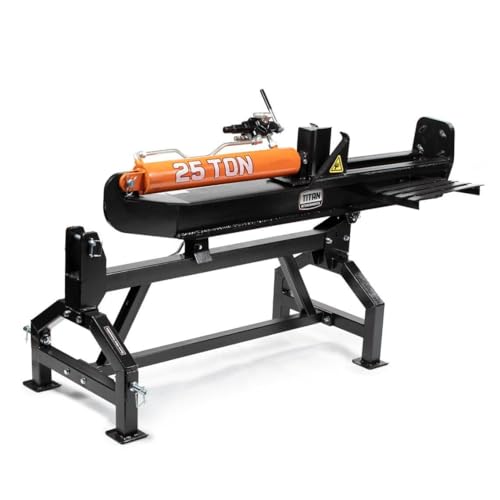
This Category 1 tractor-compatible model mounts on a three-point hitch, offering a 25-ton splitting capacity. It supports logs up to 25 inches long and 8.5 inches in diameter and includes an auto return valve with adjustable detent. Quick-hitch compatibility simplifies attachment and removal, which is valuable for multi-tractor households or fleets that perform varied tasks beyond wood splitting.
SuperHandy Log Splitter, 20 Ton, Gas Powered

SuperHandy delivers a portable gas-powered log splitter with a 7 HP engine and a two-stage Bucher hydraulic gear pump. It handles logs up to 20 inches long and 16 inches in diameter. At about 130 pounds, the unit balances portability with enough mass for stability. A 10-inch tubeless wheel setup and folding handle aid site-to-site movement, while a compact design helps when working in tighter spaces typical of rural properties or farm outbuildings. The cycle time is around 7.5 seconds, enabling rapid processing of firewood batches.
Full Boar 35 Ton 306cc Gas Log Splitter

Full Boar emphasizes strength with a 35-ton gas-powered unit featuring a BOX beam design for enhanced stability. It includes 4-Way and 6-Way blades for quick multi-seater splits in a single pass, and interchangeable blade configurations enable rapid adaptation to different wood sizes. The combination of high force output, robust construction, and versatile blade options positions this splitter as a strong option for heavy-duty wood processing on larger properties or professional settings.
4×24 Hydraulic Log Splitter Cylinder – 4″ Bore x 24″ Stroke

This heavy-duty hydraulic cylinder fits various log splitters and provides a 4-inch bore and 24-inch stroke. With a high-pressure rating and robust welding, it’s designed for compatibility across major brands. If you’re upgrading an older splitter or building a custom setup for a tractor attachment, this cylinder offers a reliable core hydraulic component for sustained splitting performance.
Buying Guide: Key Purchase Considerations For Tractor-Ready Log Splitters
When selecting a log splitter to pair with a tractor, consider how the unit integrates with your machine, property size, and typical wood types. The following factors help buyers compare options objectively:
- Attaching method and compatibility: Towable splitters work well with ATVs or utility tractors, while 3-point hitch models mount directly to Category 1 or similar tractor hitches. Quick-hitch compatibility reduces setup time between tasks.
- Splitting force and log size: Higher tonnage helps processors tackle hardwoods and large diameter logs. Check log length and diameter limits to ensure your typical wood fits within the splitter’s capacity.
- Orientation flexibility: Vertical and horizontal operation modes can improve efficiency for various log shapes and bar height constraints. A model with switchable orientation reduces manual handling of long pieces.
- Power source and maintenance: Gas-powered units deliver mobile power for remote sites, while electric or hydraulic cylinder upgrades suit shop setups. Consider engine reliability, fuel economy, and service support in your area.
- Portability and storage: Towable units require towing capacity and trailer compatibility, while lighter models with wheels are easier to move around a yard or barn. Factor weather exposure and storage space into your plan.
- Safety features: Dual-hand controls, automatic return valves, and secure interlocks reduce risk during operation. Look for protective shields, sturdy wedges, and reliable hydraulic seals.
- Blades and versatility: 4-way and 6-way blade configurations speed up processing by producing multiple log lengths in a single pass. Interchangeable blades save time during seasonal wood prep.
- Maintenance and warranties: Consider component quality, service availability, and warranty terms. Durable materials and easy-to-replace parts extend the life of heavy-use equipment.
- Budget vs. performance: While higher-tonnage units cost more, they can reduce processing time and labor. Balance upfront cost with long-term labor savings and project scope.
For tractor users, the choice often hinges on hitch compatibility, ease of attachment, and the ability to move the unit across a working property. Towable models offer flexibility if you already tow equipment, while 3-point hitch designs maximize tractor integration on a single chassis. A gas-powered engine provides on-site independence, but electric options with stands can be quieter and cleaner for indoor spaces.
Consider the typical wood species, the average log size you split, and whether you prioritize speed, portability, or blade versatility. By mapping these needs to the features above—tires and towing, hitch compatibility, blade configuration, and safety features—you can select a model that delivers consistent performance with your tractor setup.