Maintaining vibrant flowers often means safeguarding them from common pests. The following insect killers are designed to target a range of garden invaders while aiming to minimize harm to blossoms and beneficial insects when used as directed. This guide highlights five products commonly used for flowers and other blooming plants, covering contact action, coverage, and suitability for indoor or outdoor use. Each option is evaluated for effectiveness, safety for flowers, and ease of application to help you choose the right solution for your garden or potted plants.
| Product | Brand | Use | Notes |
|---|---|---|---|
| BioAdvanced Rose and Flower Insect Killer, Ready-to-Use, 24 oz | BioAdvanced | Roses and flowers | 14-day protection, broad insect range |
| BioAdvanced Houseplant Insect & Mite Control, Ready-to-Use, 24 oz | BioAdvanced | Houseplants, flowers, herbs | Kills mites and listed pests; indoor/outdoor |
| Sevin Insect Killer Ready to Use 32 oz | Sevin | Garden flowers and edibles | On-contact kill; broad pest coverage |
| Sevin 1 Gallon White Label Insect Killer | Sevin | Garden-wide protection | Large-volume option; broad pest range |
| BioAdvanced Organics Brand Insect Killer for Houseplants, 24 oz | BioAdvanced | Houseplants and flowers | OMRI-listed; fast action |
BioAdvanced Rose And Flower Insect Killer, Ready-To-Use

This ready-to-use spray targets a wide range of pests commonly found on roses and flowering plants. The formulation is designed for quick contact kill and provides up to 14 days of protection against listed insects. It is suitable for use on roses, flowers, and vegetable garden plots, making it a versatile option for mixed plantings. When applying, focus on the leaf undersides and new growth where pests tend to congregate. Always follow label directions to protect blooms and avoid stressing delicate flowers.
Key features include:
- Contact kill for 100+ insects, including aphids, caterpillars, whiteflies, and more
- 14-day protection against listed pests
- Safe for roses, flowers, and vegetable gardens when used as directed
BioAdvanced Houseplant Insect & Mite Control, Ready-To-Use
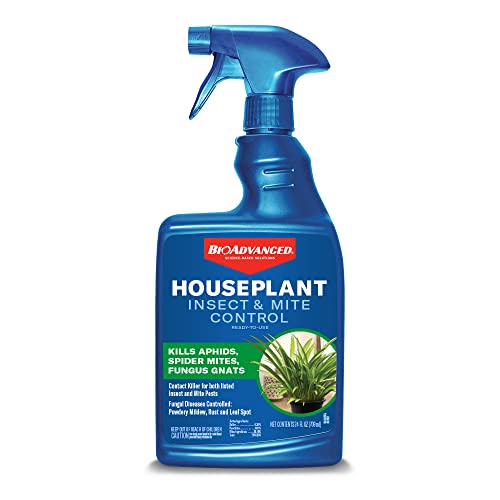
This product is designed for indoor and outdoor use on houseplants, flowers, and herbs. It kills a variety of listed insects by contact and is effective against mites, including spider mites. The spray requires thorough coverage of all plant surfaces, including undersides of leaves and new shoots, for best results. It is suitable for ornamentals and flowering herbs alike, offering a convenient option for plant care in homes and patios.
Key features include:
- Kills by contact against listed insects such as aphids and whiteflies
- Indoor and outdoor use; applicable on flowers and herbs
- Kills mites, including spider mites; thorough plant coverage recommended
Sevin Insect Killer Ready to Use 32 oz

Sevin multi-purpose insect killer provides fast control for a broad spectrum of pests that affect flowering plants. It’s designed to be applied directly to roses and other blooms to prevent damage from common garden insects. The product is noted for its on-contact activity, which can quickly reduce pest pressure on flowering plants. Users should adhere to label directions to protect blooms and avoid over-application on delicate petals.
Key features include:
- Protects roses and edible plants from listed pests
- Will not harm plants when used as directed
- Kills on contact; broad insect coverage
Sevin 1 Gallon White Label Insect Killer

This large-volume Sevin option is suitable for gardeners with extensive flower beds or multiple planters. It offers broad-spectrum coverage, killing on contact against hundreds of listed insects. Proper dilution and spraying technique are important to minimize any potential impact on flowering plants. The gallon size is a practical choice for ongoing pest management across larger outdoor spaces.
Key features include:
- Protects roses and edibles from listed pests
- Kills on contact; broad insect range
- Large-volume container for extended use
BioAdvanced Organics Brand Insect Killer For Houseplants

This organically oriented formula is suitable for houseplants and flowering plants alike, with OMRI-listed status indicating suitability for organic gardening contexts. It provides fast action to manage pests such as aphids, whiteflies, mealybugs, scale, and spider mites. The product is designed to deliver quick control while aiming to be compatible with organic practices on decorative blooms and edible flowers grown in containers or indoors.
Key features include:
- OMRI-listed for organic gardening use
- Kills a range of common houseplant pests
- Fast-acting spray suitable for flowers and foliage
Buying Guide: Key Considerations For Choosing The Right Flower Insect Killer
When selecting an insect killer for flowering plants, consider how pests affect your plants, the spray’s coverage and speed, and the safety implications for blooms, pollinators, and humans. The following perspectives help balance effectiveness with plant health and environmental considerations.
- Mode of action: Contact vs. systemic. Contact killers require direct spray on pests, while systemic products protect plants for a period after application. For flowering plants, contact killers are often preferred for targeted, immediate relief without long residue on petals.
- Plant safety: Some products are specifically labeled for flowers, roses, or edibles. Check label guidance to avoid phytotoxicity on sensitive blooms or new growth.
- Indoor vs. outdoor use: Indoor-use products are designed for houseplants and patios, while outdoor formulations address garden beds. Choose a product that matches your space and exposure conditions.
- Active ingredients and resistance management: Rotating products with different active ingredients can reduce pest resistance. Refer to the product’s pest list to ensure coverage of target species.
- Environmental impact: OMRI-listed or organic options can be preferable for organic gardens or homes with children and pets. However, always follow label directions for safe use and disposal.
- Application frequency: Some products offer extended protection (e.g., up to 14 days), while others require more frequent applications. Plan for maintenance without over-application that may stress plants.
- Coverage and dilution: For larger flower beds, consider larger-volume containers or multi-pack options. Always follow mixing ratios and spray patterns to achieve even coverage without run-off.
- Safety precautions: Wear protective gear as recommended, and avoid spray on open flowers during bloom if pollinator activity is a concern. Wash hands after application and keep treated areas away from children and pets until dry.
- Compatibility with beneficials: If you rely on natural predators, select products labeled to minimize harm to beneficial insects. Some formulations are more selective than others for non-target species.