Hydroponic systems rely on precise water temperatures to optimize root health and nutrient uptake. This guide highlights reliable hydroponic water chillers to help you maintain stable temperatures, prevent heat stress, and support robust plant growth. Below you’ll find detailed product highlights, practical cooling ranges, and buying considerations for American gardeners and hobbyists.
| Product | Brand | Approximate Capacity | Notes |
|---|---|---|---|
| BAOSHISHAN Aquarium Chiller 42gal | BAOSHISHAN | 42 gal | Compact, suitable for smaller hydroponic setups |
| VEVOR Aquarium Chiller 110 Gal | VEVOR | 110 gal | High capacity, versatile for larger systems |
| Fitnet 79 Gal Aquarium Chiller | Fitnet | 79 gal | Efficient, quiet operation |
| Poafamx Aquarium Chiller 42Gal | Poafamx | 42 gal | Solid cooling with practical airflow design |
| SDLOOL Aquarium Chiller 42gal | SDLOOL | 42 gal | Low noise, freon-free cooling |
Choosing the right chiller depends on tank size, ambient conditions, and required cooling range. The selections above cover a range from compact to larger-capacity models, with emphasis on reliability, energy efficiency, and quiet operation to suit home hydroponic systems.
BAOSHISHAN 42gal Hydroponics Chiller

The BAOSHISHAN unit is designed for 42-gallon tanks and can typically drop water temperature by up to 10°F. It uses a freon-free compressor with R290 refrigerant and maintains a target range around 68-78°F (20-26°C), which supports hydroponic root health and stable nutrient uptake. The system includes upgraded pump components, corrosion-resistant fittings, and clamps to minimize sediment and improve aesthetics in a tank setup. Practical for smaller hydroponic reservoirs and fish-friendly environments where roots benefit from cool, stable water.
VEVOR 110 Gal Chiller with 1/3 HP
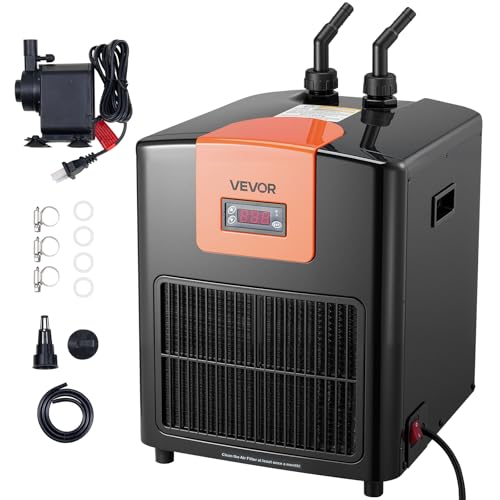
This 110-gallon chiller targets larger hydroponic setups with a 1/3 HP compressor and a titanium evaporator. It offers a stable temperature range of 65-80°F (18-27°C) and a high water circulation rate up to 1200 L/H. The refrigerant is a fluorine-free R290, and the unit emphasizes broad compatibility with both freshwater and saltwater ecosystems. Suitable for bigger reservoirs or multi-tank systems where consistent temperatures across volumes matter for plant roots and microbial balance.
Fitnet 79 Gal Hydroponic Chiller

Fitnet’s 79-gallon chiller provides automatic constant temperature control with a quiet, efficient compressor and R134a refrigerant. The recommended operating range is 68-79°F (20-26°C). It includes guidance for space around the unit to maximize heat dissipation and cooling efficiency, important in hydroponic environments where airflow can impact performance. This model balances capacity with compact form and lower noise output, making it a practical choice for mid-sized systems.
Poafamx 42Gal Chiller for Hydroponics

Poafamx focuses on fast, stable refrigeration with R290 refrigerant and dual quiet fans. It’s designed for a typical 5-10°C decrease below ambient under appropriate conditions. The unit emphasizes strong airflow around the chiller for efficient heat dissipation and long-term reliability. A practical option for mid-sized hydroponic reservoirs requiring reliable cooling with good airflow to prevent localized heat pockets around roots.
SDLOOL 42gal Hydroponic Chiller

SDLOOL’s 42-gallon chiller is built for rapid cooling with a robust compressor and effective heat dissipation. It operates quietly (under 40 dB) and uses freon-free refrigeration with R134a for safe, eco-friendly cooling. It is positioned for small to mid-sized hydroponic systems where noise and energy usage are considerations, while still delivering solid temperature control for healthy root zones.
VEVOR 500 Gallon Chiller

This high-capacity VEVOR model targets large hydroponic installations or multiple-tank setups. It features a 1-1/2 HP compressor, titanium evaporator, and a cooling range of 50-80°F (10-27°C). The unit emphasizes robust performance, corrosion resistance, and a complete fittings kit to enable flexible piping in diverse hydroponic configurations.
Express Water Universal Chiller
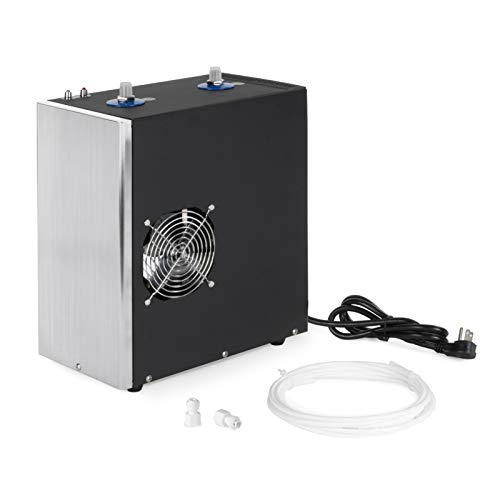
The Express Water Universal Chiller is designed to pair with select water filtration systems, offering a dedicated tank and an integrated cooling fan to achieve colder output. It’s positioned as a plug-and-play option for users who want to chill filtered water on demand. While primarily marketed for filtration accessories, its compact form and cooling capability can fit smaller hydroponic systems that need additional cold water on standby rather than continuous chill.
Buying Guide
- Tank capacity and system size: Choose a chiller that matches or slightly exceeds your reservoir volume to avoid overworking the unit. Larger tanks require higher-capacity chillers with better heat rejection.
- Temperature range and precision: Look for a model with a defined cooling range and accurate temperature control to maintain optimal root-zone conditions.
- Energy efficiency and noise: Consider units with energy-efficient compressors and quiet operation for home environments and uninterrupted work sessions.
- Refrigerant type and safety: Freon-free options (such as R290 or R32) are better for the environment; ensure compatibility with your hydroponic setup and ventilation.
- Ventilation and layout: Adequate space around the chiller improves heat dissipation. Plan for ventilation in indoor spaces to prevent heat buildup.
- Installation and maintenance: Check included fittings, hoses, and pumps. Favor models with corrosion-resistant components and easy access for routine cleaning.
- Multi-tank scalability: For growers with several reservoirs, select a unit with a higher capacity or modular options to maintain uniform temperatures across tanks.
- Placement considerations: Some chillers release heat during operation; place them in well-ventilated areas away from heat-sensitive plants where possible.
When integrating a hydroponic water chiller, monitor water temperature with a reliable thermometer and regularly inspect fittings for leaks. Maintain consistent airflow around the unit and ensure that power supply and circuit capacity meet the equipment’s needs to prevent electrical hazards.