Choosing the right growing containers can boost yields and improve plant health. This guide highlights durable fabric grow bags that are well-suited for vegetables, herbs, and potatoes. The top picks are designed for air pruning, strong drainage, and easy mobility, making them ideal for balconies, patios, or yards. The buyers most likely to benefit are urban gardeners seeking space-efficient options, and DIYers who want reusable, multi-season containers.
Summary table of selected products:
- FEED GARDEN 5 Gallon Grow Bags (4 Pack) – breathable, reinforced handles, durable fabric
- Cavisoo 5-Pack 10 Gallon Potato Grow Bags – thick nonwoven, reinforced handle
- MEKOLIFE 5 Gallon Grow Bags (3 Pack) – ultra-breathable, heavy-duty handles
- Jorvila 5 Pack 5 Gallon Grow Bags – self-air pruning, strong drainage
- Land Guard 4-Pack Fabric Grow Bags 5 Gallon – sturdy, easy to move, good drainage
FEED GARDEN 5 Gallon Grow Bags 4 Pack

Best for balcony or patio gardeners who want a multi-season, lightweight option. These 5-gallon bags are built from 300G non-woven fabric that promotes airflow and drainage to reduce over-watering and root rot. The fabric is thicker than standard bags, improving durability and resisting tears. Reinforced, double-stitched handles make it easy to move filled pots without damage. This set is ideal for growing vegetables, herbs, and flowering plants in tight spaces where root health and clean harvesting matter.
Who it’s best for: urban dwellers who need portable containers and frequent repositioning. Why selected: the combination of breathable fabric, reinforced handles, and thick construction supports healthier roots and longer-term use. Caution: higher-density fabric may retain more moisture in cooler climates, so consider drainage planning in rainy periods.
Key features in brief:
– Breathable 300G non-woven fabric for airflow and drainage
– Thickened fabric for durability across seasons
– Double-stitched reinforced handles for easy movement
Product uses table:
| Feature | Benefit |
| Breathable fabric | Reduces root rot and encourages healthy root systems |
| 300G thickness | Increases durability beyond single-season use |
| Reinforced handles | Easier transport when filled with soil
Cavisoo 5-Pack 10 Gallon Potato Grow Bags
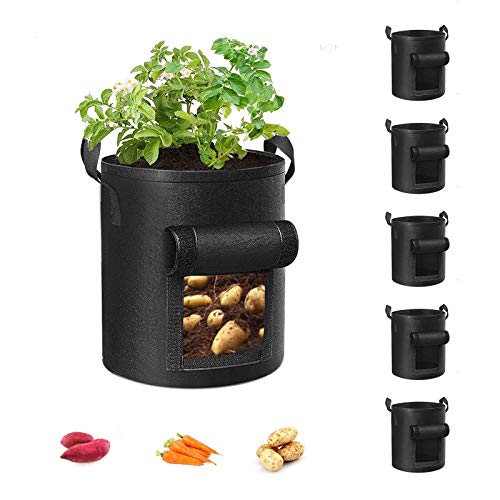
Best for home potato growing or mixed vegetable crops with larger container needs. These 10-gallon bags are made from 300g thick nonwoven fabric, designed for reuse over several seasons. They provide excellent drainage and a robust reinforced handle for easy relocation. The material’s breathability helps prevent waterlogging and promotes steady root development, which benefits crops like potatoes, tomatoes, and larger herbs.
Who it’s best for: gardeners planning larger plantings or early potato harvests in bags. Why selected: high-capacity fabric pots with durable handles and reliable drainage, suitable for seasonal crops. Caution: 10-gallon size requires more soil and weight when full, so ensure sturdy placement and support.
Key features:
– Durable 300g fabric for long-term use
– Excellent drainage for ideal root conditions
– Reinforced handle with strong webbing
MEKOLIFE 5 Gallon Grow Bags – 3 Pack

Better for gardeners seeking ultra-breathable, lighter-weight containers with strong mobility. MEKOLIFE’s 5-gallon bags use double-layer breathable nonwoven fabric to boost air circulation around the root zone, helping to prevent root rot and support vigorous growth. The heavy-duty dual handles simplify moving plants to sun or shade, and reinforced double seams provide reliable structure for soil and plant weight.
Who it’s best for: container gardeners who rotate sun exposure or frequently relocate plants. Why selected: the dual-handle design and fabric construction balance portability with root health. Caution: heavier soil loads may stress the seams if handles are not fully secured during movement.
Key features:
– Ultra-breathable double-layer fabric
– Reinforced dual handles for mobility
– Sturdy seams and base for stability
Jorvila 5 Pack 5 Gallon Grow Bags

Best for flexible, reusable options with strong root health benefits. Jorvila’s 5-gallon bags use 300G thickened nonwoven fabric that resists wear and is washable for multiple seasons. Their aeration fabric supports self-air pruning, which reduces root circling and encourages healthier root structures. Drainage remains strong, helping plants cope with overwatering and temperature shifts.
Who it’s best for: gardeners who value reusability and good root growth at an affordable price. Why selected: proven air-pruning potential and a durable construction that holds up to regular use. Caution: washing and drying thoroughly after use helps maintain fabric integrity over time.
Key features:
– 300G thickened fabric for longevity
– Aeration design promotes healthy roots
– Durable handles for easy movement
Land Guard 4-Pack Fabric Grow Bags 5 Gallon

Best for cost-conscious buyers who want a sturdy, easy-to-use option. Land Guard’s 4-pack 5-gallon bags emphasize high-strength nonwoven fabric and lightweight design, yet they maintain good drainage through the soil to support plant health. Easy-to-use features include heavy-duty handles and robust construction to move full bags with less risk of tearing.
Who it’s best for: gardeners who value value plus usability. Why selected: strong drainage and handle durability at a practical price point. Caution: check for any minor stitching wear after heavy use and re-tighten handles as needed.
ZtohPyo 15 Gallon Plant Grow Bags

Best for large-space needs and square-foot garden setups. The 15-gallon bags are made from thickened non-woven fabric with reinforced stitching for durability. They provide 360-degree ventilation to encourage robust root growth and prevent circling. Large diameter and 8-inch height create substantial growing space for vegetables and herbs.
Who it’s best for: gardeners with more space or those building raised-bed-like setups in fabric form. Why selected: substantial size supports bigger crops; reinforced stitching ensures resilience. Caution: the larger footprint requires stable support and a flat surface to prevent tipping in windy conditions.
CJGQ Fabric Raised Garden Bed

Best for users who want a large, multi-grid planting area in a single fabric bed. This 128-gallon grow bed measures with eight grids and offers ample space for potatoes, vegetables, and flowers. It uses premium non-woven fabric with reinforced stitching to ensure reuse and durability. The design promotes 360-degree ventilation and efficient drainage for healthy root systems.
Who it’s best for: larger balcony gardens or ground-level setups needing a raised-bed feel without wood frames. Why selected: very large grow bag design that consolidates several plant zones into one container. Caution: its large size requires sufficient space and careful setup to prevent sagging or fabric wear at grid borders.
Mulctun 4 Pcs 15 Gallon Potato Grow Bags
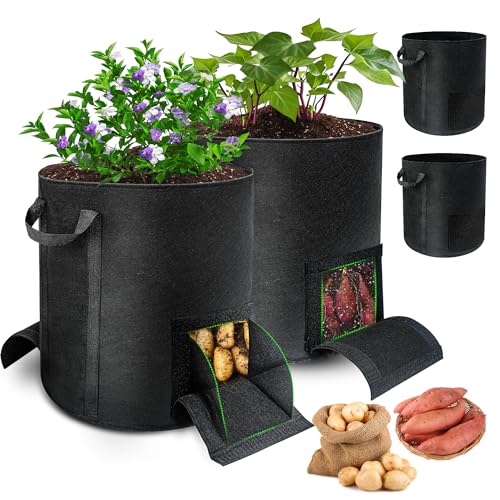
Best for potatoes and large vegetables with visible harvest windows. These 15-gallon bags feature an upgraded dual-window design for easy harvesting and moisture checks without digging. The extended reinforced handles aid movement when full of soil, and the large capacity supports robust growth and bigger harvests.
Who it’s best for: potato enthusiasts and root gardeners who want clean, simple harvesting. Why selected: practical window design plus strong handles for heavier loads. Caution: ensure the window opening is kept clean to prevent soil leakage when harvesting.
Buying Guide: Fabric Grow Bags For Vegetables
What size should you choose? For small patios, 5-gallon bags cover many herbs, peppers, and compact tomatoes. For larger vegetable crops or potatoes, 10–15 gallon bags provide more rooting space and easier harvests. Consider the soil weight you’re prepared to manage and the available space on your balcony or yard.
Why nonwoven fabric matters: breathable fabric improves aeration and drainage, reducing root rot and encouraging healthy root architecture. Thicker fabric (around 300G) adds durability for multi-season use, while reinforced seams and handles improve longevity and portability.
Drainage and root health: look for bags that promote air pruning and avoid drown-out by ensuring ample drainage holes and fabric openness. Self-air pruning helps prevent root circling, which can limit plant growth in dense soils.
Portability and placement: consider how often you’ll move containers. Bags with strong, double-stitched, reinforced handles make repositioning easier without tearing. Lighter-weight bags with strong handles are suitable for balconies facing sun shifts or wind exposure.
Care and maintenance: keep bags clean between seasons, dry them after use, and store flat to save space. Reusable fabric pots offer long-term value when properly cared for, especially in urban or seasonal climates.
FAQ
- Are fabric grow bags better than plastic pots for vegetables? Fabric grow bags offer superior air pruning and drainage, which helps prevent root rot and encourages healthier roots, especially for root crops and tomatoes.
- What size is best for potatoes? Potato crops typically do well in 10–15 gallon bags, giving space for tubers to develop while still allowing easy harvest.
- Do fabric bags last multiple seasons? Quality 300G fabric bags with reinforced seams can last several seasons with proper care, though wear can occur at seams over time.
- How much soil do I need? For 5-gallon bags, about 1/2 to 3/4 full with high-quality potting mix is typical; 10–15 gallon bags need proportionally more soil.
- Can I reuse bags after harvest? Yes, wash and dry thoroughly between seasons before storing to preserve fabric integrity and prevent mold.
- Do I need drainage holes? Yes. Proper drainage is essential to prevent waterlogged roots and to maintain healthy soil moisture levels.