Powering outdoor solar lights reliably requires high-quality rechargeable batteries designed for outdoor conditions. The following selections are AA NiMH rechargeables that commonly fit garden lights, landscapes, string lights, and pathway lamps. This guide highlights each option’s capacity, durability, and longevity, helping you choose batteries that maximize sun-powered performance and minimize replacements.
| Product | Brand | Capacity | Notes |
|---|---|---|---|
| Brightown 12-Pack Rechargeable AA Batteries | Brightown Store | 1000mAh | Pre-charged 30%; 1000x recharge cycles |
| EBL Solar AA Battery Rechargeable | EBL Store | 1300mAh | Pre-charged; Low-Self Discharge |
| Ni-MH Rechargeable AA Batteries (4 Pack) | JiajaX Store | 600mAh | Affordable backup option |
| Tenergy Solla Rechargeable AA Battery | Tenergy Store | 1000mAh | UL Certified; 2,000 cycles |
| Kruta 20-Pack Rechargeable AA Batteries | Kruta Store | 1600mAh | Long-lasting power; 1200 cycles |
Choosing the right garden solar light battery involves balancing capacity, cycle life, and battery technology. Higher mAh ratings typically mean longer runtime between charges, especially in cloudy weather. But cycle life and self-discharge rates also affect performance over time. The following product sections summarize the key characteristics of five popular options, helping you identify which batteries best fit your outdoor lighting setup and maintenance preferences.
Brightown 12-Pack: Pre-Charged, High Capacity AA NiMH

The Brightown AA batteries offer a 1000mAh capacity with a robust rechargeable design intended for frequent cycling. Marketed as pre-charged at 30%, they are ready for charging in solar applications after initial use. This model emphasizes cost savings over time by enabling up to about a thousand recharge cycles. The battery’s NiMH chemistry helps stabilize voltage, reducing drop-off periods that can affect outdoor lighting performance. It is a practical choice for those seeking reliable performance and broad compatibility with typical solar garden fixtures.
EBL Solar AA Battery Rechargeable
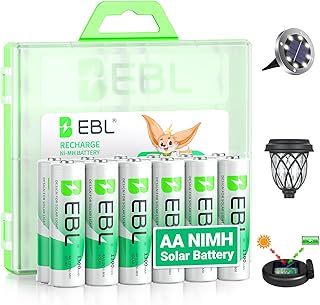
EBL’s 1300mAh AA rechargeable batteries are designed for outdoor solar lights and landscaping fixtures. Pre-charged and ready for use, these batteries claim longer run times before a recharge is needed. The higher capacity supports extended periods of sunlight exposure, helping to keep garden lights brighter for longer evenings. With modern production methods, they feature improved cycle life and a focus on minimizing waste through repeated use. This option suits lights that demand more power from each cell during peak sun hours.
Ni-MH Rechargeable AA Batteries (4 Pack)

This JiajaX 4-pack delivers 600mAh capacity per cell, making them a solid entry-level option for standard garden lights and remote controls. The set emphasizes replacement practicality—ideal when original batteries fail—and it lists a 500-charge cycle expectation. While lower in capacity than some competitors, the 600mAh cells are lightweight, cost-effective, and perfectly adequate for devices that do not demand peak performance during every sun window. They function well as reliable, persistent backups for hobby-grade solar lighting systems.
Tenergy Solla Rechargeable AA Battery

Tenergy Solla batteries are built with Solar PRO technology to address common garden-light battery issues, such as leakage from overcharging and premature discharge after long periods of sun exposure. With a focus on year-round outdoor performance, these cells are designed to withstand temperature extremes while maintaining capacity. The claimed 2000 charging cycles significantly outperform typical NiMH batteries, which can translate into less frequent replacements for solar lights that stay powered through changing seasons. This option suits homeowners seeking long-term reliability.
Kruta 20-Pack Rechargeable AA Batteries
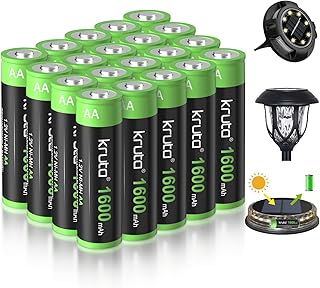
Kruta’s 20-pack provides a high-capacity 1600mAh option designed for extended runtime in outdoor solar fixtures. The larger capacity allows longer service in lights during low-sun periods and supports powering multiple lights from a single charge. The model emphasizes durability and a high number of recharge cycles (up to about 1200). It is well-suited for homeowners with extensive solar lighting setups or those who rotate power sources across several devices in their outdoor spaces.
Buying Guide
Key considerations when selecting garden solar light batteries include capacity, cycle life, self-discharge, and compatibility with your fixtures. Higher mAh typically means longer operation between charges, but the effective runtime also depends on the light’s power draw and how often it is exposed to full sun. NiMH chemistry offers good cycle stability and broad compatibility with AA-sized fixtures, though some models may have different charging profiles that matter in long-term use.
Important factors to compare:
- Capacity and run-time: Balance mAh with your sun exposure and light intensity.
- Cycle life: Look for models advertised with thousands of recharge cycles for long-term savings.
- Self-discharge rate: Low-self-discharge designs keep charge longer when lights are idle.
- Environmental resilience: Temperature tolerance and sealing adequacy affect outdoor performance.
- Pre-charge and replacement needs: Pre-charged cells reduce initial activation friction; consider replacement frequency in your maintenance plan.
- Cost per cycle: Higher upfront costs can pay off through more cycles and reduced replacements.
For practical maintenance, consider labeling batteries per fixture and scheduling periodic checks to ensure solar panels are clean and unobstructed. If your lights encounter rapid dimming after long cloudy periods, opting for higher-capacity cells with better self-discharge resistance may improve reliability. When stocking replacements, ensure the dimensions and voltage align with your fixtures’ requirements to avoid compatibility issues.