Finding the best fertilizer to promote flowers depends on your plants and growing goals. This guide highlights five well-rounded options that help annuals, perennials, and container flowers thrive with vibrant color and stronger stems. Each product appeals to different needs—quick bloom boosts, long-lasting feeding, or organic options—so you can match a fertilizer to your garden style and maintenance level. The following quick-reference table summarizes the featured products for easy comparison.
| Product | Formula Type | Best For | Feeding Duration |
|---|---|---|---|
| Miracle-Gro Water Soluble Bloom Booster Flower Food | 10-52-10 high-phosphorus | Containers, annuals, perennials | Rapid feeding |
| Espoma Organic Bloom! | 1-3-1, liquid concentrate with kelp and humic acids | All flowering plants seeking organic option | Every 2–4 weeks during season |
| Miracle-Gro Shake ‘n Feed Rose & Bloom | Granular, extended release up to 3 months | Roses and flowering plants needing long-lasting color | Up to 3 months |
| Miracle-Gro Shake ‘N Feed All Purpose | Granular, all-purpose formula | All plants in-ground or containers | Up to 3 months |
| Scotts All Purpose Flower & Vegetable Continuous Release | Continuous release nitrogen | Flowers, vegetables, and in-ground beds | Up to 2 months |
Below are five selected products with direct links to purchase. Each section explains who should choose the product, why it was selected, and any practical limitations to consider.
Miracle-Gro Water Soluble Bloom Booster Flower Food

Best for quick bloom enhancement in containers and beds. This high-phosphorus formula promotes more blossoms and richer color for flowering annuals and perennials. The water-soluble mix feeds instantly, helping plants respond quickly to feeding. Use this when you want visible blooms sooner, especially in pots, hanging baskets, and in-ground flower borders.
Who it’s best for: gardeners who want fast color and are feeding flowering annuals or perennials in containers or in-ground beds. If you need rapid bloom improvement with a soluble solution, this is a strong choice. A caution: frequent, direct feeding can increase salt buildup in highly containerized soils if not used as directed.
Farmer’s Secret Fruit & Bloom Booster Fertilizer

Best for a wide range of fruit trees, berries, vegetables, and flowering plants. This concentrated formula strengthens root systems to improve nutrient uptake, supporting both abundant blooms and fruit sets. It works across plant families, making it versatile for mixed gardens or edible landscapes where flowering and yield matter.
Who it’s best for: gardeners looking for a single booster that covers fruits, vegetables, and ornamentals. A limitation: the product is highly concentrated and is recommended to dilute at a rate of 1 teaspoon per 2 gallons of water to avoid over-fertilizing sensitive plants.
Espoma Organic Bloom! 16-Ounce Concentrated Plant Food

Best organic option for flowering plants. This liquid concentrate blends natural proteins with kelp extracts and humic acids to nourish blooms in annuals, perennials, and containers. The 1-3-1 analysis supports steady growth and color without synthetic additives, appealing to organic gardeners and those sensitive to synthetic nutrients.
Who it’s best for: organic growers or anyone preferring plant foods derived from natural ingredients. Limitation: organic blends may work more slowly than quick-acting synthetic formulas, so expect gradual improvements in bloom intensity over several weeks with regular applications.
Miracle-Gro Shake ‘n Feed Rose & Bloom

Best for roses and other flowering plants that benefit from long-lasting feeding. This granular fertilizer feeds soil and roots for up to three months, supporting more blossoms and vibrant color. It’s guaranteed not to burn when used as directed, and the formula includes natural components like kelp and bone meal to nourish soil microbes for healthier roots.
Who it’s best for: rose gardens or mixed flower beds where a long interval between feedings is preferred. Limitation: longer intervals between applications may not suit plants needing rapid nutrient uptake after heavy bloom demand or heat stress.
Miracle-Gro Shake ‘N Feed All Purpose
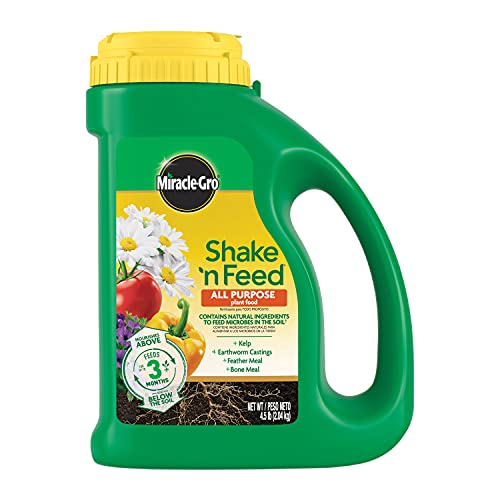
Best for a versatile, all-in-one option. This all-purpose formula feeds above and below the soil for up to three months and includes micronutrients to support overall plant vigor. It’s suitable for container plants and in-ground gardens alike, including flowers, vegetables, and herbs.
Who it’s best for: gardeners seeking a single product to nourish diverse plantings with less maintenance. Limitation: as a universal product, it may not tailor to the unique needs of highly specific flowering species that demand specialized formulas.
Scotts All Purpose Flower & Vegetable Continuous Release

Best for steady, in-ground feeding. This continuous-release formula provides nitrogen over a two-month period to support steady growth in flowers and vegetables. It’s particularly convenient for in-ground beds and established garden plots where consistent feeding reduces maintenance.
Who it’s best for: gardeners who prefer a predictable, time-release program with minimal dosing. Limitation: may not deliver a quick bloom boost after a new planting or a period of rapid flower production unless paired with a supplementary, quick-acting option.
Buying Guide: How to Choose the Right Flower Fertilizer
- Growth stage and plant type: Decide whether you need a quick-acting fertilizer for immediate blooms (soluble formulas) or a long-lasting option for ongoing growth (granular or continuous-release).
- Organic vs synthetic: Organic blends favor soil health and long-term microbes, while synthetic formulas provide fast results. Your choice may depend on your gardening philosophy and plant sensitivity.
- N-P-K balance: For flowering emphasis, look for higher phosphorus (the middle number) to promote blooms and color. A 10-52-10 formula targets flowering heavily, while balanced mixes (e.g., 1-3-1) support overall health with bloom potential.
- Application method and schedule: Water-soluble fertilizers require more frequent application, while granular and continuous-release options reduce maintenance. Containers may benefit from soluble feeds for quick color changes.
- Soil and irrigation considerations: Ensure the product fits your soil type and watering routine. Over-fertilizing can lead to salt buildup, especially in pots with limited drainage.
- Plant-specific needs: Roses, hydrangeas, and flowering shrubs may benefit from dedicated formulas that address their unique nutrient requirements and bloom cycles.
FAQ
- What fertilizer promotes more blooms quickly?
– Quick-acting soluble formulas (such as bloom boosters) often produce faster color bursts in flowering plants, especially in containers or new plantings. - Is organic fertilizer better for flowers?
– Organic options improve soil texture and microbial activity over time, appealing to gardeners prioritizing sustainability and soil health. - How often should I fertilize flowering plants?
– Most flowering plants benefit from regular feeding every 2–4 weeks during the growing season for soluble forms, or up to every 3 months for many granular, slow-release formulas. Always follow label directions. - Can I use the same fertilizer for roses and annuals?
– Many all-purpose or specialized bloom formulas work for both roses and annuals, but roses often respond well to targeted rose & bloom formulas for deeper color and longer flowering cycles. - Should I avoid fertilizing heat-st stressed plants?
– Yes. Fertilizing during peak heat can stress plants further. Wait until cooler conditions or after a moderate watering, then resume with lower rates as needed. - What is the best option for container flowers?
– Water-soluble bloom boosters provide quick results in containers, while long-lasting granular feeds reduce maintenance. A combination approach can work well for color and longevity.