Fall is a critical time to protect and feed your lawn while weeds prepare to rebound in spring. The right fall weed killer not only targets common broadleaf weeds but also supports turf health through cooler months. This guide highlights five top products designed for American lawns, explaining how each works, where they shine, and how to choose the best option for your yard.
Summary of selected products
- Scotts Turf Builder WinterGuard Fall Weed & Feed3 — Weed killer and fertilizer for 4,000 sq. ft.
- Scotts Turf Builder WinterGuard Fall Weed & Feed5 — Weed killer and fertilizer for 4,000 sq. ft.
- Scotts Halts Crabgrass & Grassy Weed Preventer — Pre-emergent for 10,000 sq. ft.
- Spectracide Weed Killer — Broad weed control, for multiple weed types.
- Roundup for Lawns₂ Concentrate — Weed killer for northern grasses, 32 oz.
Scotts Turf Builder WinterGuard Fall Weed & Feed3

Brand: Scotts
Features: This weed killer plus fall fertilizer controls over 50 listed lawn weeds, including clover, dandelion, plantain, and purslane. It feeds the lawn as weeds are actively growing, with temperatures between 60°F and 90°F for best results. Apply on a moist lawn for optimal uptake in fall.
Scotts Turf Builder WinterGuard Fall Weed & Feed5

Brand: Scotts
Features: Similar to the 3-in-1 formulation, this product targets more than 50 listed lawn weeds while delivering fall fertilizer. It is designed for use when weeds are actively growing in cooler fall temperatures, promoting a stronger lawn come spring.
Scotts Turf Builder WinterGuard Fall Weed & Feed5 (12,000 sq. ft.)

Brand: Scotts
Features: This is a higher-coverage variant of the fall weed and feed strategy, useful for larger lawns. It kills over 50 listed weeds and feeds grass to strengthen root systems and overall health through fall.
Scotts Halts Crabgrass & Grassy Weed Preventer

Brand: Scotts
Features: A pre-emergent weed killer designed to prevent germination of crabgrass, foxtail, spurge, and other listed weeds. Effective in early spring or fall, with performance resilient to rain or cold after application. Helps protect bare or thin lawn areas from weed invasion.
Spectracide Weed Killer, 10.8 lb
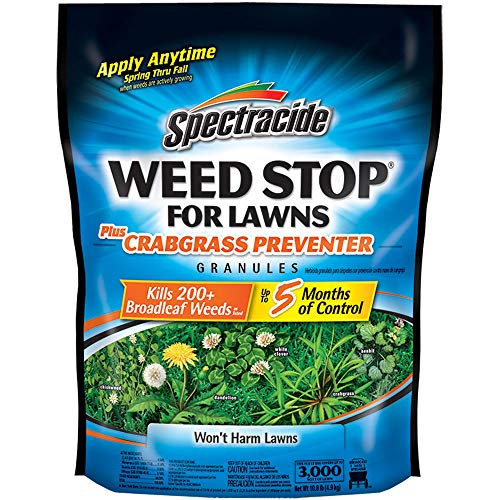
Brand: Spectracide
Features: Kills more than 200 types of weeds when used as directed and won’t harm lawns when applied properly. Includes pre-emergent options to prevent crabgrass and other annual grasses. Provides extended control up to several months depending on conditions.
Scotts WeedEx Prevent with Halts
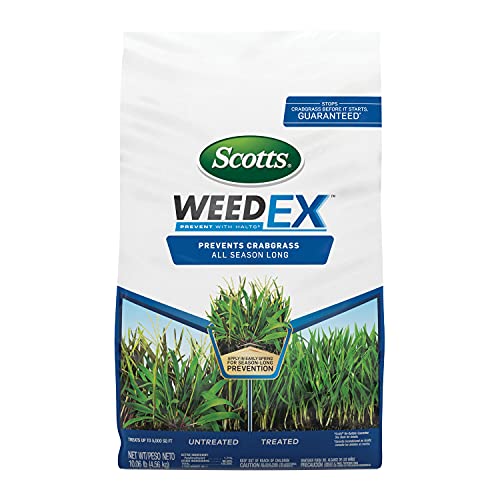
Brand: Scotts
Features: This pre-emergent prevents crabgrass and other grassy weeds all season. Suitable for early spring or fall applications, it helps protect lawns from weed pressure throughout the season and supports ongoing lawn health by reducing weed competition.
Roundup for Lawns₂ Concentrate

Brand: Roundup
Features: A concentrated weed killer for northern grasses that kills weeds at the root. It offers quick action with up to three months of weed control under proper use and is capable of treating a wide range of weed species listed on the label.
Buying Guide
Key considerations for choosing a fall weed killer:
- Weed targets: Identify the common weeds in your lawn (dandelion, clover, crabgrass, etc.) and choose a product formulated to address those species. Pre-emergents prevent weed germination, while post-emergents kill already established weeds.
- Turf type and climate: Northern grasses and cool-season lawns respond best to products labeled for seasonal use in fall. Check label temperature recommendations (often 60–90°F) for optimal results.
- Coverage area: Select a container size that matches your lawn’s square footage. Some products come in bags sized for 4,000–12,000 sq. ft. or more, which affects cost-per-square-foot and application frequency.
- Pre-emergent vs post-emergent: If your lawn is prone to crabgrass or Poa annua, a pre-emergent may be essential. For existing weeds, a post-emergent formula is more effective.
- Fertilization component: Some fall products also fertilize the lawn to help recovery and growth in spring. Consider whether you need added nutrients in addition to weed control.
- Application timing: Fall applications are typically aligned with weed growth cycles and cooling temperatures. Follow the product’s timing guidelines to maximize effectiveness.
- Safety and lawn care practices: Apply to a moist lawn and water after application if directed. Wear protective gear as recommended and avoid windy or rain-prone days during treatment.
Comparative notes:
- Integrated weed killer and fertilizer (Fall Weed & Feed) provides a two-in-one approach, reducing the number of steps for fall lawn care but may not suit lawns needing targeted weed control only.
- Pre-emergents like Halts prevent weed seeds from germinating, which is ideal for maintaining weed-free lawns in early spring and fall, but they should be timed carefully to avoid interfering with overseeding or other lawn care.
- Broad-spectrum herbicides (Roundup, Spectracide) offer wide weed control but may require more careful use to protect desirable grasses and non-target plants.
- Consider lawn size, weed pressure, and climate when choosing between higher-coverage options and smaller bags for tighter maintenance budgets.