Answering the buyer’s question, these clone boxes enable plant propagation with minimal disruption to the parent plant. They’re ideal for woody plants, fruit trees, and ornamentals that are hard to root by traditional cuttings. The top picks here suit gardeners who want higher rooting success, visible progress, and reusable tools. This guide compares five strong options, highlighting who each is best for, and why. A quick summary table follows to help you compare at a glance.
| Product | Best For | Key Benefit |
|---|---|---|
| ZUCKBOX 12 PCS Plant Root Growing Box | Beginners and hobbyists | Easy setup and reusable design |
| PAMAZY 9Pcs Tree Root Growing Box (Size M) | Observant growers | Half-transparent design for root observation |
| Tanzfrosch 10 Pack Root Growing Box | Bulk propagators | Multiple units for larger projects |
| FCENDS 24 PCS Plant Root Growing Boxes (Medium) | Value-focused buyers | High quantity and durable buckles |
| Lazzineer 10pcs Small Root Growing Box | Woodies and ornamentals | Clear roots without damage to parent |
Note: This introduction and table are designed to help you pick quickly. For deeper details, scroll to the product sections below where each option is analyzed with suitability, pros, and practical cautions.
ZUCKBOX 12 PCS Plant Root Growing Box

The ZUCKBOX kit uses an air-layering approach to propagate by encouraging root development on a chosen branch while keeping it attached to the parent plant. It is simple to use: select a healthy branch, peel a bark circle, fill the device with moist soil, and secure it at the peeled site. Best for beginners or gardeners who prefer a non-damaging method that minimizes stress on the parent plant. Caution: ensure secure fastening to prevent detachment in windy conditions or during handling.
Who this is best for: New propagators and hobbyists seeking a straightforward method with reusable components.
PAMAZY 9Pcs Tree Root Growing Box (Size M)

PAMAZY emphasizes an air layering method with a half-transparent design, allowing direct observation of root development without removing the box. Its oval shape increases space for roots and includes multiple drainage holes to prevent waterlogging. Best for observant growers who want to monitor moisture and root growth. Caution: visibility is good, but users should avoid over-watering since excess moisture can lead to slower rooting times in poorly aerated environments.
Who this is best for: Gardeners who want to watch root growth closely and prefer a slightly larger observation area.
Tanzfrosch 10 Pack Root Growing Box
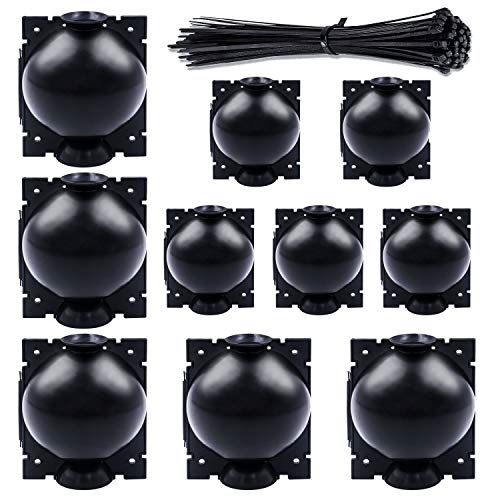
Tanzfrosch offers a multi-pack solution focused on speed and reliability. The globe design promotes stronger, faster-rooted cuttings and supports a 2X growth rate when combined with air layering techniques. It’s best for growers propagating several plants or experimenting with different species. Caution: ensure the parent plant bears a branch thick enough to fit the box without girdling the bark layer.
Who this is best for: Propagation projects with multiple plants or trialing several species at once.
FCENDS 24 PCS Plant Root Growing Boxes (Medium)

FCENDS provides a high-volume option with reusable design and automatic buckles for quick setup and removal. It includes ample plastic ties to secure the shells, supporting repeated use. This option suits larger gardens or professional growers seeking more units per project. Caution: check buckle integrity over time; failure may require replacement ties to maintain a secure graft area.
Who this is best for: Large-scale propagators and users who value a bulk supply and easy assembly.
Lazzineer Tree Root Growing Box – 10pcs Small

Lazzineer focuses on woody plants compatibility and provides a transparent rooting device designed for magnolia, fig, citrus, and roses. It enables root development while keeping the branch attached, offering a higher success rate than some traditional cuttings. Best for gardeners working with hard-to-root trees. Caution: not ideal for very soft herbaceous stems or very thick branches; choose the size that matches your branch thickness.
Who this is best for: Gardeners working with woody ornamentals and fruiting trees that resist standard cuttings.
Buying Guide
Key considerations help you pick the right clone box for your goals:
- Plant type and thickness: Look for sizes that fit branches in the 3–12 mm range for most woody plants; larger sizes accommodate thicker branches but may be harder to apply on delicate plants.
- Observation needs: If you want to monitor root development, choose a half-transparent or transparent design to see moisture and growth without removing the device.
- Reusability and durability: Reusable models save money over time; check the buckles and ties for wear and ensure components resist repeated use.
- Drainage and moisture control: Adequate drainage holes prevent waterlogging, which can rot roots. Consider boxes with more holes for rainy climates.
- Ease of setup: Automatic buckles and simple assembly help with single-handed operation and reduce setup time.
- Project scale: For multiple plants, bulk packages offer better value; for a single plant or trial, a smaller kit may suffice.
- Best practices: Follow bark-peeling and moistened soil placement precisely; avoid damaging the parent plant and ensure proper sealing around the box to prevent moisture loss.
Practical tips for using clone boxes
- Prepare branches with clean cuts and avoid stressed or diseased wood.
- Use moist soil or moss inside the box to sustain rooting until roots appear.
- Secure the device firmly but avoid compressing the bark too tightly.
- Monitor moisture and adjust watering to maintain a consistent environment inside the box.
- Label each box with plant name and date to track progress across projects.
Frequently asked questions
- What is air layering? A propagation method where roots form on a branch while it remains attached to the parent plant.
- Which plants respond best to root-growing boxes? Woody plants, roses, magnolias, citrus, and other trees or shrubs with hard-to-root characteristics.
- Are clone boxes reusable? Yes, many models are designed for multiple uses, with durable plastic and adjustable buckles.
- How long does propagation take? Roots generally develop within 6–8 weeks, depending on species and conditions.
- Do clone boxes damage the parent plant? When used correctly, they minimize damage by avoiding extensive pruning and keeping roots attached during layering.
- Can I use clone boxes indoors? Yes, in a well-lit area with stable humidity and temperature suitable for rooting.