When choosing a backflow prevention device for irrigation or non-potable systems, you want reliable protection that matches your system’s pressure and installation needs. The following five products are widely used thanks to their certified status, durable materials, and clear installation guidance. They’re suitable for homeowners, landscapers, and small commercial users seeking effective anti-backflow solutions that are easy to maintain.
| Product | Best For | Key Benefit | Ideal Use |
|---|---|---|---|
| ONDAQUA 1″ Brass Pressure Vacuum Breaker | High-flow irrigation with non-potable water | Thick brass, 400 PSI rating, certified | Residential/Small commercial sprinklers |
| ONDAQUA 3/4″ Brass Pressure Vacuum Breaker | Compact, potable-capable backflow | Lead-free, 400 PSI, certified | Mid-size irrigation zones |
| RASETSU PK1390 Vacuum Breaker Replacement | Outdoor faucet and hose bibb setups | Self-draining, heavy-duty brass | Frost protection and seasonal use |
| LTLUO 3/4″ 720A and 1″ 720A Vacuum Breaker Assemblies | Versatile backflow with sealant-based construction | Sealant-based sealing, thickened brass, high pressure | Residential and light commercial irrigation |
| Feekoon 2 Set 15 PSI Drip Irrigation Adapter Kit | Integrated backflow, regulator, and filter for drip systems | All-in-one kit, drip-ready | Drip irrigation with low pressure |
ONDAQUA 1″ Brass Pressure Vacuum Breaker

The 1″ ONDAQUA Pressure Vacuum Breaker (PVB) is designed for non-potable irrigation and industrial systems, with certification to UPC and ASSE 1020-2020. It uses thick brass construction for corrosion resistance and is rated to 400 PSI, making it suitable for high-flow installations. The unit emphasizes robust sealing with PTFE tape and has undergone extensive testing to extend service life beyond 15 years. This makes it a strong choice for buyers prioritizing certified, durable backflow protection in larger irrigation lines.
Best for: Homeowners and small facilities needing dependable, certified backflow protection for non-potable irrigation. Choose this if you require a large-diameter connection and proven long-term durability. Caution: Ensure correct flow direction as indicated by the body arrows, and avoid settings where extreme temperatures or physical damage could compromise the brass body.
ONDAQUA 3/4″ Brass Pressure Vacuum Breaker

This 3/4″ ONDAQUA PVB is UPC-certified and ASSE 1020-2020 compliant, with lead-free construction suitable for potable drinking water piping systems as well. It also features a 400 PSI maximum pressure and a robust PTFE tape sealing approach. The compact size makes it an attractive option for mid-sized irrigation runs or areas with tighter install spaces while maintaining high flow capabilities.
Best for: Systems needing a compact, certified backflow preventer with potable compatibility options. Better for: smaller zones or where space is limited. Caution: Follow the manufacturer’s sealant and torque guidelines to maintain long-lasting seal integrity; disassembly may void the seal.
RASETSU PK1390 Vacuum Breaker Replacement

The PK1390 replacement offers a self-draining design to prevent freezing, a feature valuable in climates with cold winters. Constructed from 100% solid brass, it resists corrosion and supports longer service life. Easy to install on standard 1-1/16″ female fine-thread faucets, this model suits outdoor faucets and hose bibb lines that require frost protection and quick maintenance.
Best for: Outdoor hose connections and frost-prone environments where drainage is critical. Choose this if you want a straightforward upgrade from a leaky or aging vacuum breaker. Caution: Ensure compatibility with the thread size and do not force-fit if the faucet is damaged or oversized for the thread.
LTLUO 3/4″ 720A Pressure Vacuum Breaker Assembly

The 720A assembly from LTLUO uses upgraded sealant materials in place of traditional Teflon tapes, which can deteriorate over time. Thickened brass construction provides strong corrosion resistance and high-pressure stability, making it suitable for residential and light commercial irrigation. It emphasizes reliable sealing to protect water quality and reduce backflow risk in high-pressure piping systems.
Best for: Installers who prefer sealant-based sealing over tape in high-pressure runs. Better for: systems where long-term sealing reliability is a priority. Caution: Unscrewing the valve can destroy the PVB seal; handle removal with care and follow torque guidelines during reassembly.
LTLUO 1″ 720A Pressure Vacuum Breaker Assembly
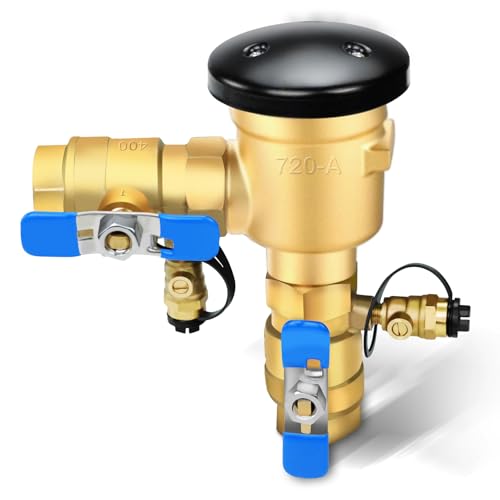
This 1″ variant from LTLUO shares the same sealant-based approach and thickened brass construction, designed to endure high pressures without cracking. It’s a robust choice for larger irrigation lines or commercial setups that require dependable backflow prevention and anti-siphon protection. The model benefits from reliable sealing and corrosion resistance in demanding outdoor environments.
Best for: Larger irrigation layouts and commercial-grade residential systems. Choose this if you need a high-flow, durable PVB with long service life. Caution: Like all metal-on-metal connections, ensure proper installation to prevent leaks; improper torque can compromise seals.
SPARKWHIZ Test Cocks With PTFE Tape

These 4 test cocks are designed for standard 1/4″ female connections, compatible with many pressure vacuum breakers. They’re made of brass and come with PTFE tape to help prevent leaks and ensure a clean, reliable seal during testing and maintenance. The kit is suitable for backflow preventers and sprinkler systems that require precise testing and verification of flow paths.
Best for: DIYers and professionals performing regular backflow testing and maintenance. Better for: ensuring test accuracy and leak prevention during service. Caution: Verify thread compatibility before installation and avoid overtightening to prevent thread damage.
Buying Guide: Key Considerations For Backflow Prevention In Irrigation
- Certification and compatibility: Look for UPC, ASSE, and lead-free certifications when choosing backflow preventers for both irrigation and potable-use considerations.
- Material and durability: Thickened brass bodies resist corrosion and withstand high-pressure systems. Consider self-draining features if you’re in freezing climates.
- Flow and pressure ratings: Most devices here are rated to 400 PSI. Match the device to your irrigation line size (1″, 3/4″, etc.) and expected flow rate.
- Sealing method: Some models use sealants rather than Teflon tape. Sealant-based designs can offer different longevity and maintenance profiles—select based on your installation and service preferences.
- Installation and maintenance: Ensure correct orientation and that the unit’s arrows indicate flow direction. Regular inspection and testing help prevent backflow incidents.
Frequently Asked Questions
- What is a backflow preventer and why do I need one for irrigation?
A backflow preventer blocks the reverse flow of water, protecting the clean water supply from contamination due to back-siphonage or backpressure in irrigation systems. - Can backflow preventers be used with potable water lines?
Some models are lead-free and certified for potable use, but always check the specific product’s certification and local codes before installation. - What does 400 PSI mean for these devices?
It indicates the maximum pressure the unit can safely handle in typical irrigation setups. Exceeding this rating can damage the device or reduce effectiveness. - Are self-draining backflow preventers better in cold climates?
Self-draining designs help reduce freezing risk by removing residual water, beneficial in regions with freezing temperatures. - Do I need to hire a professional to install a backflow preventer?
Depending on local regulations and system complexity, professional installation is recommended to ensure code compliance and proper testing.