When you need serious soil work, a heavy-duty front tine tiller is essential. This guide highlights five strong choices ideal for breaking through compacted soil, preparing seedbeds, and managing weed growth in larger gardens or small plots. Each option is evaluated for power, maneuverability, adjustability, and durability, helping you match the tiller to your soil type and garden size. Suitable buyers include homeowners tackling clay or hard soil, landscapers needing reliable season-long performance, and gardeners seeking versatile 2-in-1 capabilities.
Product snapshot table (quick comparison)
| Product | Engine | Width Range | Best For | Limitations |
|---|---|---|---|---|
| Earthquake Versa 2-in-1 | 99cc Viper | 11″–21″ | Small to mid-size plots; 2-in-1 versatility | Limited to lighter soil with very tough roots |
| Earthquake Victory 39381 | 209cc Viper | Counter-rotating, wide reach | Very tough soil; deep tilling | Heavier; may be harder to maneuver in tight spaces |
| 212cc Gas Rototiller (GasXcel) | 212cc | 22″ width | Large plots; hard soil and clay | Heavier; more maintenance |
| TAZZ 35310 2-in-1 | 79cc Viper | 11″–21″ | Budget-friendly 2-in-1 versatility | Lower power vs. bigger models |
| NOVUS 2-in-1 | 79cc | 9″–17″ | Precision beds; light-to-moderate soil | Smaller working width |
Earthquake Versa 2-in-1 Tiller Cultivator

Summary: This 2-in-1 front tine tiller converts to a cultivator, powered by a 99cc Viper engine. Tilling width adjusts from 11 to 21 inches without tools.
- Best for: small to medium gardens that require occasional cultivator use.
- Why selected: Flexible 2-in-1 design and tool-less width adjustment support varied beds without multiple machines.
- Caution: May struggle in very dense clay without pre-loosening.
Earthquake Badger Front Tine Tiller 41080

Summary: A compact 160cc Viper engine model with two-position wheels and adjustable tilling width up to 21 inches. Designed for effective deep tilling in tighter spaces.
- Best for: homeowners needing strong power with good maneuverability in smaller yards.
- Why selected: Strong power in a compact frame with versatile wheel positioning for transport and control.
- Caution: Heavier soil may require longer tilling sessions; consider soil prep beforehand.
Earthquake Victory Rear Tine Tiller

Summary: A heavy-duty 209cc Viper engine with counter-rotating tines for breaking tough soil, plus an instant reverse feature for tight spaces and improved soil turnover.
- Best for: very challenging soil that resists standard tilling.
- Why selected: Counter-rotating tines and instant reverse provide robust soil disruption and easier maneuvering near obstacles.
- Caution: Higher weight may require more storage space and strength during handling.
TAZZ 35310 2-in-1 Front Tine Tiller

Summary: A 79cc Viper engine powers a robust 2-in-1 design with tool-free outer tine removal for tilling or cultivating. Up to a 21-inch width and 16/11/21 width options.
- Best for: budget-conscious buyers needing versatile 2-in-1 capability.
- Why selected: Balanced power-to-weight with straightforward maintenance and adjustable widths.
- Caution: Lower engine displacement than larger models may require two passes in very hard soil.
NOVUS 2-in-1 Gas Tiller
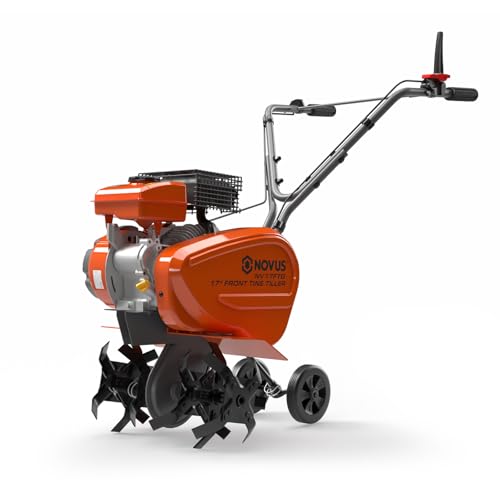
Summary: A 79cc front tine tiller with 9″–17″ tool-free width adjustments and 24 steel tines. Never-flat wheels aid mobility and ease of use.
- Best for: precise garden beds and lighter-to-moderate soil work with easy transport.
- Why selected: Compact 2-in-1 with practical width options, suitable for raised beds and tight plots.
- Caution: Smaller tilling width may require more passes on larger plots.
Buying Guide: Heavy-Duty Front Tine Tillers
What to consider when choosing a heavy-duty front tine tiller:
- Soil type and density: Hard clay or packed soil benefits from larger engines, counter-rotating tines, and deeper tilling capabilities.
- Working width and depth: Wider widths cover more ground but require more space to maneuver. Depth controls impact soil aeration and root penetration.
- Two-in-one capability: If you need both tilling and cultivation, 2-in-1 models save space and cost.
- Engine displacement and power: Higher cc generally means greater torque for tougher soils; balance with operator strength and yard size.
- Wheel design and transport: Two-position or adjustable wheels improve control, transport ease, and row turning near edges.
- Maintenance and durability: Look for robust transmissions, forged steel tines, and serviceable components for long lifespans.
FAQ
- What’s the difference between front tine and rear tine tillers?
- When should I choose a 2-in-1 tiller?
- Is engine displacement essential for dense soil?
- What maintenance should I perform after tilling?
- Which tiller is best for large plots?
- Are any of these heavy enough to require assistance?
Front tine tillers use forward-rotating tines on the front of the machine, which generally provide better maneuverability and are lighter for smaller yards. Rear-tine models typically offer more power for very hard soil but can be harder to steer in tight spaces.
Choose a 2-in-1 tiller if you want the flexibility to switch between tilling and cultivating without buying a separate tool, especially for garden beds and seedbeds that require frequent row maintenance.
Yes. Higher displacement (cc) usually delivers more torque, helping break through dense or clay soils more effectively, though it also increases weight.
Check tines for wear, lubricate moving parts, inspect the transmission, and replace air filters as needed. Regular oil changes and proper storage extend life.
Large plots benefit from higher-displacement engines, wider tilling widths, and models with reinforced transmissions and durable wheels designed for extended use.
Yes. Some models with 160cc–209cc engines can be heavy; consider wheel positioning, lift assistance, and safe handling practices if you have back or shoulder concerns.