 Trusted Garden Reviews
Your lawn has a puddle, and the obvious next move seems to be buying something that improves drainage. Slow down for one ordinary watering cycle, because a wet patch can have several very different causes.
The useful question is where the water comes from, where it stops, and what happens underneath it. A notebook, a few photographs, and a comparison with nearby ground can tell you more than another treatment spread over the whole yard.
Start with the water, not the product
Make a rough sketch showing your house, pavement, roof outlets, garden beds, and the wet area. Add arrows only where you actually see water moving, rather than assuming everything runs in the direction the yard appears to slope.
Watch from a dry path when possible. Repeatedly walking through saturated grass can damage the surface and make a busy gate area look worse while you investigate it.
Record whether the puddle appears during irrigation, after rain, or in both situations. A patch that stays wet with the sprinklers off deserves a check for leaks as well as a look at the soil.
Keep your first notes descriptive: “water crosses the patio edge after five minutes” is more useful than “the soil is bad.” You can choose a response once the pattern is clear.
If it happens during watering, watch a complete cycle
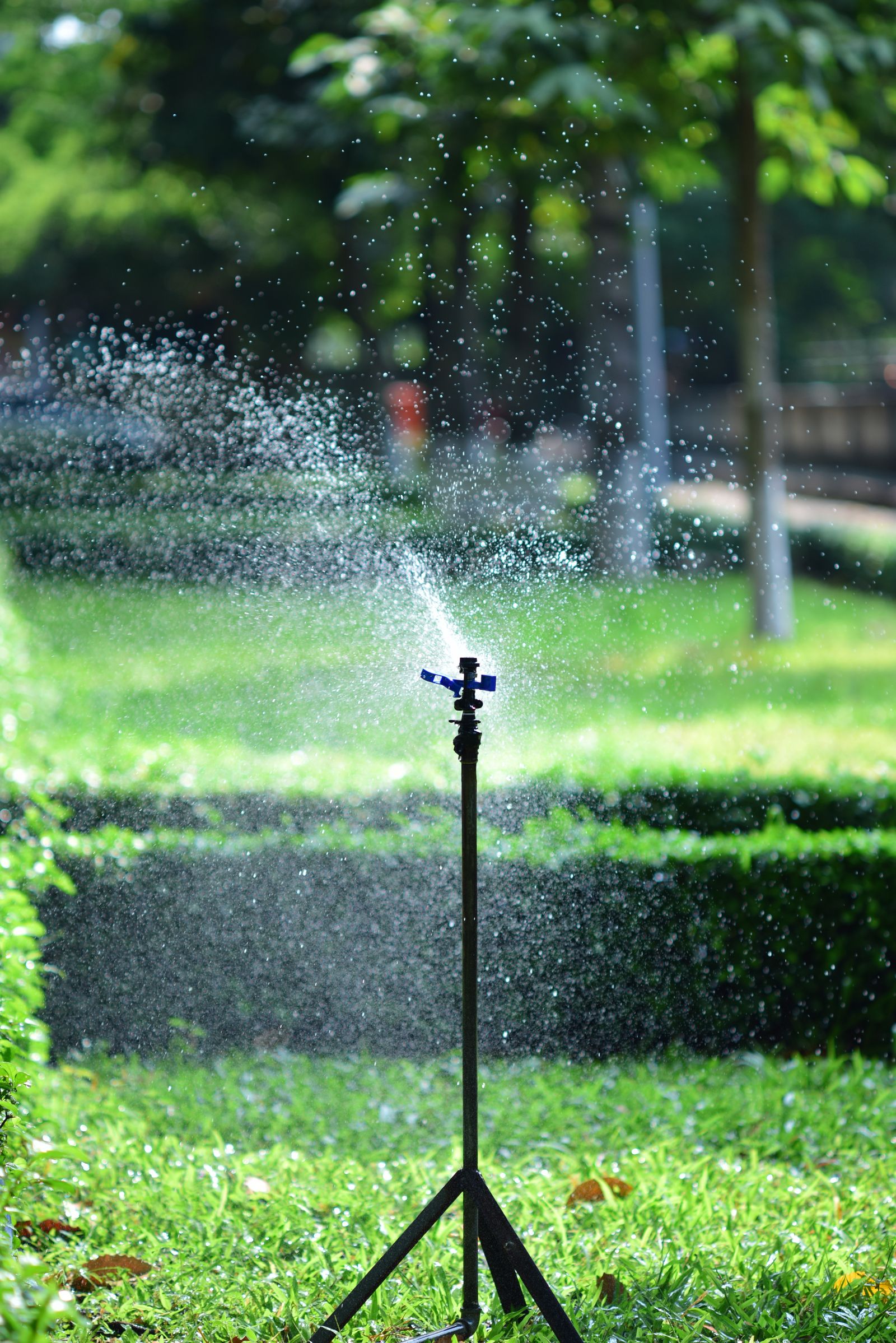
Look for a sprinkler aimed at a path, overlapping sprays, a damaged connection, or a low area receiving water from a higher zone. Equipment can work mechanically while its coverage or schedule is wrong for the actual garden.
Note when watering begins and when pooling starts. If the surface starts collecting water before the programmed cycle ends, extending that same cycle is unlikely to be a helpful first experiment.
Identical shallow containers placed around the watered area can reveal uneven coverage. Use several positions, keep people away from moving equipment, and remember that wind can change the result between visits.
This is a distribution check, not a promise that one container represents the entire yard. Maryland Extension’s water-conservation guidance supports adjusting watering to site conditions rather than treating the timer as a permanent instruction.
Check the forecast and recent rainfall before repeating the schedule. A routine that seemed reasonable during a dry spell may simply add unnecessary water when cooler weather arrives.

Follow runoff after an ordinary rain
Water arriving from a roof or paved surface can overwhelm a small patch that otherwise drains reasonably well. Trace that route before concluding that every square foot of lawn needs a soil treatment.
A downspout extension might be disconnected, blocked, or ending in an awkward location. Correcting an obvious maintenance problem is different from designing a new drainage system, especially when the building is close by.
Do not redirect water toward a neighbor, a basement, or another vulnerable area. A permanent change needs a suitable receiving location and may involve local drainage requirements.
Look for a shallow dam at the lawn edge: raised edging, accumulated soil, or pavement sitting above the grass. An obstruction at one exit point creates a different problem from slow water movement through the whole root zone.
Take photographs from the same position during comparable events. Include the patio edge or another fixed feature so you can judge the size and route of the wet area later.
Check whether the surface is a hollow
When the lawn is dry enough to inspect without leaving footprints, view it from several sides. A shallow depression can be easier to see at a low angle than while standing directly over it.
That hollow can hold water even when its soil resembles the surrounding ground. Aeration does not remove the shape of the depression or stop additional runoff from entering it.
Avoid solving the problem by dumping a deep layer of soil onto living grass. You also need to consider tree roots, nearby paving, and how changing one level affects the next place the water travels.
For a significant depression, a recurring problem beside the house, or uncertain grades, get site-specific advice. Bring your sketch and photographs so the conversation starts with an observed route rather than a guessed product.

On a small screen, swipe or use the arrow keys to inspect the full illustration.
Compaction is a possibility, not a universal answer
A regularly used gate, a dog route, or a place where a cart turns provides a reason to investigate compaction. Construction history and traffic when the soil was wet are also useful clues.
Compare a worn patch with nearby ground under similar moisture conditions. A screwdriver that struggles in very dry soil does not, by itself, tell you how dense the soil is or why the water stays there.
Where conditions allow, a small hand sample can reveal rooting and changes between soil layers. Check for shallow irrigation and other services first, and restore the sampled spot afterward.
Maryland’s established-lawn guide distinguishes core aeration from other lawn operations and links timing to the type of grass. That is a better starting point than copying a date from a lawn in another climate.
A hollow-tine tool removes small plugs; a solid spike pushes into the ground. Neither operation repairs a broken downspout or creates an outlet for water trapped by the shape of the yard.
If aeration is justified, plan it for suitable growing conditions and manageable soil moisture. Working saturated ground because the calendar says “spring lawn weekend” can turn a maintenance job into more damage.
Look below the green leaves
Separate loose clippings from the layer between living growth and mineral soil. They are not automatically the same thing, and seeing clippings after mowing is not enough to diagnose a thatch problem.
Notice whether roots stay near the surface or meet a different layer underneath. A thin layer of imported material above compacted construction soil presents a different situation from a mature lawn with a fairly uniform root zone.
An ordinary fertility test can help with nutrient and pH decisions. It does not replace checking slopes, water sources, buried layers, or the route a proposed drain would use.
Keep observations together instead of treating every clue as a separate reason to buy something. A muddy gate, shallow roots, shade, and daily foot traffic may need a change in use as well as a horticultural response.
Try one response you can evaluate
Choose the simplest confirmed problem first. Adjusting a sprinkler that sprays pavement gives you a clearer comparison than changing irrigation, adding compost, filling a hollow, and aerating on the same afternoon.
Write down the change and watch a comparable watering cycle. Improvement is more meaningful when you can explain what changed and when the rest of the conditions were reasonably similar.
If water arrives faster than the ground accepts it, your irrigation system may allow shorter periods separated by time for infiltration. The useful schedule still depends on the system, soil, plants, and local guidance, rather than a universal number of minutes.
If runoff is the main issue, focus on its source and destination. A gravel-filled trench without a verified outlet is a purchase, not proof of a working drainage solution.
Be skeptical of a bagged shortcut
The phrase “clay soil” often triggers an immediate recommendation to add sand. A small amount on the surface does not automatically create a deep, uniform root environment, and contrasting layers can complicate the result.
Compost has useful roles, but it cannot remove a hollow receiving water from a roof. Decide what an amendment is supposed to change before ordering a load or burying grass under an unmeasured layer.
Likewise, greener leaves after fertilizer do not show that drainage has improved. Keep color, nutrient management, water movement, and the physical condition of the soil as separate observations.
Three situations that need different next steps
Beside a patio, watch the sprinkler before treating the lawn. If overspray runs off the paving into the same depression, improving coverage may remove a substantial part of the incoming water.
At a muddy gate, compare traffic, shade, and soil with a less-used patch nearby. Even a justified aeration job may be short-lived unless wet-weather traffic is reduced or a more durable walking route is considered.
Near a building, check obvious leaks and outlets, then avoid improvising grades. Persistent wetness in that location needs a plan that considers the structure and the water’s final destination.
These are observation examples, not diagnoses of your property. Similar-looking puddles can have different combinations of causes, so use the pattern you can actually document.
Keep a small record, then decide
For each event, note the date, whether rain or irrigation supplied the water, the first pooling location, and what the ground looks like later. A simple sketch is easier to reuse than a collection of close-ups with no landmarks.
There is no single disappearance time that diagnoses every lawn. Compare ordinary events, look for repeated saturation or turf decline, and raise the priority when water threatens a building or creates a persistent access problem.
If the cause remains unclear, your local Extension office or a qualified site professional can help interpret the observations. Bring the evidence and ask what additional check would separate the remaining possibilities.
Before reseeding, make sure the root environment and the way the patch is used have a realistic chance of supporting grass. Replacing the seed without changing a recurring water or traffic problem can put you back at the same starting point.
What to bring when you ask for help
Make a short packet with your sketch, two or three dated photographs, the irrigation schedule, and the changes you have already tried. Include whether the patch is close to a foundation, a property boundary, or a frequently used entrance.
Describe the weather in ordinary terms if you do not have a rain gauge. It is still useful to distinguish a brief downpour from several days of steady rain, without inventing a precise amount from a weather app covering a different location.
Ask what observation would change the proposed response before agreeing to major work. A clear explanation of the water’s source and destination is more useful than a long list of products that might help an unidentified problem.