 Trusted Garden Reviews
Growing indoor plants with a UV-friendly lamp can boost photosynthesis, encourage robust foliage, and support year-round growth. Below are five reliable options that span clip-on, desk, and tall-stand designs, each offering full-spectrum or near-UV capabilities, timers, and multiple dimming levels. This guide highlights what each device brings, so you can compare features and choose the right UV lamp for your plant setup.
Summary Table of Selected Products
| Product | Brand | Key Features | Link |
|---|---|---|---|
| SANSI Grow Lights for Indoor Plants | SANSI | 5W; 4000K natural light; 360° gooseneck; clip-on; 4-level dimmable; 3/6/12 hrs timer | Amazon |
| GooingTop LED Grow Light | GooingTop | Full spectrum; 6000K; 75 LEDs; 3 timer options; 4/8/12 hrs; USB or AC power | Amazon |
| LEOTER Grow Light | LEOTER | 80 LEDs (32 red, 12 blue, 36 full spectrum); 10 dimmable levels; auto timer 3/9/12H | Amazon |
| LORDEM Grow Light | LORDEM | 72 LEDs; full spectrum 380-780nm; auto on/off 4/8/12H; adjustable height | Amazon |
| yadoker LED Growing Light | yadoker | Full spectrum 380-800nm; 61.1″ max height; 10 dimmable; 2-pack option | Amazon |
SANSI Grow Lights for Indoor Plants

SANSI offers a compact, powerful option for small pots or desktop setups. The 5W light uses ceramic technology for efficient power conversion and delivers about 35.78 μmol/s/㎡ at 6 inches, supporting a range of houseplants from succulents to African violets. Its 360° gooseneck and clamp provide flexible positioning, and the 4000K natural light is designed to be easy on the eyes while providing targeted growth. A 4-level dimmable design and 3/6/12-hour timers help automate daily care for busy plant owners.
GooingTop LED Grow Light
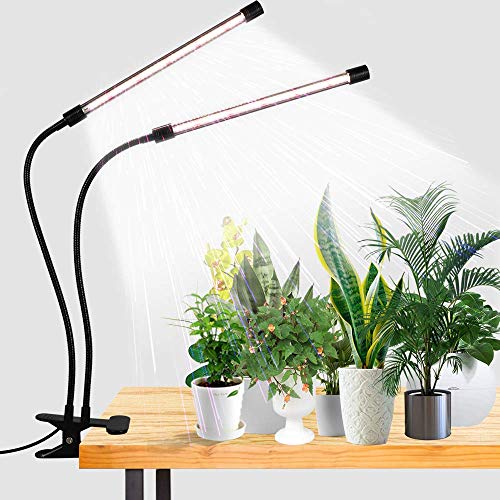
This GooingTop fixture features a full-spectrum blend with 6000K white light and a substantial 95 CRI, closely mimicking daylight for indoor gardening. The device uses 10 red and 74 white LEDs, designed to support plant growth without harsh glare. It offers a timer with multiple options (4/8/12 hours) and adjustable gooseneck with a strong clamp, enabling flexible angles for desks, shelves, or plant stands. Power can be supplied via USB or an AC adapter, making it adaptable to different setups.
LEOTER Grow Light
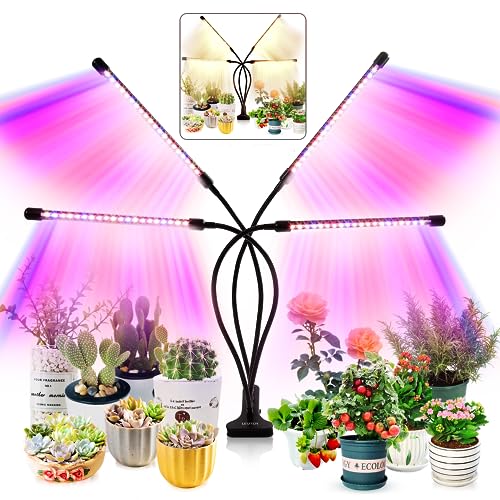
LEOTER presents an 80-LED configuration (32 red, 12 blue, 36 full-spectrum) designed to cover full growth stages from germination to flowering. The lamp supports three timer modes (3H, 9H, 12H) and 10 dimmable brightness levels, empowering precise control over light exposure. An adjustable gooseneck and compact base allow placement on desks or shelves, while USB or wall power adds versatility for various indoor environments.
LORDEM Grow Light

LORDEM combines a 72-diode full-spectrum setup (380-780nm) with a stable desk-friendly base and adjustable height from about 9.8″ to 30.6″. The auto on/off timer supports 4/8/12-hour cycles, ensuring consistent daily lighting. This design emphasizes higher PAR/LUMEN output and a compact footprint, making it suitable for herb containers, small tomato plants, or flowering specimens on a desk or plant shelf.
yadoker LED Growing Light

The yadoker unit emphasizes large-coverage capability with a height-adjustable pole reaching up to 61.1 inches. It uses a full-spectrum array (380-800nm) with multiple brightness levels across 10 settings. The two-pack option is ideal for growing several plants in close proximity, enabling a grid-like lighting system without excessive heat or glare. The adjustable design supports taller specimens and stretching to reach wider plant groups, making it a versatile option for multi-plant arrangements.
Buying Guide: Key Purchase Considerations
When selecting a UV lamp for plants, consider spectrum, intensity, and coverage. Full-spectrum or balanced white-and-red-blue mixes better support photosynthesis across growth stages, while UV-specific wavelengths can benefit certain plant responses but are often not necessary for all houseplants.
- Spectrum and wavelengths: Look for devices that provide a broad spectrum (roughly 380 nm to 780 nm) to emulate natural sunlight. Red and blue channels support germination and flowering; white or full-spectrum options tend to be more versatile for a variety of species.
- Light intensity and PAR: For compact pots, lower wattage with efficient output can suffice. For larger setups, ensure adequate PAR (photosynthetically active radiation) at the plant canopy level, typically measured in μmol/m²/s.
- Adjustability: A flexible gooseneck, adjustable height, and tilt angles help achieve optimal light angles for each plant and stage of growth.
- Timers and automation: Built-in auto on/off timers reduce maintenance and help simulate day/night cycles. Check for multiple timing options (4/8/12/18 hours) to suit different plant needs.
- Power and mounting options: USB-powered lights are convenient for desktops and small spaces; plug-in adapters suit larger setups. Clamps, stands, and telescoping poles support diverse placements without crowding.
- Energy efficiency: LED-based lamps usually consume less electricity than traditional grow lights while delivering comparable or superior results. Assess long-term running costs and heat output.
- Durability and warranty: Choose models with sturdy bases, good build quality, and reliable customer support. A warranty can offer protection against early failures.
- Plant compatibility: Some lights are optimized for seedlings and herbs, while others support flowering and fruiting. Match the device’s spectrum and intensity to your plant types.
For general home gardening, a balanced full-spectrum lamp with adjustable height, multiple timer modes, and a compact footprint typically provides the best overall value. If you need to illuminate a larger plant collection or taller specimens, consider a taller stand or a multi-light setup to ensure even coverage without shadows.
Remember to position lights at an appropriate distance from plant canopies to avoid scorching while delivering adequate intensity. Regularly monitor plant responses and adjust distance, intensity, and duration to optimize growth across species.