 Trusted Garden Reviews
Maintaining healthy oxygen levels is essential for a thriving pond ecosystem, especially on larger properties. Solar pond aerators offer a maintenance-free, energy-efficient way to circulate water, reduce stagnation, and enhance neighborhood curb appeal. This article highlights top solar and related aeration options suitable for a one-acre pond, including kits that float, float-to-sky designs, and robust 110V alternatives for comparison. The selections emphasize easy installation, reliable performance, and multiple spray styles to optimize oxygenation and aesthetics.
| Product | Type | Key Benefit | Approx. Suitable Size |
|---|---|---|---|
| My Natural Pond 50W Floating Solar Pond Fountain Kit | Floating Solar | Self-contained solar pump with three nozzle options and 8–10 ft spray | Small to mid ponds (deep enough water) |
| HQUA PAS20 Pond & Lake Aeration System | Air Diffuser System | Up to 3 acres with 0.75 HP compressor and long tubing | Medium to large ponds |
| RELIY Pond Fountain Aerator | Floating Electric Fountain | Impressive 15000 GPH, dual nozzles for varied spray | Large ponds |
| HQUA-FS02 Floating Fountain | Floating Fountain Pump | 9000 GPH with two spray patterns | Medium to large ponds |
| Pond Aerator Kit (Bsteciar) | Aeration System | 3/4 HP motor with 3/4 CFM air delivery and diffusers | Up to 3 acres |
Note: Size, depth, and climate influence aeration effectiveness. This guide focuses on options that work well for a one-acre pond while offering a range of installation styles, from solar-powered floating units to robust circulating systems requiring electrical power. All products are chosen for reliability, ease of use, and proven aeration performance.
My Natural Pond 50W Floating Solar Fountain Kit

The 50W floating solar fountain is designed for ponds with depths that allow a minimum water level to surface the float. It operates in direct sun or light haze and automatically adapts to water level changes without mounting. With an 8–10 ft spray, it circulates and aerates while adding visual interest. It can pump up to 900 GPH and includes two 25W solar panels with stands, a large pump, a 32 ft cable (extendable), an anchor kit, and all wiring for a quick setup. Three interchangeable nozzles provide spray patterns or a dome effect spanning 4–8 ft, supporting both aeration and aesthetic appeal. Suitable depth is stated as a minimum of 3 ft for best performance. Depending on pond size, this unit is most effective in small to mid-sized ponds or as a supplementary aerator in larger ponds.
Key features include solar-powered operation, a floating design that eliminates mounting hassles, quick 10-minute setup, and multiple spray options. Pros are zero fuel costs and simple installation; cons include dependence on sun exposure and limited depth for maximum aeration at large pond scale.
HQUA PAS20 Pond & Lake Aeration System

This aeration system uses compressed air to oxygenate the pond water. It pushes air into the pond bottom, helping to increase the dissolved oxygen level, reduce fish stress, and minimize fish kills. The PAS20 is designed to handle ponds up to about 3 acres and can operate the compressor down to 65 feet depth. It includes a two-diffuser setup with two >100′ weighted tubing and provides robust oxygenation surges for larger, deeper ponds. The system runs via an efficient, quiet 3/4 HP oil-less rocking piston air pump, with two filters and an outlet timer for scheduling.
Pros include strong aeration potential for larger ponds and flexible tubing reach; cons include reliance on electrical power and a higher initial setup effort compared to floating solar kits. This is a solid choice for year-round oxygenation and clarity in medium to large ponds.
RELIY Pond Fountain Aerator

This is a powerful 110V, 0.75KW/1HP fountain pump capable of delivering up to 15,000 GPH, delivering rapid circulation and strong oxygenation. Two nozzle heads offer V-shaped and parabola spray patterns for eye-catching water effects while improving aeration across a larger surface area. A 12-gauge, 100-foot power cord and two 100-foot guide ropes are included, making installation easier in larger ponds. The single-phase motor provides reliable operation, suitable for backyard ponds or larger water features that need substantial aeration and visual appeal.
Advantages include high flow rates and dramatic spray effects; potential downsides include higher energy consumption and the need for a dedicated electrical outlet. This unit is well-suited for large ponds where strong aeration and a striking fountain are both priorities.
HQUA-FS02 Floating Fountain
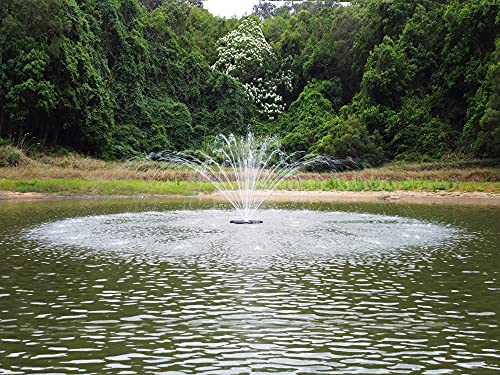
The HQUA-FS02 is a 120V, 1/4 HP floating fountain with a 9000 GPH pump. It includes a 100’ power cord and two spray patterns—one wider, one more compact—for flexibility in shaping water movement. The diffuser-style spray helps break surface tension and improve oxygen exchange. With a crown-style, classic spray geometry, this unit is designed for straightforward installation and reliable, low-maintenance operation. It’s suitable for ponds that require moderate aeration and decorative water features without heavy electrical demands.
Pros include easy DIY setup and compact power needs; cons include higher ongoing electricity usage than solar-only options and the need for a weatherproof outdoor outlet. It’s a practical option for mid-sized ponds seeking both aeration and a classic fountain look.
Pond Aerator Kit (Bsteciar)

This kit combines a 3/4 HP compressor with 100′ weighted tubing and two diffusers, designed for outdoor ponds and lakes up to about 3 acres. The system promotes water oxygenation and circulation, helping prevent stagnation and supporting aquatic life. The included diffusers distribute air across the water column, improving overall oxygen levels. The setup focuses on reliability, deep reach, and effective aeration for larger water bodies, with attention to energy use and durability for long-term performance.
Considerations include the need for outdoor electrical access and appropriate protection from weather. This kit provides robust aeration for larger ponds and is a solid option when a stationary, high-capacity aeration solution is preferred.
Buying Guide: Key Purchase Considerations And Comparisons
Consider Pond Size, Depth, And Water Volume
For a one-acre pond, estimate water volume to determine the needed aeration rate. Larger volumes demand higher GPH or CFM output. Floating solar options are appealing for shallower depths or sun-rich climates, while deeper ponds may benefit from air diffusers or higher-capacity pumps with reliable electrical power.
Power Source And Energy Use
Solar options rely on sunlight and are energy-efficient, but performance can vary with weather. Electric-powered fountains deliver consistent performance but require outlets and can raise operating costs. Mixed systems or local grid power backups are worth considering for year-round aeration.
Spray Patterns And Aesthetic Value
Interchangeable nozzles add visual appeal and influence surface mixing. V-shaped, parabola, and dome or trumpet-like sprays can enhance oxygenation and create attractive focal points in the landscape. For large ponds, wider spray patterns aid surface agitation and aeration distribution.
Installation Effort And Maintenance
Floating solar kits offer quick setup and minimal mounting, while diffuser-based systems need more pumping hardware and tubing. Opt for models with accessible service parts, warranties, and easy cleaning or filter maintenance to minimize downtime.
Durability And Weather Resilience
Outdoor equipment should resist sun exposure, humidity, and temperature swings. Look for rust-resistant housings, UV-stable plastics, sealed connections, and protective cords or floats designed for long-term use in variable climates.
Cost of Ownership And Return On Investment
Solar units minimize energy costs but may require regular battery or panel maintenance. Electric systems have higher energy usage but can deliver consistent results in low-sun periods. Compare initial cost, ongoing energy use, and expected service life to determine total ownership value.
In sum, the best choice depends on pond size, depth, climate, and whether you prioritize solar simplicity or maximum aeration capacity. For many homeowners, a hybrid approach—solar for daytime operation with a backup electric option for cloudy days—offers a balanced solution that supports pond health while maintaining visual appeal in the landscape.