 Trusted Garden Reviews
This guide reviews five top orchid bark products designed to support epiphytic and tropical plants with excellent aeration, drainage, and root development. Each option offers unique blends—from simple pine bark to mix-rich formulations—to help you select the best fit for your orchids, catteleyas, dendrobiums, and other epiphytic species. Explore trusted brands, real-world benefits, and practical usage tips to optimize growing conditions at home.
| Product | Brand | Package | Best For |
|---|---|---|---|
| Better-Gro Orchid Bark | Better-Gro | 4 Quarts | Root development and water retention |
| Orchid Bark Potting Mix | POLIUMB | 1 QT | Ventilation and stable growth |
| Legigo Orchid Bark | Legigo | 2 Quarts | Aeration and drainage |
| Better-Gro Special Orchid Mix | Better-Gro | 4 Quarts | Drainage and air flow |
| 100% Organic Orchid Potting Bark | Soil Sunrise | 8 Quarts | Natural, additive-free medium |
Better-Gro Orchid Bark — Premium Grade

Better-Gro offers a grower-grade western fir bark designed for epiphytic orchids and tropical plants. This premium bark is sized to promote robust root development and healthy growth. The product supports potting and repotting needs and can also serve as a base for custom orchid mixes. Available in 8 dry quarts or 4 dry quarts, the bag is resealable for extended storage and usability. The fir bark components provide the ideal environment for root development, ensuring good aeration and drainage. This option is versatile for spot filling and base mixtures, making it suitable for Phalaenopsis and other tropical plants.
Orchid Bark Potting Mix — POLIUMB

POLIUMB’s orchid potting mix combines premium pine bark with perlite to deliver reliable ventilation and water retention. The blend reduces soil compaction and supports stable plant growth, preventing clumping. Made from natural ingredients, it emphasizes organic quality without artificial additives, promoting healthy orchid roots and vibrant blooms. The mix features a two-size pine bark composition and perlite to enhance drainage, with hollow, porous perlite aiding soil aeration and gas exchange around the roots. This medium aims to replicate the orchid’s natural epiphytic environment.
Legigo Organic Orchid Bark — 2 Quarts

Legigo provides a clean, all-natural pine bark product in a 2-quart package. The bark pieces are sized around 3/8 inch, promoting even distribution and stronger root formation. It acts as mulch for orchid pots, offering excellent aeration and drainage while insulating roots from overwatering. This bark is suitable for potting mixes and can be combined with perlite or soil to craft a custom orchid substrate. It also stores well over long periods, reducing the need for frequent substrate replacement.
Better-Gro Special Orchid Mix — 4 Quarts

Better-Gro Special Orchid Mix is designed for multiple epiphytic orchid varieties, including Cattleyas, Phalaenopsis, Dendrobiums, Paphiopedilums, and Oncidiums. This formula emphasizes drainage and airflow with a dynamic blend of western fir bark, hardwood charcoal, sponge rock, coarse perlite, and bark nuggets. The combination supports robust root development while maintaining excellent ventilation to mimic natural orchid habitats. It is a ready-to-use medium that can be used for potting, repotting, and as a base for custom mixes tailored to specific orchid species.
100% Organic Orchid Potting Bark — 8 Quarts
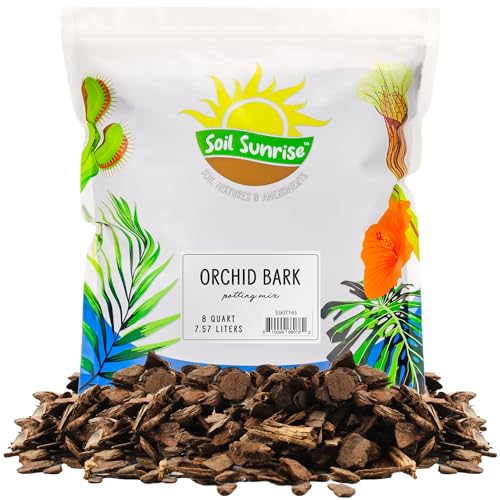
Soil Sunrise offers an all-natural 8-quart organic orchid potting bark with no additives or synthetic chemicals. Sourced from USA pine bark, this mix emphasizes aeration and drainage, closely resembling an epiphytic plant’s native environment. It’s suitable for planting orchids, epiphytes, and other plants that require rapid drainage and good air circulation. The bark chips provide voids that facilitate oxygen exchange around roots, helping prevent root rot and promoting healthier growth in indoor or outdoor containers.
Buying Guide: Key Purchase Considerations And Comparisons
Choosing the right orchid bark or bark-based mix depends on your plant species, growing setup, and maintenance preferences. Consider these factors to optimize results:
- Drainage vs. moisture retention: Epiphytic orchids thrive with excellent drainage and adequate aeration. If you frequently overwater, use bark blends with perlite or sponge rock to enhance air flow. For orchids that tolerate slightly more moisture, a mix with a bit more bark and less porosity can work.
- Particle size and texture: Smaller particles provide more surface area for root contact but may compact over time. Larger chunks improve aeration but can dry out quickly. Match particle size to your pot size and watering routine.
- Organic vs. additive formulations: All-natural, additive-free options emphasize sustainability and simplicity. Blends with charcoal, sponge rock, or perlite aim to optimize drainage and root ventilation for a wider range of orchid species.
- Longevity and storage: Some barks store longer without rotting, which reduces substrate replacement frequency. Resealable bags help maintain moisture content and prevent contamination.
- Species-specific needs: Phalaenopsis often benefit from well-drained mixes with good aeration, while some dendrobiums may require different proportions of bark and inert materials. Consider your collection’s variety when selecting a mix.
- Cost and packaging: Larger quantities can lower per-unit cost if you pot several plants. For smaller collections, 1–4 quart packages provide flexibility to test blends before large purchases.
- Compatibility with containers: Epiphytic orchids in porous pots or baskets may perform better with lighter mixes that don’t retain excess moisture. Consider pot type when choosing a bark blend.
In summary, the best orchid bark choice balances drainage, aeration, and root health while fitting your care routine. The options listed above provide a spectrum—from simple pine bark to multi-component mixes—so you can tailor your substrate to your orchids’ needs and your horticultural approach.