 Trusted Garden Reviews
Choosing the right growing light is essential for indoor gardening, seed starting, and year-round plant care. This guide highlights five reliable options that balance spectrum coverage, adjustability, and ease of use. Each product is designed to support photosynthesis, promote germination, and encourage blooms. Read on to compare features and find the best fit for your plant collection and space.
Summary of Selected Products
| Product | Brand | Light Type | Key Features |
|---|---|---|---|
| LEOTER Grow Light for Indoor Plants | LEOTER | Full Spectrum + Red/Blue | 80 LEDs, 3/9/12H timer, 10 dimmable levels, adjustable gooseneck |
| Plant Grow Light, yadoker LED Growing Light | yadoker | Full Spectrum | 72 LEDs, height up to 61.1″, 10 dimmable levels |
| GooingTop LED Grow Light | GooingTop | Full Spectrum with White/Red | 6000K white, 10 red + 74 white + 2 blue LEDs, timer options |
| bseah Grow Light Plant Lights | bseah | Full Spectrum | 10 dimmable levels, 3 switch modes, auto timer 3/9/12h |
| GHodec Grow Light with Stand | GHodec | 5500K Full Spectrum | Adjustable tripod stand, 5 brightness levels, auto timer |
LEOTER Grow Light for Indoor Plants
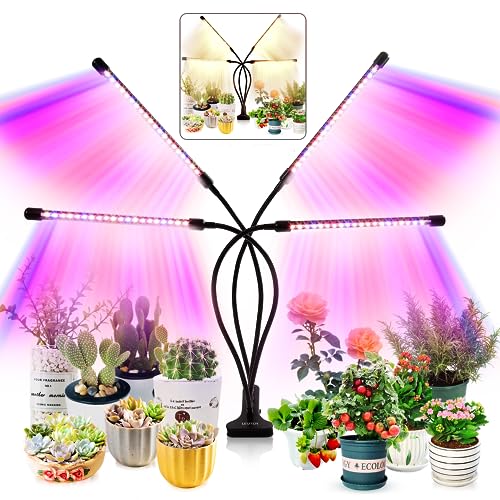
LEOTER’s upgrade features an 80-LED system with a balanced spectrum to support germination, vegetative growth, and flowering. The lamp offers a full spectrum range (380nm-800nm) for all stages of plant life, plus dedicated red and blue channels for flowering and root development. A circular memory timer supports 3H, 9H, or 12H cycles, enabling hands-free operation while you’re at work or away. Ten dimmable levels provide precise control for seed starting or mature foliage, and the gooseneck lets you position light exactly where plants need it.
Plant Grow Light, yadoker LED Growing Light

yadoker delivers a full-spectrum grow light with a telescoping height system that reaches up to 61.1 inches. The setup covers a broader area, making it ideal for taller arrangements or multiple plants in a row. The fixture includes 72 LEDs across the spectrum (380nm-800nm) with warm white and red accents to foster growth through germination, vegetative development, and flowering. Ten dimming levels let users tune brightness from 10% to 100%, while height adjustability ensures the light stays at the proper distance as plants grow.
GooingTop LED Grow Light
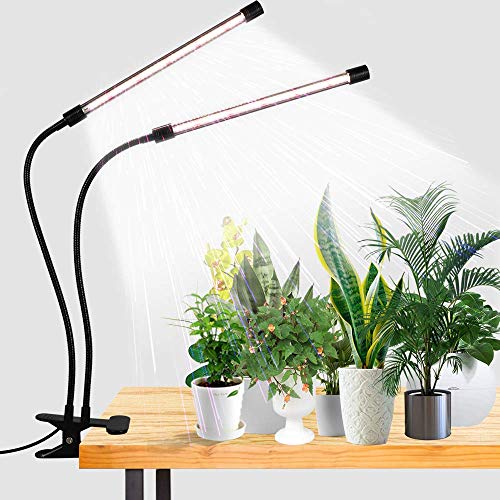
GooingTop combines a 6000K white light with an embedded red LED array to simulate a balanced noonday sun. The fixture provides a high color rendering index (around 95), which helps plants photosynthesize efficiently while staying easy on the eyes for nearby readers. It includes a timer with 4, 8, or 12-hour options on a 24-hour cycle, enabling consistent daily lighting. A flexible gooseneck and a sturdy clamp offer versatile placement for desks, shelves, or small grow tents.
bseah Grow Light Plant Lights
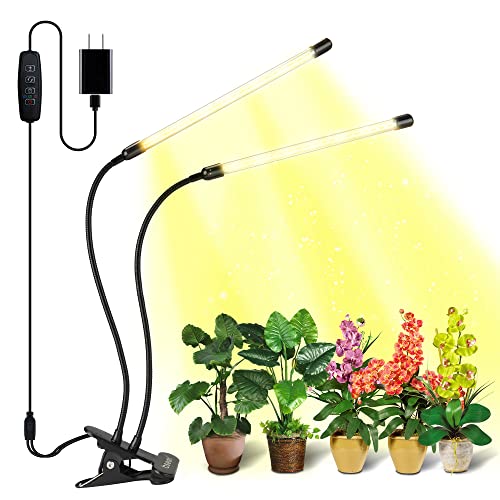
bseah emphasizes a full-spectrum approach with a blend of yellow and white LEDs to emulate natural sunlight. The light supports plant stages from germination through fruiting and includes an auto on/off timer with 3/9/12-hour options. Ten dimmable modes paired with three switch modes accommodate varying growth stages, ensuring plants receive tailored light exposure during seedlings, vegetative growth, and flowering cycles.
GHodec Grow Light With Stand
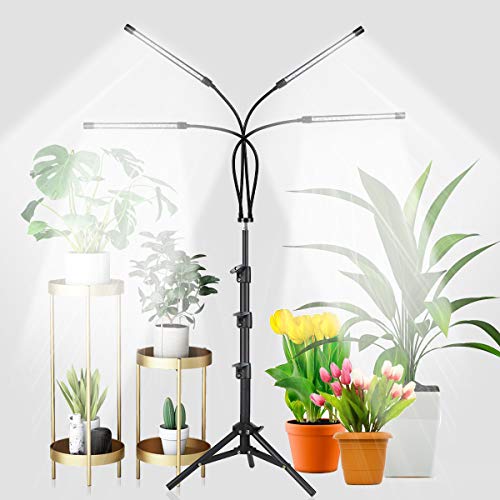
GHodec offers a floor-standing, full-spectrum setup with a 5500K daylight output designed for robust indoor plant growth. The adjustable tripod stand provides range from about 15 to 48 inches, making it suitable for desk plants to taller specimens. The lamp includes five brightness levels and a three-timer system (4H/8H/12H) to automate daily lighting. The USB connection adds flexibility for home offices or living rooms, and the stand helps position the light for optimal photosynthesis across plant varieties.
Buying Guide: Key Purchase Considerations And Comparisons
- Spectrum Coverage: Look for full-spectrum LEDs (approximately 380-800 nm) to cover germination, vegetative growth, and flowering. Some models add targeted red/blue channels to boost specific stages like blooming or root development.
- Intensity And Dimming: Multiple models offer 5–10 dimming levels. Choose a light that lets you adjust brightness for seedling delicate needs versus robust vegetative growth, and ensure you can safely operate at night or in low-light rooms.
- Timer Features: Auto ON/OFF timers (3/9/12 hours) help maintain consistent day cycles. Consider whether the timer resets after power loss and how easy it is to reprogram after interruptions.
- Adjustability: A gooseneck, adjustable pole, or tripod stand helps you target light where plants need it most and accommodate growing heights or spread.
- Installation And Footprint: Clip-on, clamp, or floor-standing designs affect where you can place the light. For compact spaces, choose a model with a narrow footprint or a long reach from a single mount.
- Power And Safety: Check voltage requirements (USB vs. AC adapters). Ensure the device is rated for safe indoor use and includes appropriate heat management to protect LEDs and plants.
- Coverage Area: Larger setups with multiple lamps or higher-output fixtures are better for bigger flats or greenhouses, whereas a single light suffices for a desk garden or a few potted plants.
- Durability And Warranty: Look for quality LEDs and robust goosenecks or stands. A warranty offers protection for LEDs and electronics over time.
- Cost Of Ownership: Consider energy use, replacement LED longevity, and maintenance needs. Efficient full-spectrum lamps often reduce electricity use while delivering strong plant performance.
- Plant Type Compatibility: Seedlings often benefit from gentler, balanced light, while fruiting plants may require stronger red-blue emphasis. Choose a model that aligns with your plant mix and growth stage.
The options above provide varied combinations of spectrum, adjustability, and automation. For compact spaces, consider clip-on or small desk-talent lamps with adjustable goosenecks. If you’re growing a larger collection or taller specimens, a tripod stand or floor lamp with a wide range of height and angle can help maintain optimal distance from leaves. In all cases, monitor plant responses and adjust light duration and intensity to prevent light stress while promoting steady growth.