 Trusted Garden Reviews
Choosing the right electric fence charger is essential for protecting cattle and maintaining pasture integrity. This guide highlights five reliable options that work well in American farm settings, from large parcels to remote pastures. Each product is evaluated for durability, voltage, and ease of use, helping you compare features at a glance and select the best electric fence box for cattle operations.
| Product | Brand | Coverage | Power Type |
|---|---|---|---|
| Zareba 25 Mile AC Powered Low Impedance | Zareba | Ideal up to 25 miles; performs in light to heavy weeds | AC-powered |
| AC/DC 2-in-1 Power Supply | LIFENCE | Up to 40 acres; 10-mile range | AC & DC 2-in-1 |
| Parmak SE5 504564 | Parmak | Up to 50 miles; high impedance | AC-powered |
| 15.5J Electric Fence Charger | PROOVEELLY | Up to 600 acres; 31 miles (no weeds) | AC/DC 2-in-1 |
| Electric Fence Charger AC Powered 100 Miles | L-FENCE LYDITE FENCE | Large properties; 300 acres | AC-powered |
Below are detailed profiles of five top choices, reflecting real-world performance, ease of installation, and suitability for cattle management. Each section provides practical considerations to help shop decision-making, including handling in remote locations, weed resistance, and maintenance needs.
Zareba 25 Mile AC Powered Low Impedance Charger

The Zareba EAC25M-Z model delivers a reliable AC-powered solution for fences designed to control cattle, horses, and other livestock. It’s rated for up to 25 miles in ideal conditions and about six miles in heavy weed scenarios, making it suitable for mid- to large-sized pastures. This unit is compatible with various fence types, including high-tensile and polywire systems. The charger’s low-impedance design helps maintain consistent shock strength, which is important for cattle response and deterrence of escapes. Regular inspection of grounding and wire connections is recommended to maximize performance in different weather and vegetation conditions.
Key considerations include gate proximity and weather patterns, as well as weed density along fence lines. In practical terms, users report dependable operation in standard fencing setups, with straightforward wiring and mounting. For ranches with mixed terrain, pairing this charger with a robust grounding system can improve performance during damp seasons. Maintenance typically involves checking the output at the fence line and ensuring the connection integrity remains solid after wind or snowfall.
AC/DC 2-in-1 Power Supply By LIFENCE

This versatile 2-in-1 charger supports both AC mains and DC operation, enabling use in remote areas without grid access. It delivers up to 10 miles of fence range and a 2 joule output, suitable for containment across roughly 40 acres with compatible wiring. The device includes indicator lights to monitor system status, aiding quick troubleshooting. It supports multiple installation methods and features a ground terminal and fence output for easy wiring. For remote homesteads, the 12V battery or solar compatibility expands containment options beyond standard electrical services.
Considerations for use include the balance between energy output and pasture size, as well as soil conductivity and vegetation density. In practice, this charger shines when electricity access is unreliable, though it requires thorough grounding and routine status checks to prevent performance dips during adverse weather. UL-listed safety features add reassurance for farms with family-operated layouts and seasonal personnel changes.
Parmak SE5 504564 Super Energizer

The Parmak SE5 504564 is a low-impedance, high-output controller designed for larger cattle operations or properties with extended fence networks. It features a built-in digital performance meter that reports real-time fence status, including voltage and fault alerts. With holding power exceeding 8,000 volts under a 500-ohm load, this unit is built to punch through wet vegetation and brush that commonly reduce shock effectiveness. It’s a robust option for ranchers seeking strong, consistent performance across a wide perimeter.
Buyers should consider installation space, as the SE5 tends to be deployed in permanent or semi-permanent setups. The internal diagnostics help maintain performance, but monitoring and occasional recalibration may be needed after wiring changes or fence repairs. The powerful output makes it suitable for demanding fencing configurations, though it may be more than necessary for small paddocks, where a lighter unit could suffice.
15.5J Electric Fence Charger By PROOVEELLY
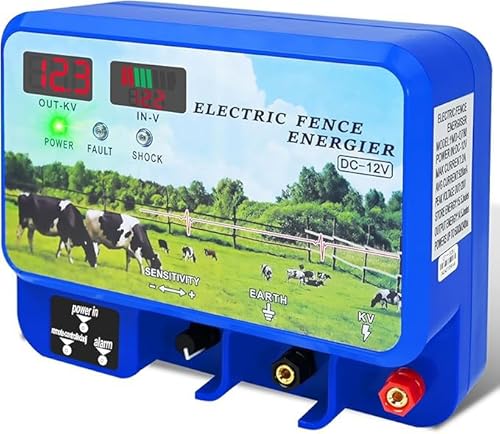
This unit combines 15.5 joules of energy with a dual AC/DC capability, offering practical performance for properties up to several hundred acres under no-weed conditions. It presents a clear LCD readout for real-time input and battery voltage, enhancing situational awareness on the farm. With 31 miles (no weeds) coverage and an output of 14.5 joules, it aims to deliver strong deterrence against predators while containing cattle and livestock effectively. The device is designed for straightforward wiring and monitoring via its display and alarm features.
Important factors include weed management and the balance of joule output with pasture size. In real-world use, this charger provides dependable performance in open fields and is useful for remote stations where visibility of the alarm or display aids maintenance. As with high-output units, routine inspection of ground connections and fence integrity is advised to sustain optimal performance.
Electric Fence Charger AC Powered 100 Miles

This large-scale charger targets expansive properties, offering up to 100 miles (approximately 300 acres) of fence coverage with 7 kV output under 500 ohms. It’s built to endure ranch environments, featuring a sturdy housing and a lightning arrester for protection against surges. The device supports T-post mounting and stake installation, helping farmers anchor a long fence line across uneven terrain. Its high-impedance performance helps ensure consistent deterrence even in challenging pasture layouts.
For operations with significant acreage, this option delivers reliable, long-range performance. However, the higher voltage and larger footprint require careful planning around fence routing, grounding, and ongoing maintenance. If you expect variable wind conditions or prolonged wet seasons, pairing with a robust ground system will maximize effectiveness and minimize misfires or power loss along distant fence sections.
Buying Guide: Key Purchase Considerations And Comparisons
Selecting the right electric fence charger for cattle depends on pasture size, vegetation, and access to electrical power. Consider these factors to guide your choice:
- Coverage Area: Match the unit’s rated miles or acres to your fencing perimeter. For large ranches, higher joule outputs and longer-range units reduce the number of chargers needed.
- Power Source: AC-powered units are simple where power is available; DC or solar-compatible models suit remote sites with limited electrical access.
- Impedance: Low-impedance chargers maintain shock through weeds and brush. They’re typically more effective for cattle that may rub or press against fences.
- Grounding And Installation: A strong grounding system improves performance. Verify mounting options (pole, wall, or post) and ensure compatibility with your fence type (polywire, polytape, or high-tensile).
- Monitoring Features: LCD displays, status indicators, and fault alarms help prevent fence outages. Models with digital performance meters provide quick diagnostics.
- Durability: Weather-resistant housings and surge protection extend life in hot summers and freeze-thaw cycles common on American farms.
- Maintenance: Regular checks of connections, ground rods, and fence lines reduce downtime. Plan for seasonal adjustments in weed density and vegetation
In practice, the best option balances range, reliability, and ease of use. For smaller pastures, a 10–20 mile or 40-acre rated charger with strong weed resistance may be adequate. For larger operations, investing in a high-output, low-impedance unit with remote monitoring features can improve containment and reduce cattle escapes. Always align the charger’s specifications with your fence design, weather patterns, and pasture management goals to achieve durable cattle control.